
May 31 – June 2, 2022
Stop two on Tour d’Italia 2022: Florence! Back to you, Mark:
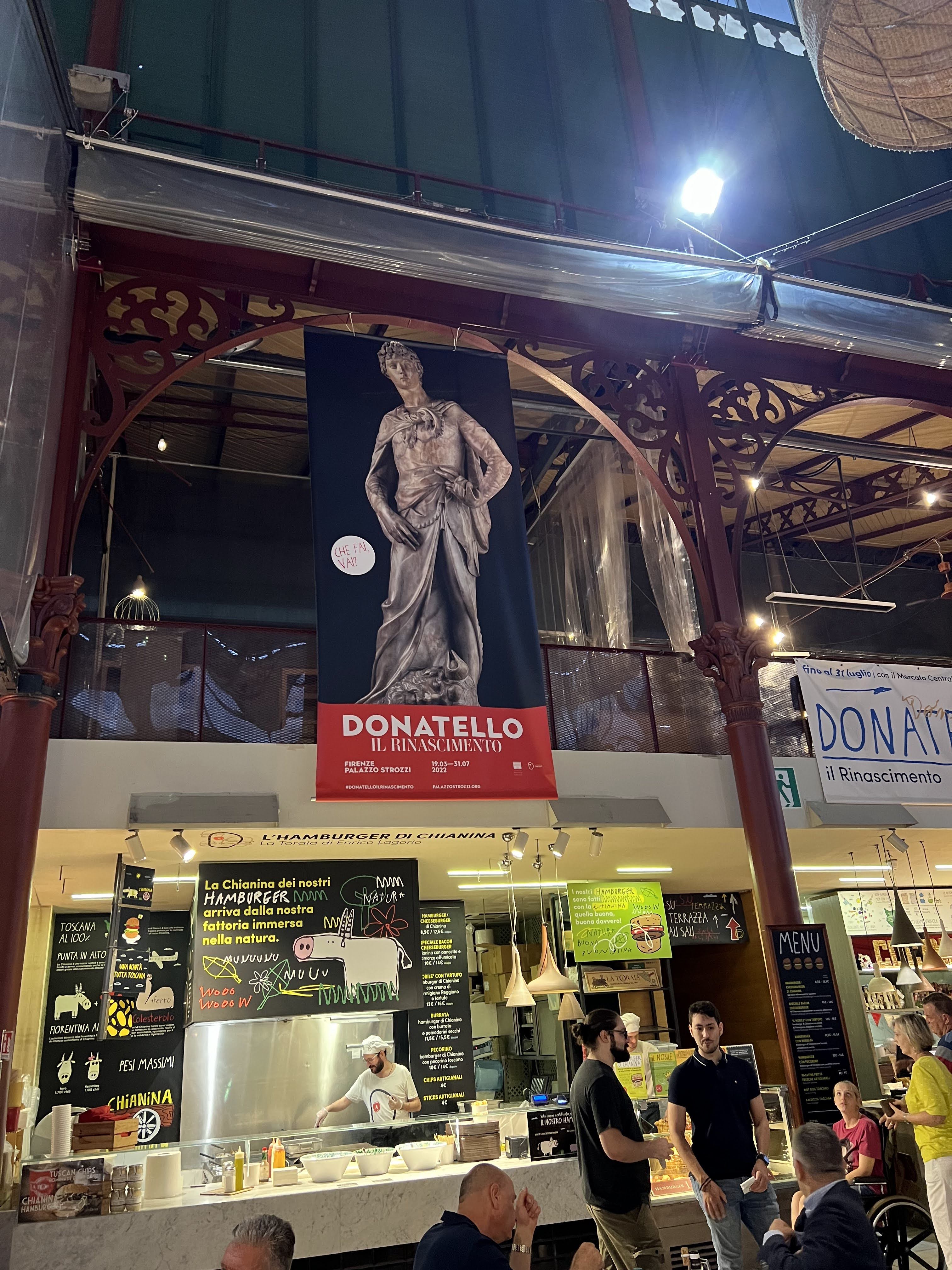
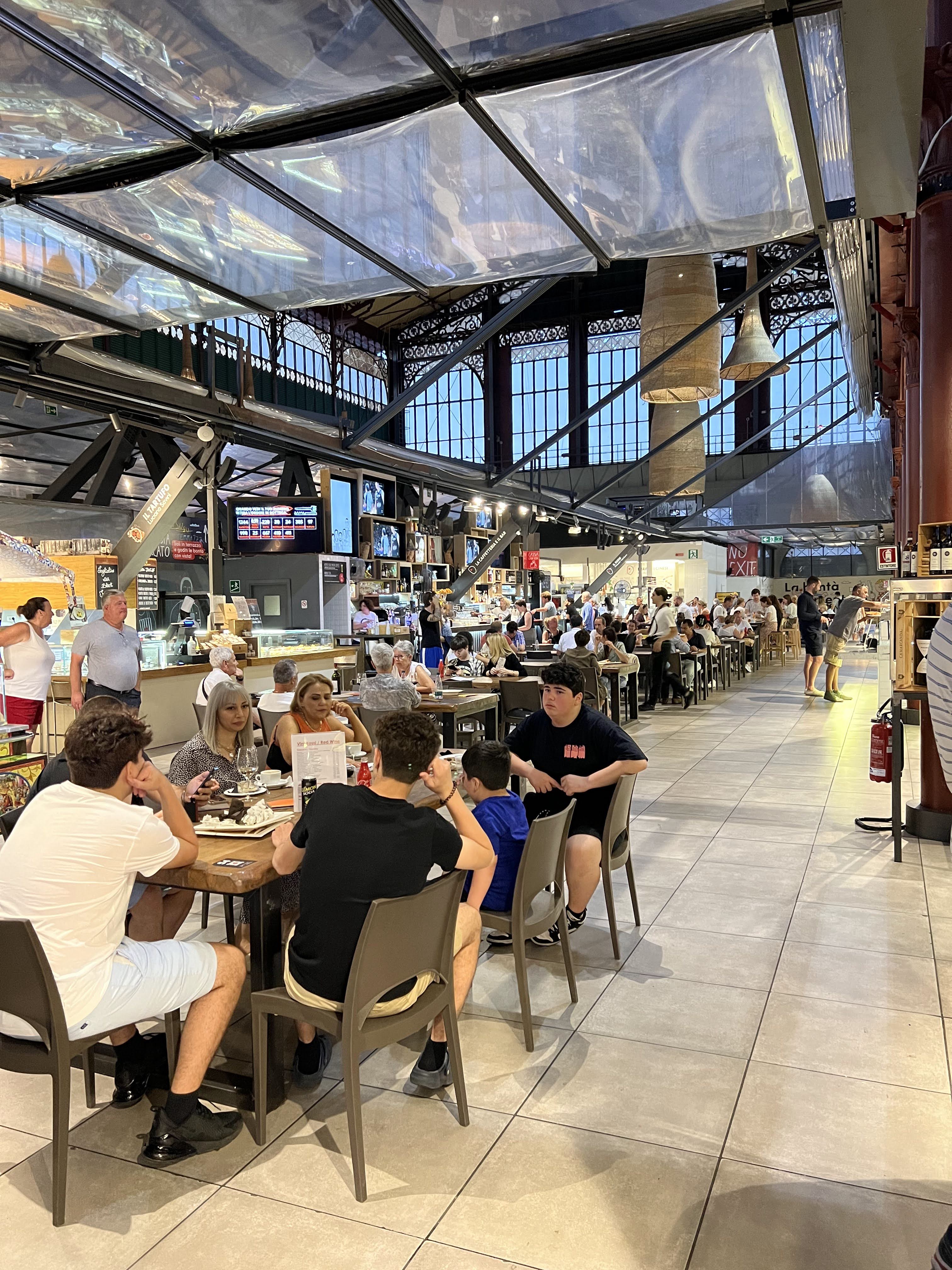
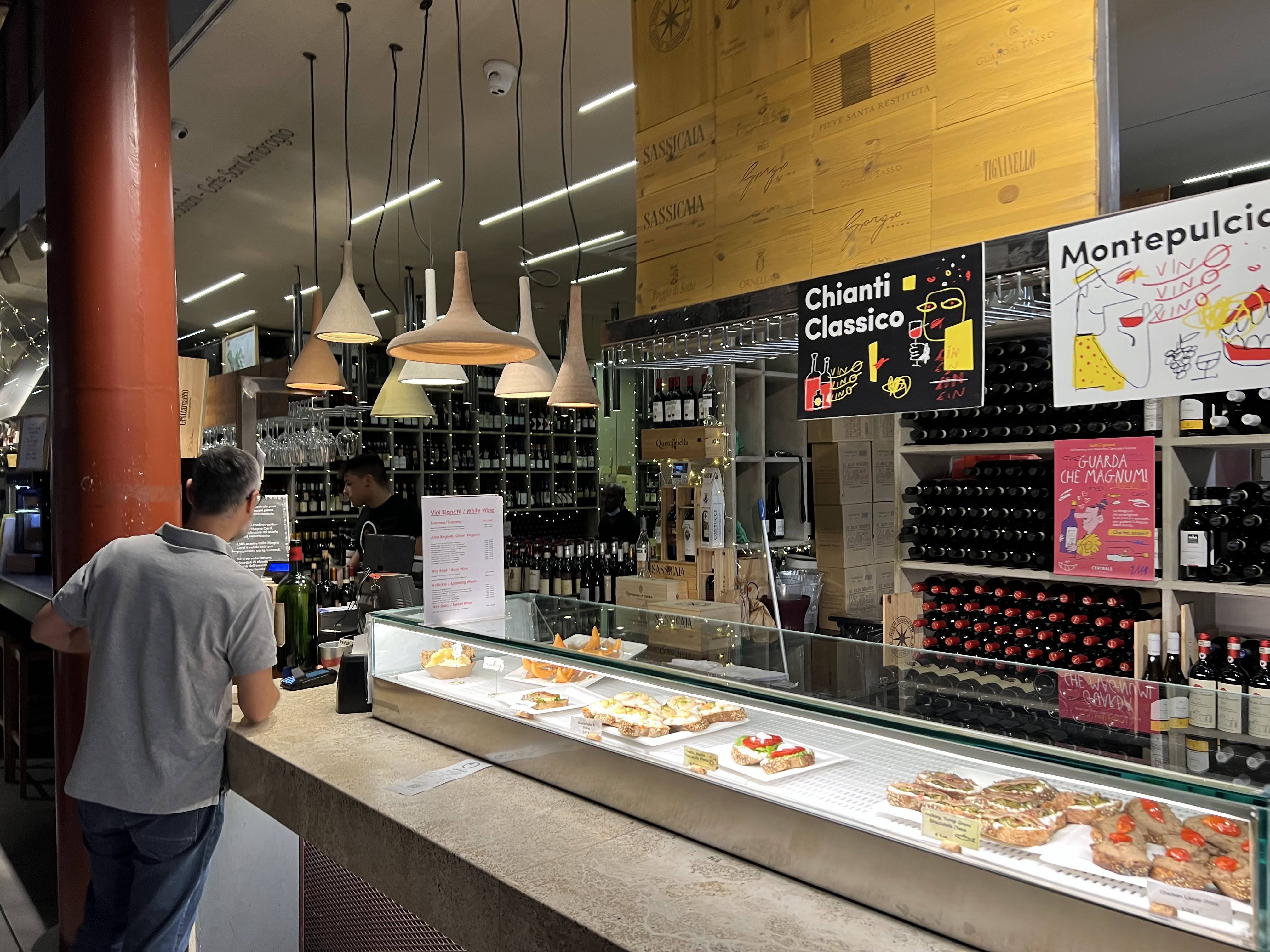
Somehow I didn’t take many pictures of our drive – oh yeah, I was driving … now we’re in Florence, which is much more crowded and has actual streets with cars and scooters and tiny little sidewalks that don’t seem to have been laid with roller suitcases in mind. We were tired and I was starting to get a head cold and I don’t think we were too impressed with Florence the first night. But our hotel was awesome and we found this Central Market (Mercado Centrale) where we bought a variety of things for dinner and took them back to the hotel.

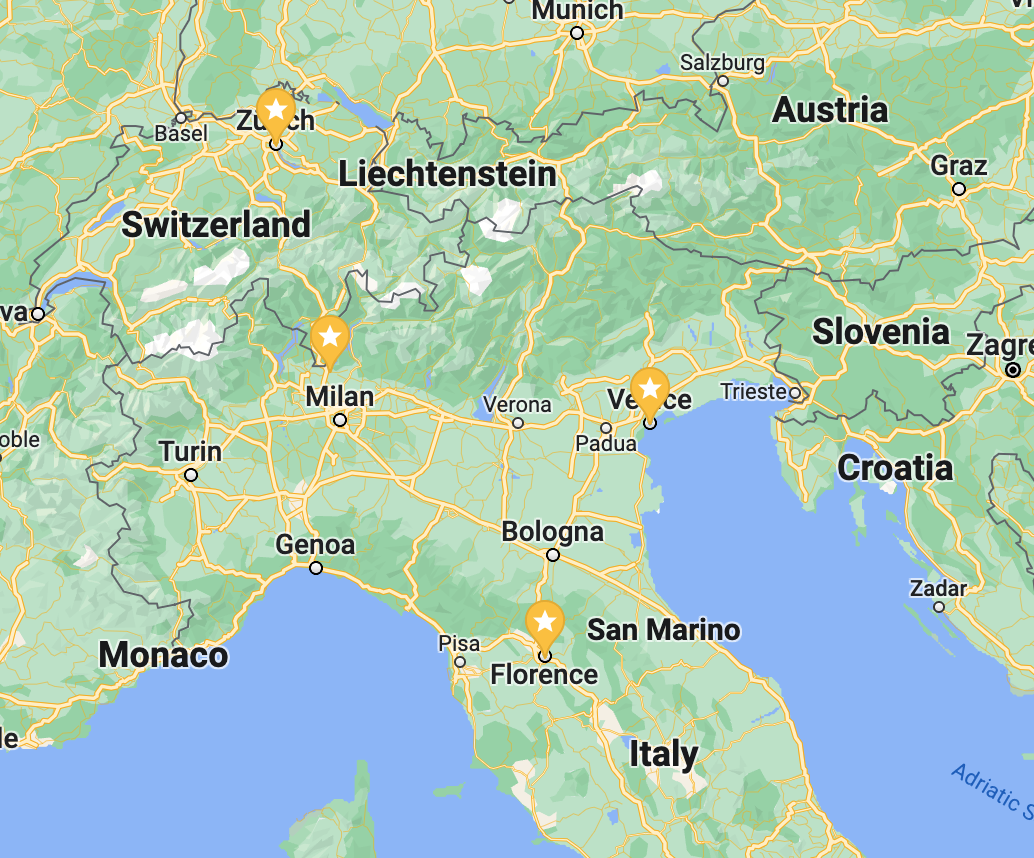
We never ventured much farther north than our hotel, the Corte Guelfa, during our time in Florence, and never farther south than the Ponte Vecchio (described below). However, on the right, you can see the overall proximity of Florence to Venice, and our other two destinations, Como and Zurich.
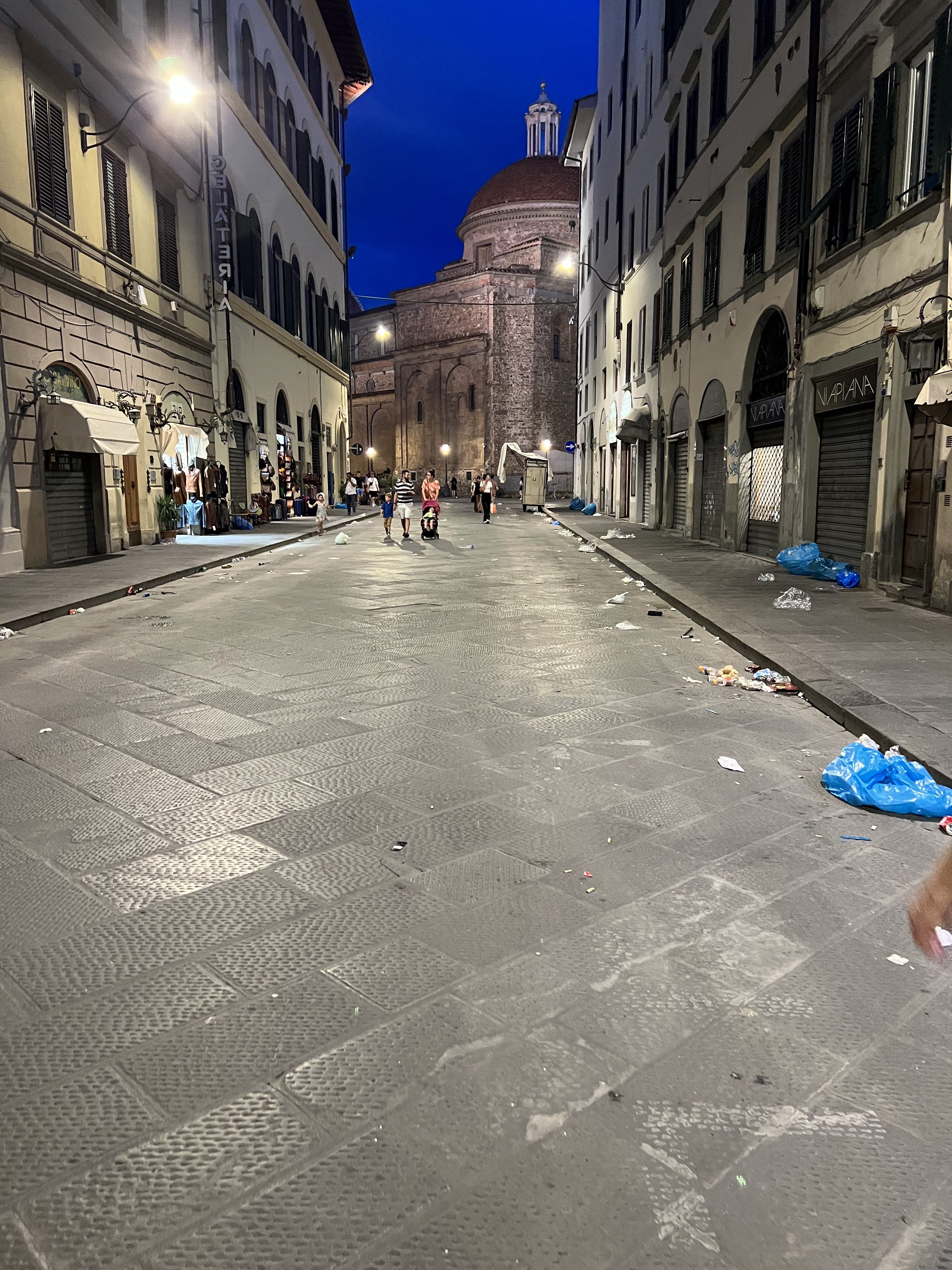
Left: Outside the Mercado Centrale, the street looks dirty and littered but in reality, a few hours before, it was filled with stands loaded with luxury leather goods. The stands were taken down at a certain point and then the next day they were back. I meant to come back in the morning and see if the streets got swept in between, I assume they did.
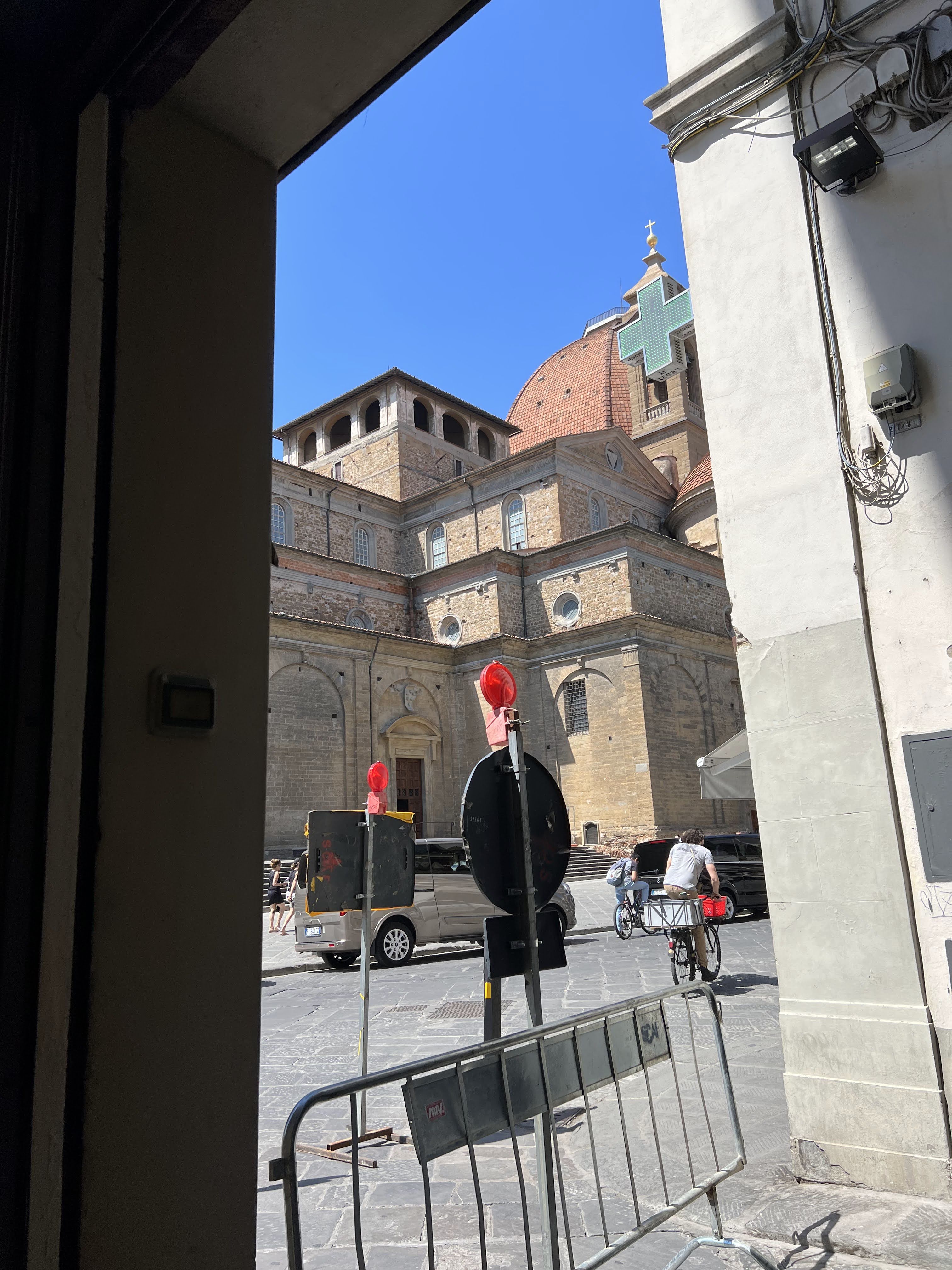
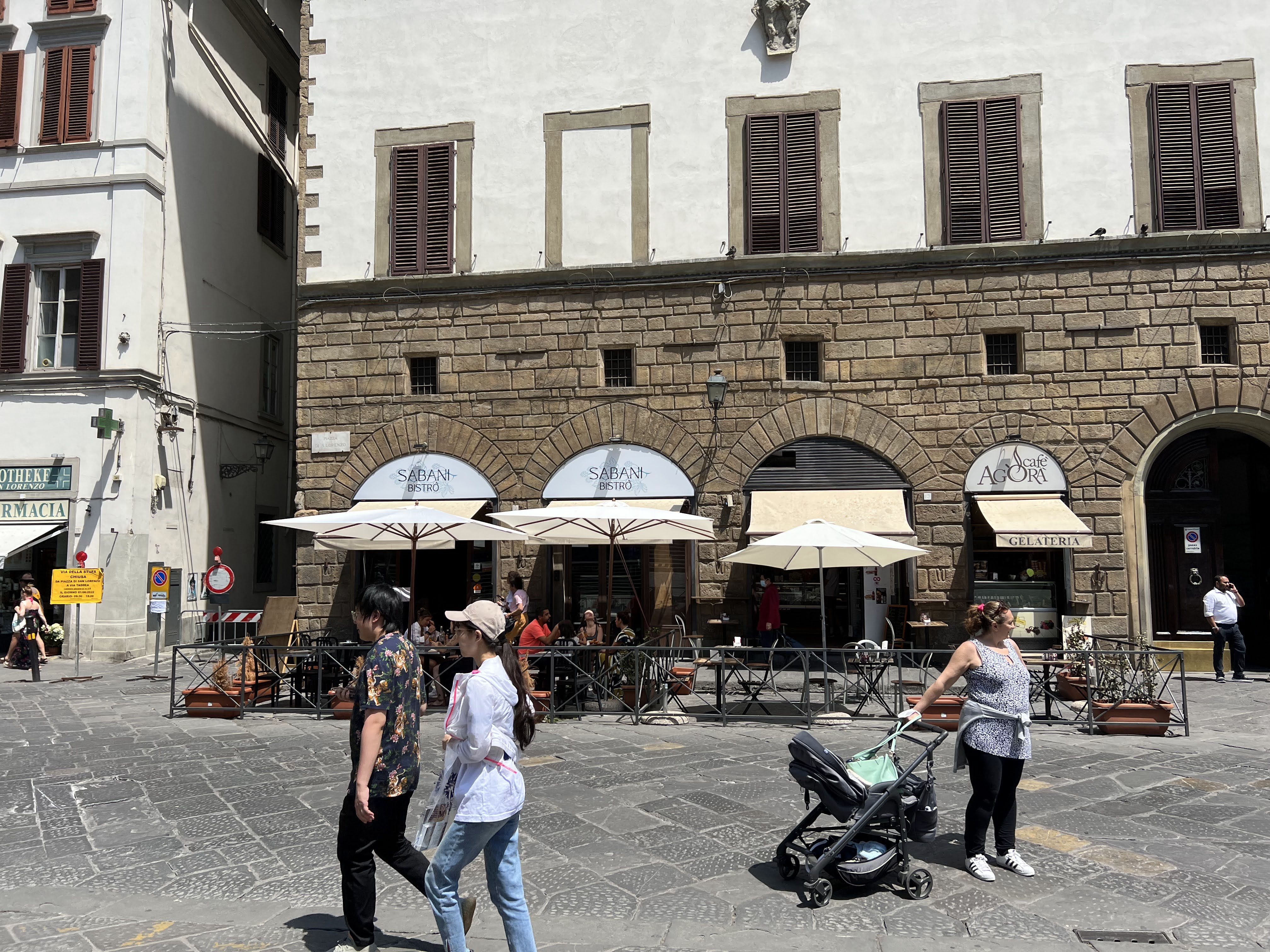
Middle left: Having lunch near the Basilica di San Lorenzo; think of this as the Medici family parish, a bunch of them are buried in there. I really wanted to go inside and look around but we didn’t make it.
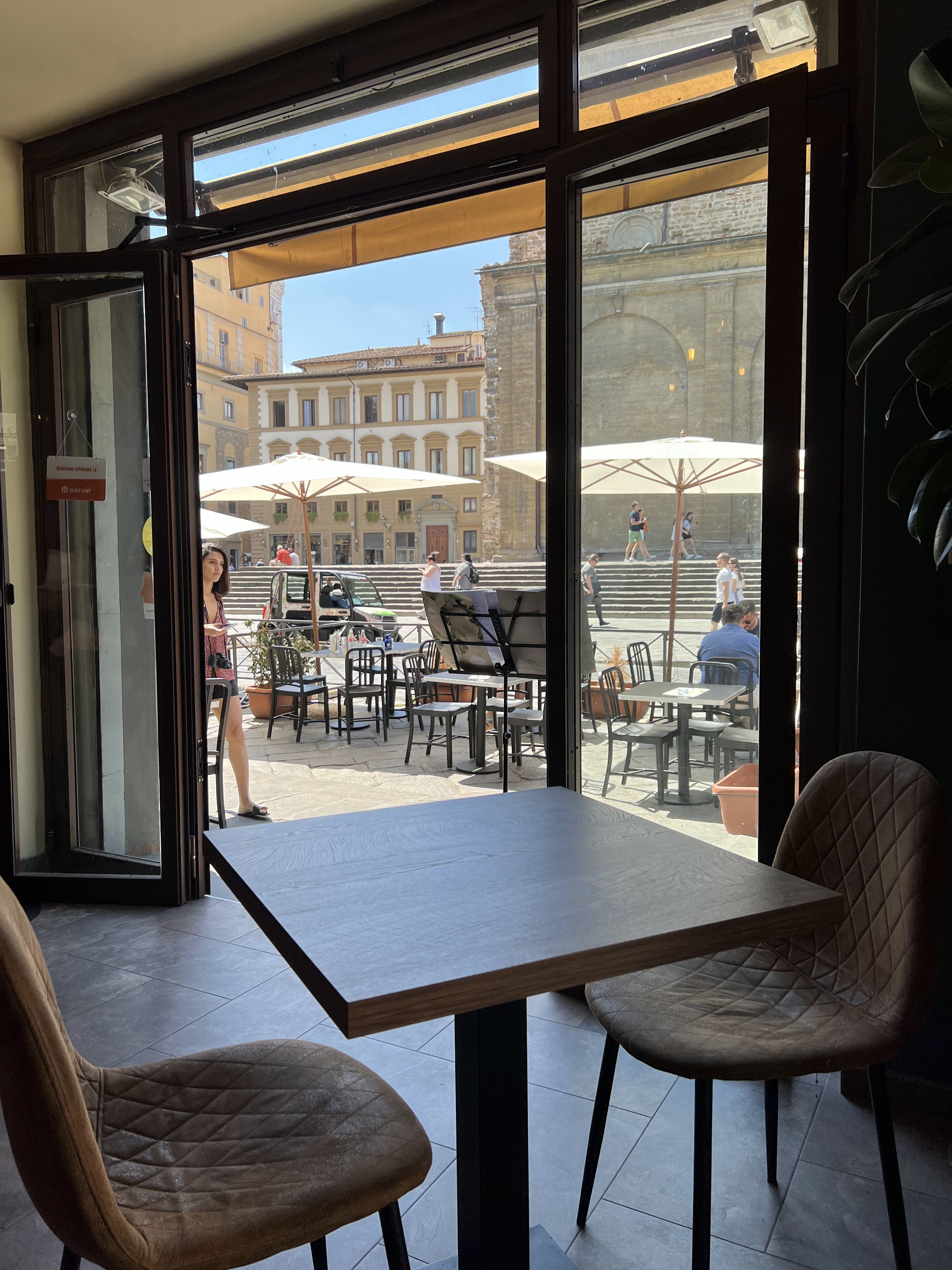
Right: Sabani Bistro, where we had lunch near San Lorenzo. I think I also bought some stuff at the Farmacia next door.

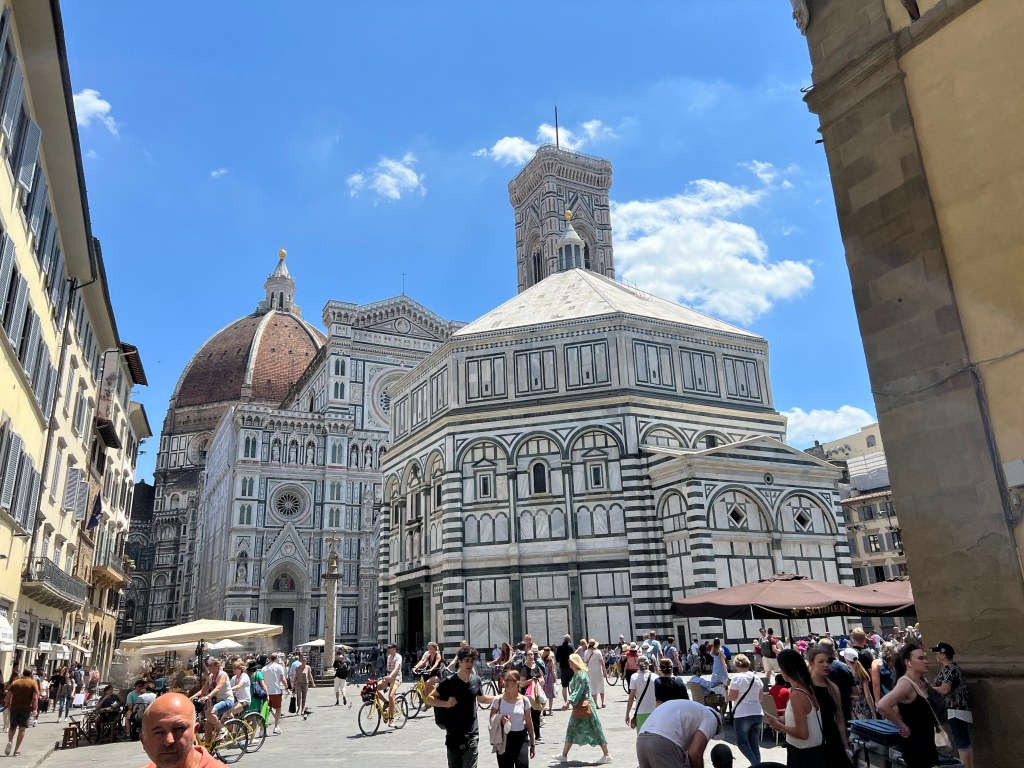
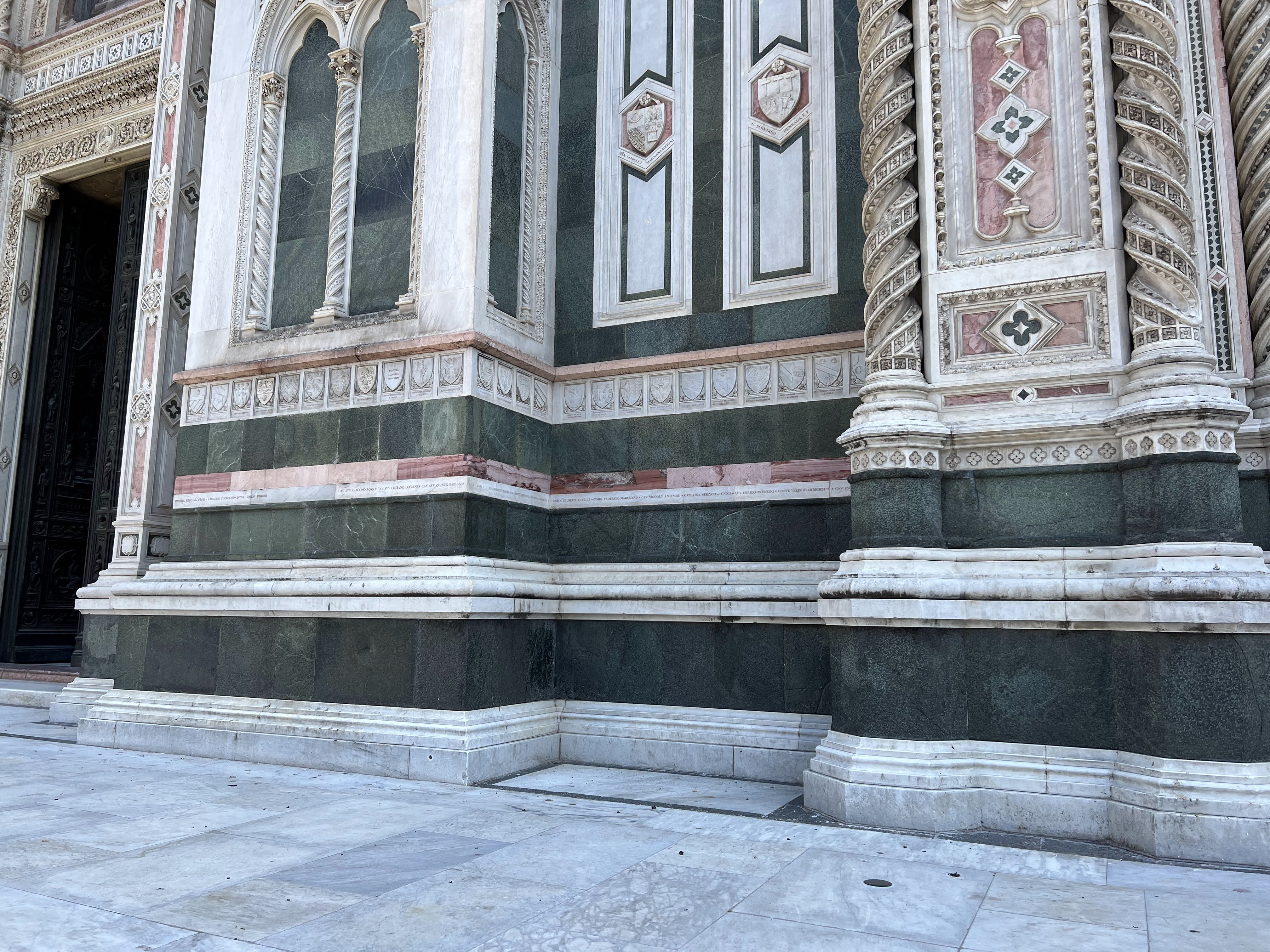
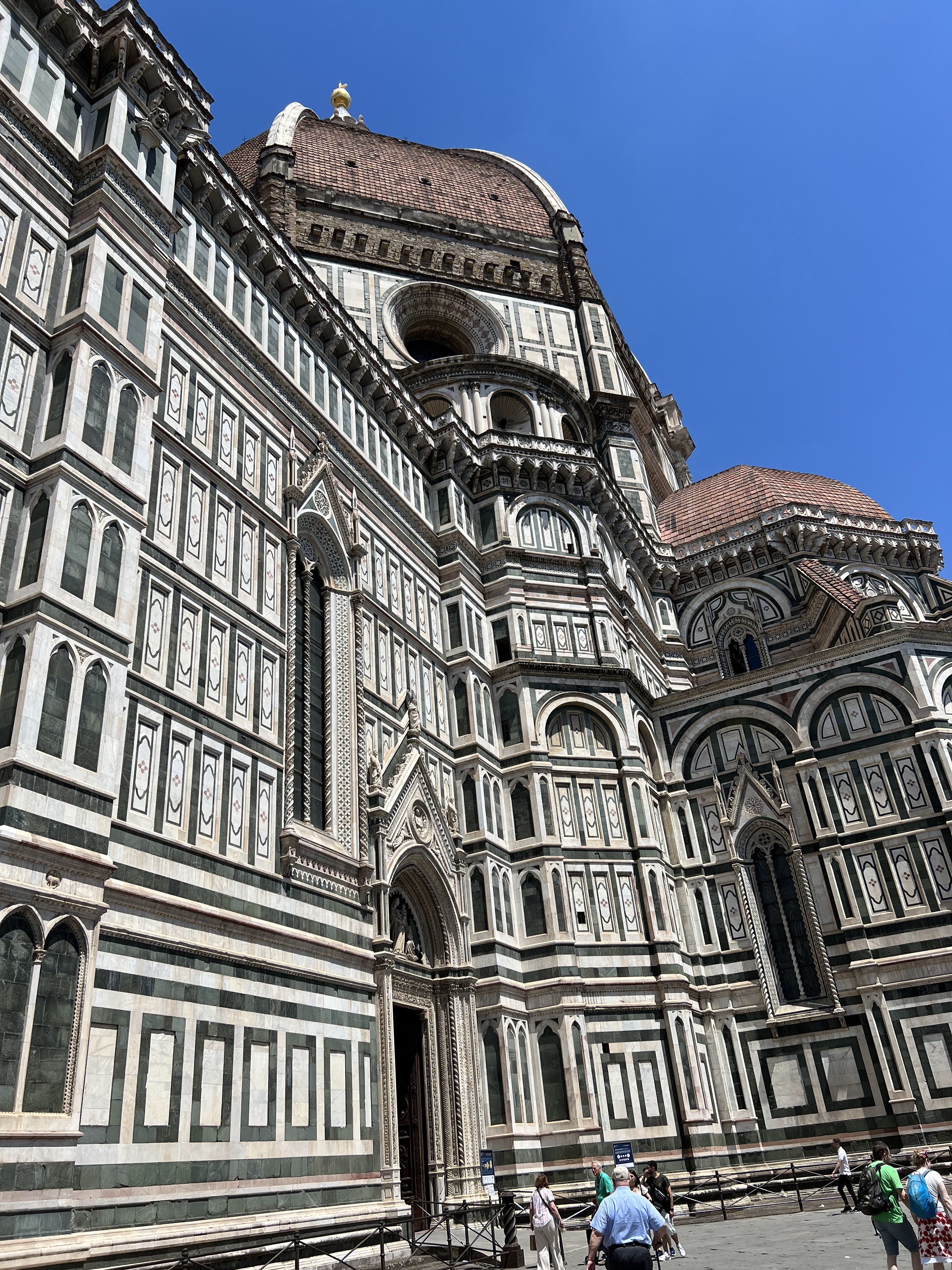
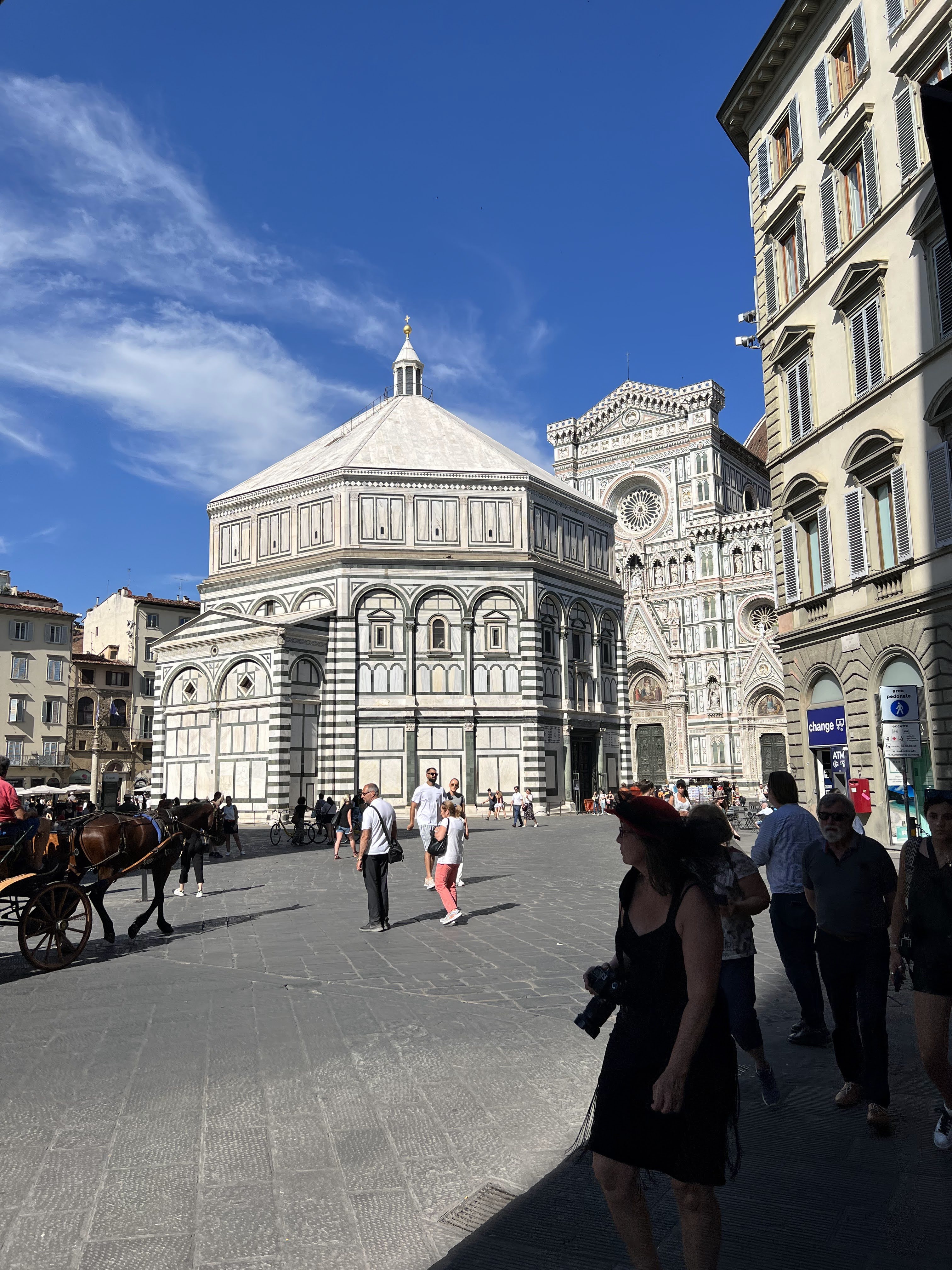
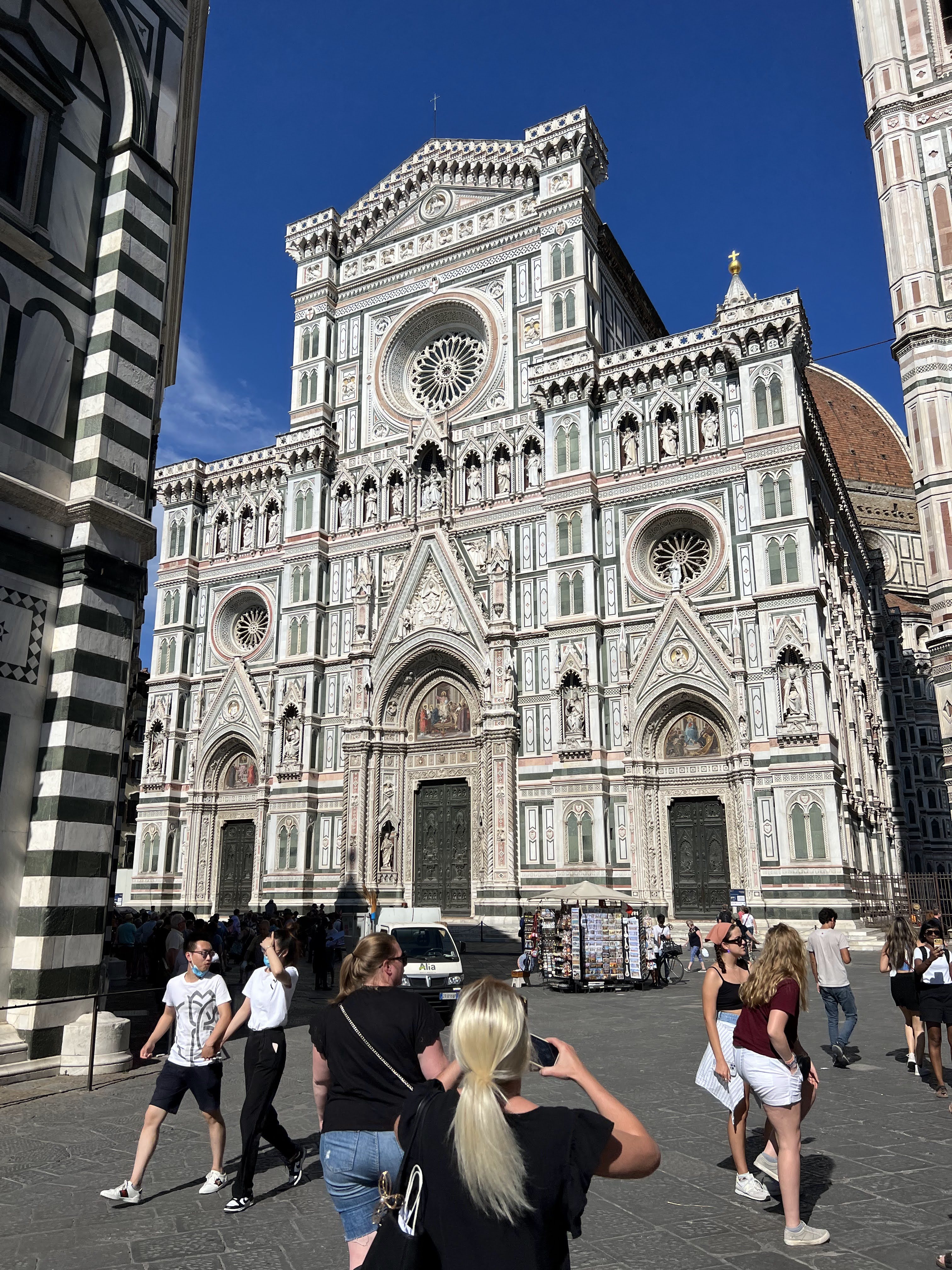
Bottom: First shot of the Santa Maria della Fiore complex. In the foreground is the Baptisteria which was like a little basilica dedicated to Saint John.
From Wikipedia: “The Baptistery is one of the oldest buildings in the city, constructed between 1059 and 1128 in the Florentine Romanesque style. Although the Florentine style did not spread across Italy as widely as the Pisan Romanesque or Lombard styles, its influence was decisive for the subsequent development of architecture, as it formed the basis from which Francesco Talenti, Leon Battista Alberti, Filippo Brunelleschi, and other master architects of their time created Renaissance architecture. In the case of the Florentine Romanesque, one can speak of “proto-renaissance”, but at the same time an extreme survival of the late antique architectural tradition in Italy, as in the cases of the Basilica of San Salvatore, Spoleto, the Temple of Clitumnus, and the church of Sant’Alessandro in Lucca.
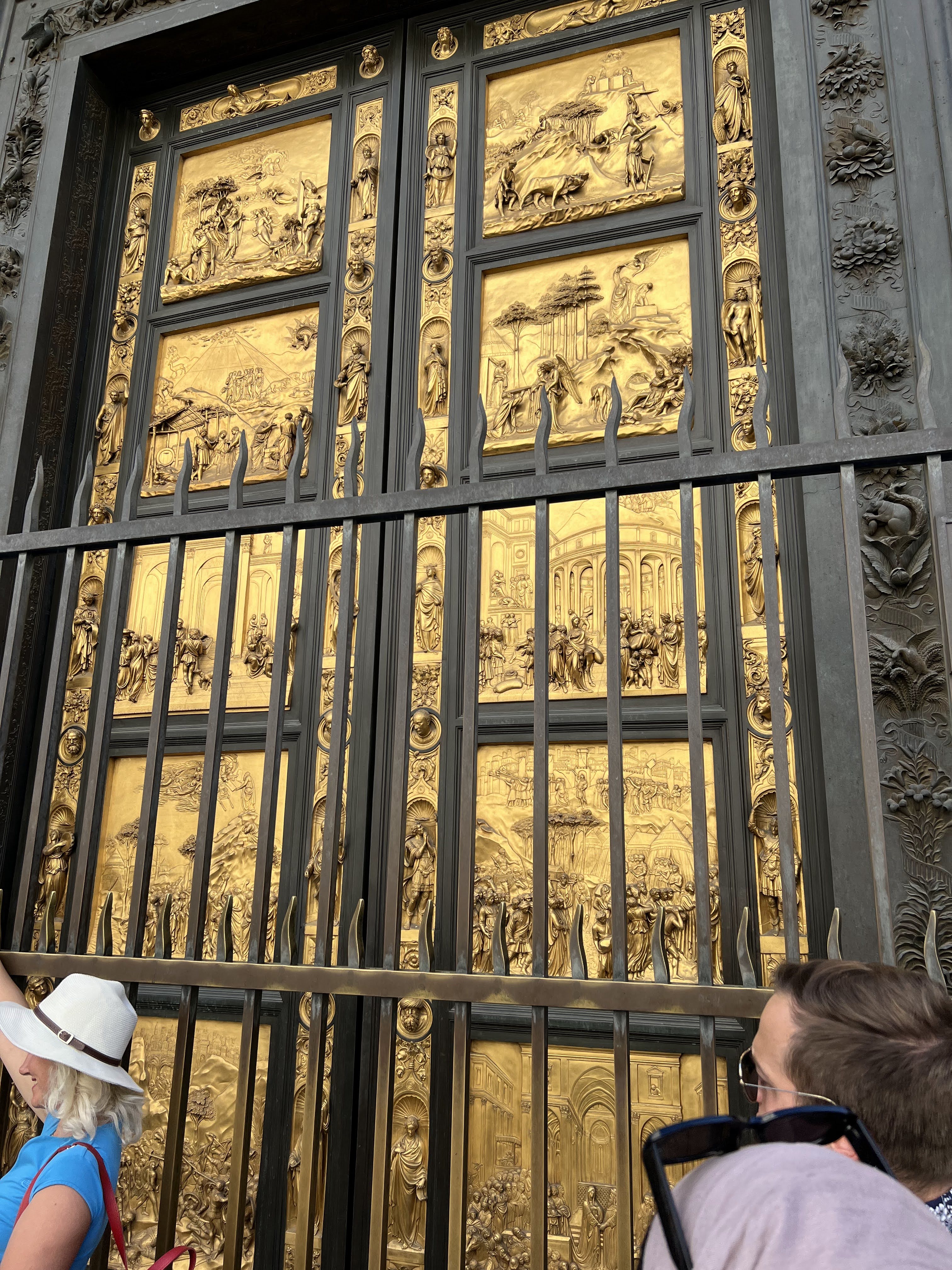
The Baptistery is renowned for its three sets of artistically important bronze doors with relief sculptures. The south doors were created by Andrea Pisano and the north and east doors by Lorenzo Ghiberti. Michelangelo dubbed the east doors the Gates of Paradise.
The Italian poet Dante Alighieri and many other notable Renaissance figures, including members of the Medici family, were baptized in this baptistery.
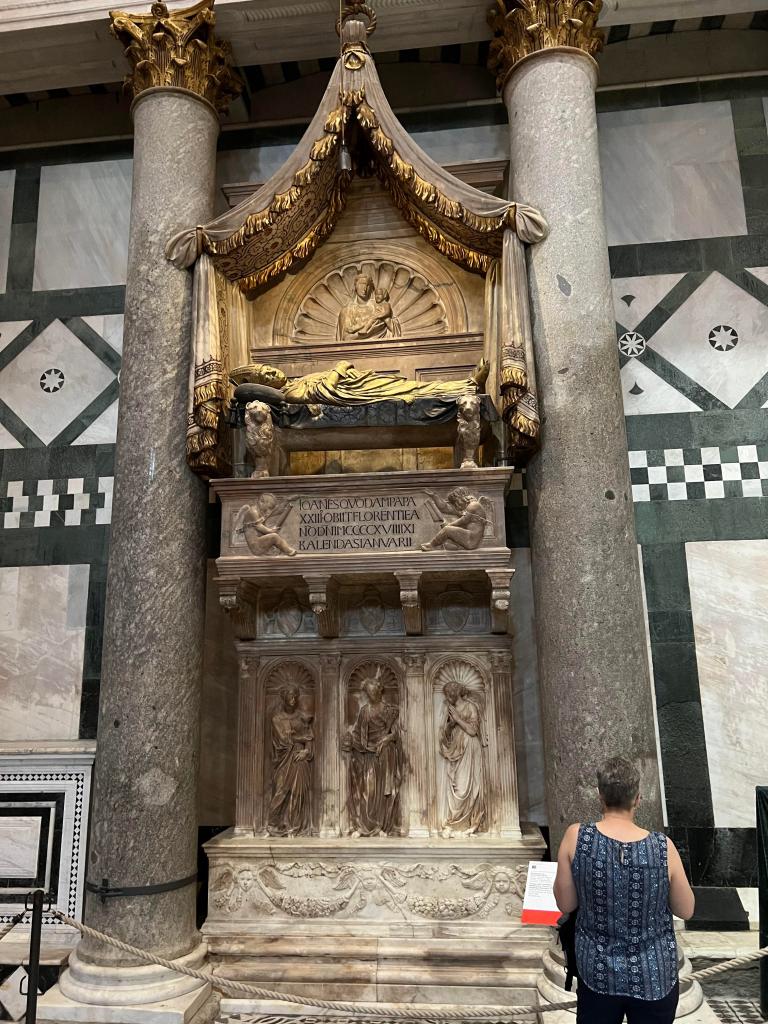
The building contains the monumental tomb of Antipope John XXIII, by Donatello.”
Top Middle: Tomb of Antipope John XXIII. I think the Medicis supported him.
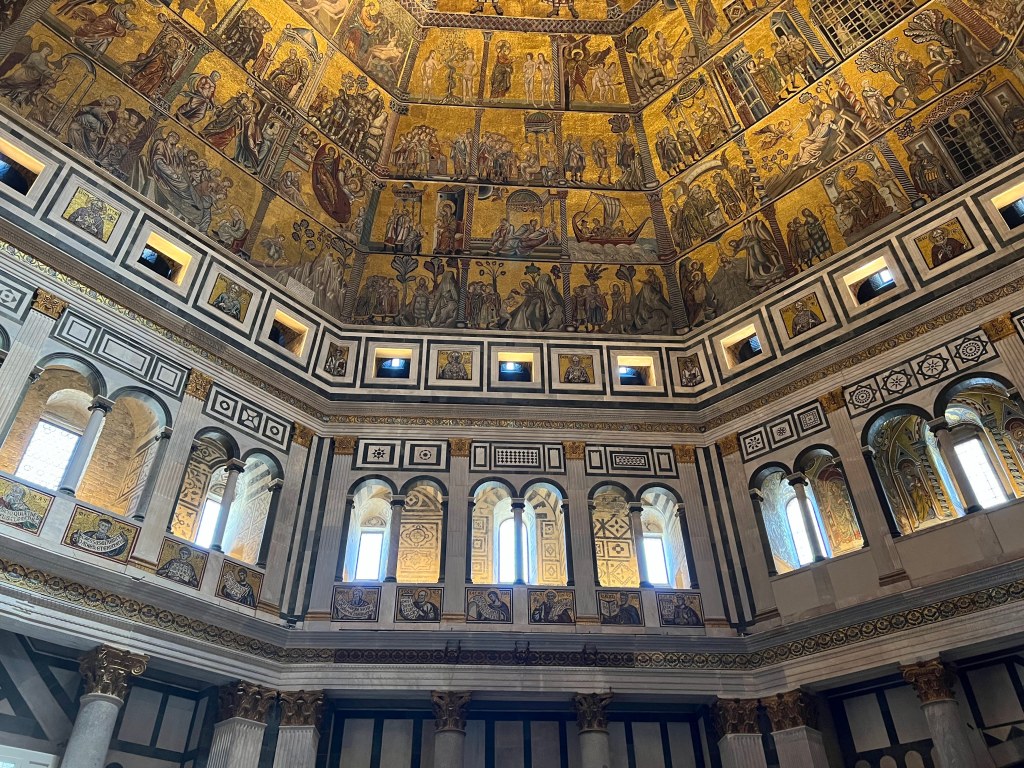
Top Right: Ceiling of the Baptistry.
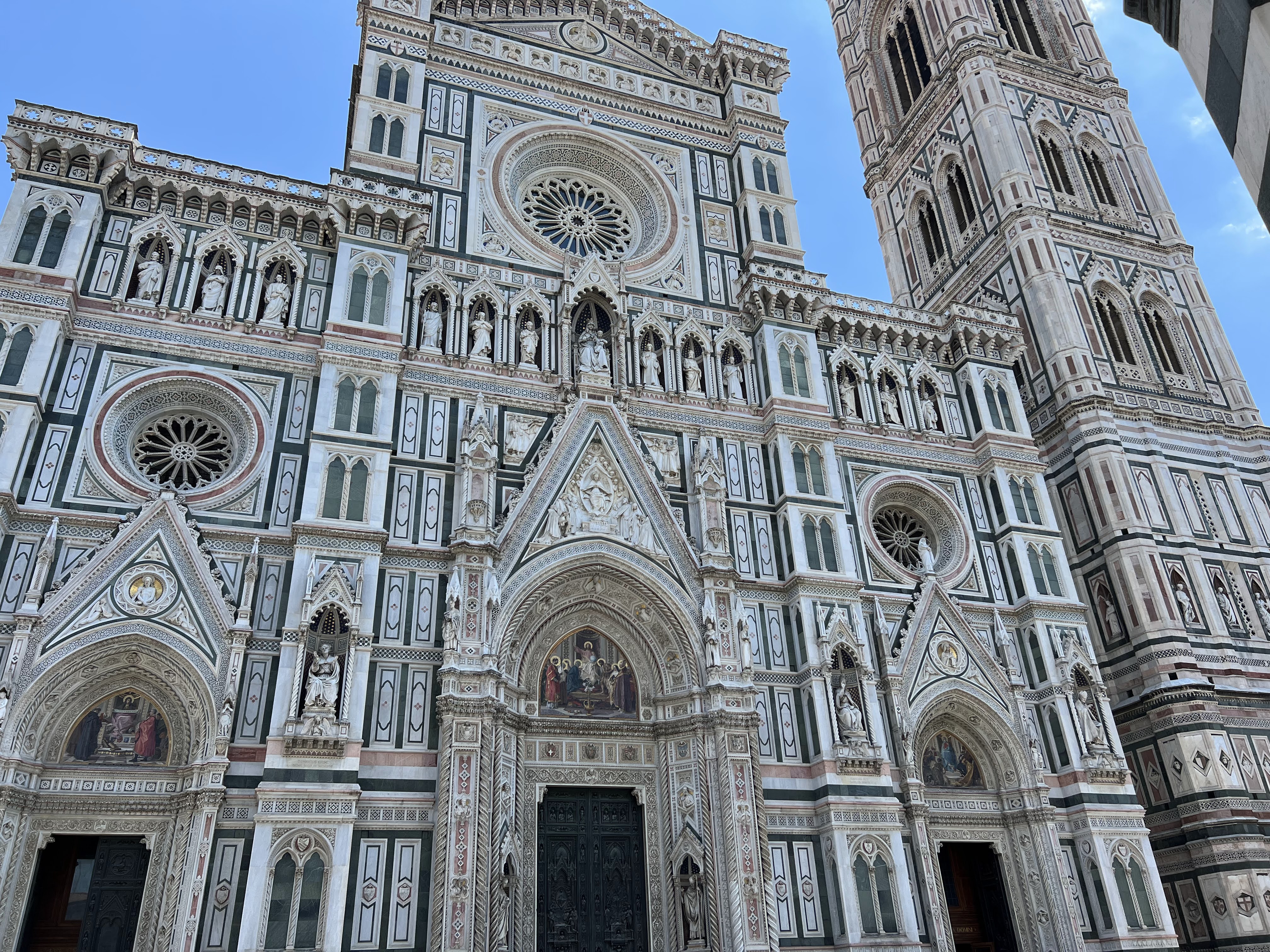
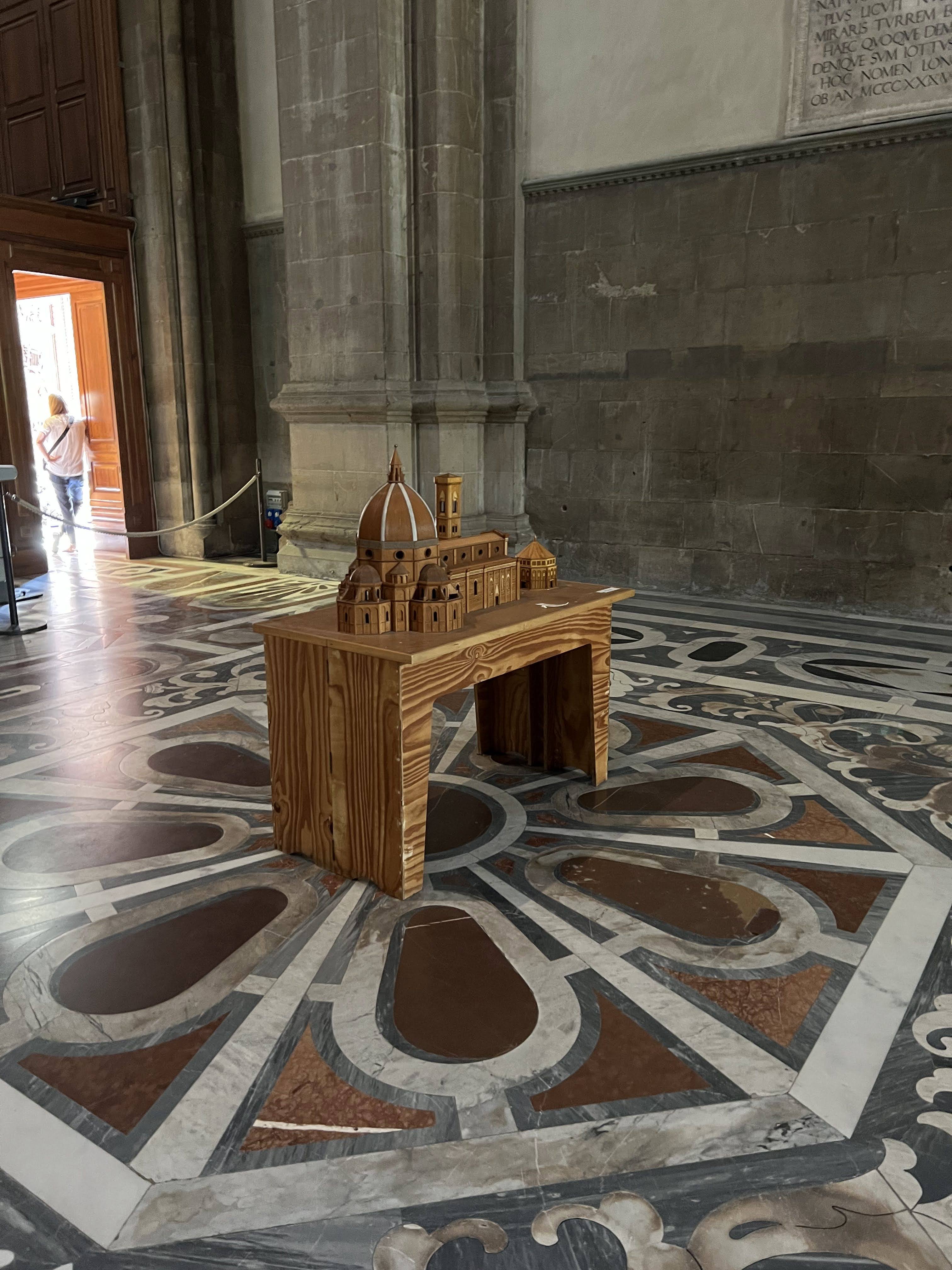
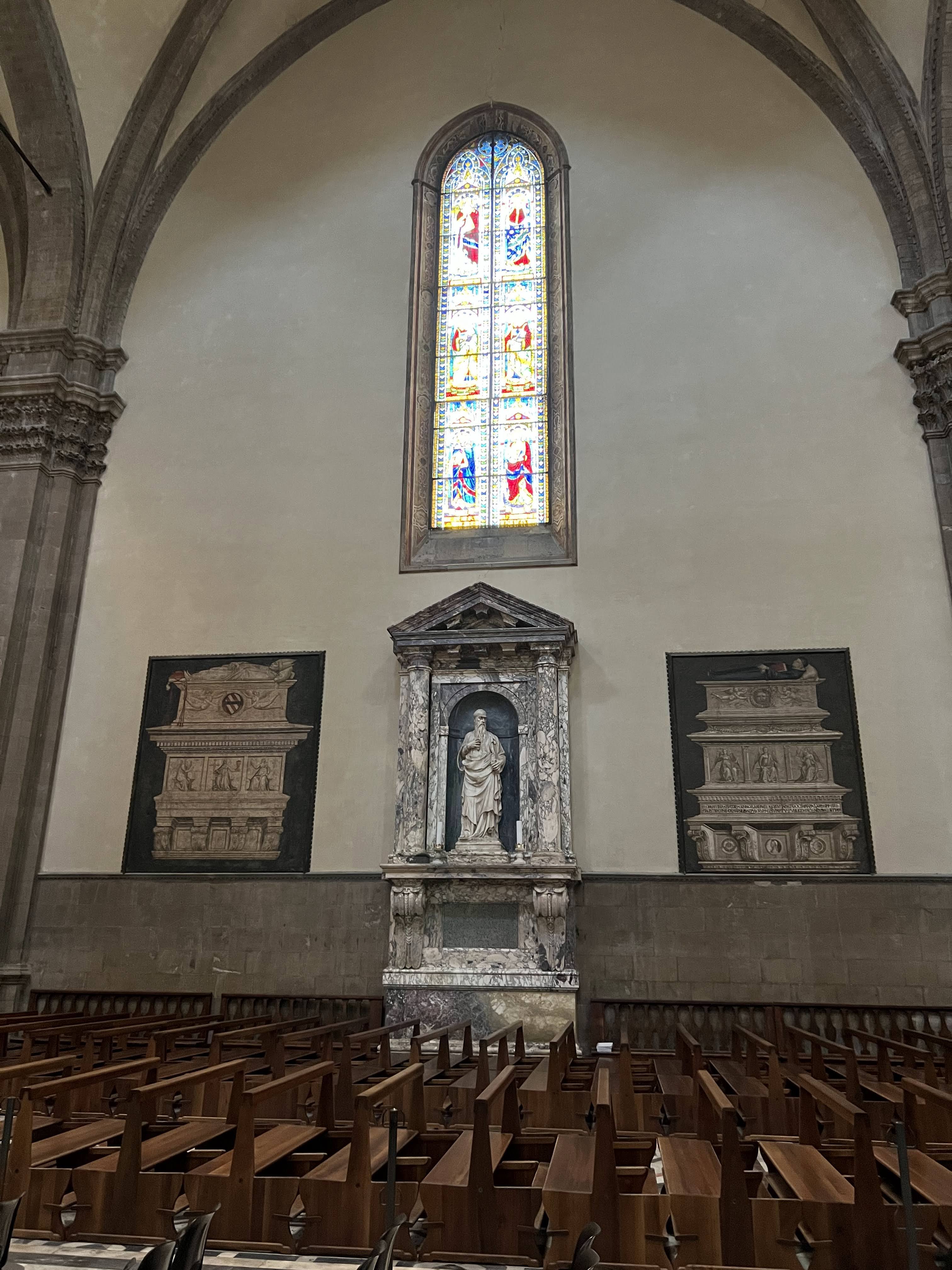
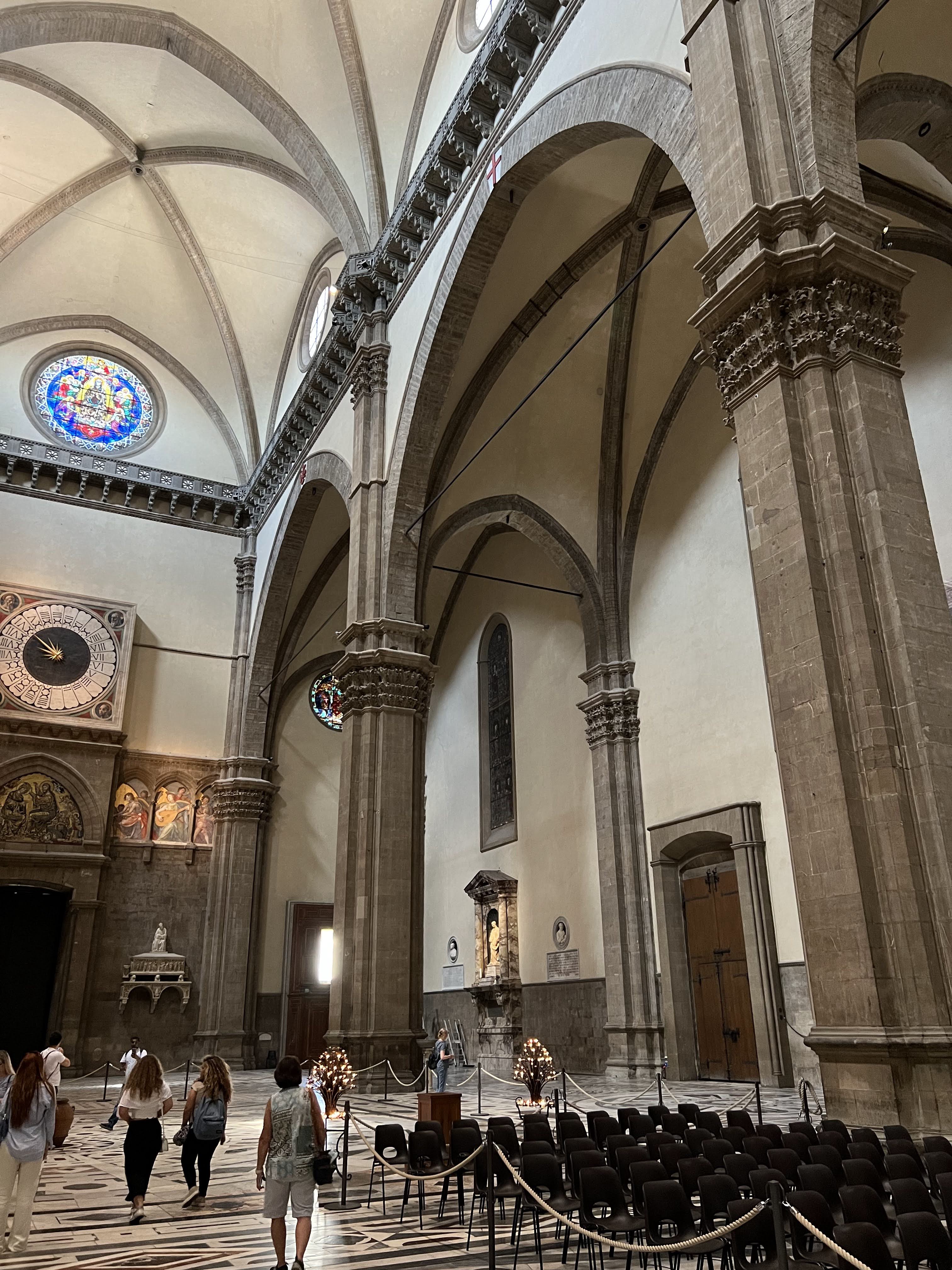
Unlike a lot of Gothic cathedrals, with tons of columns and a very busy look, in Italian Renaissance architecture there was an emphasis on the design of large open spaces – the guys who designed these things were brilliant, look at the space between the columns (right).
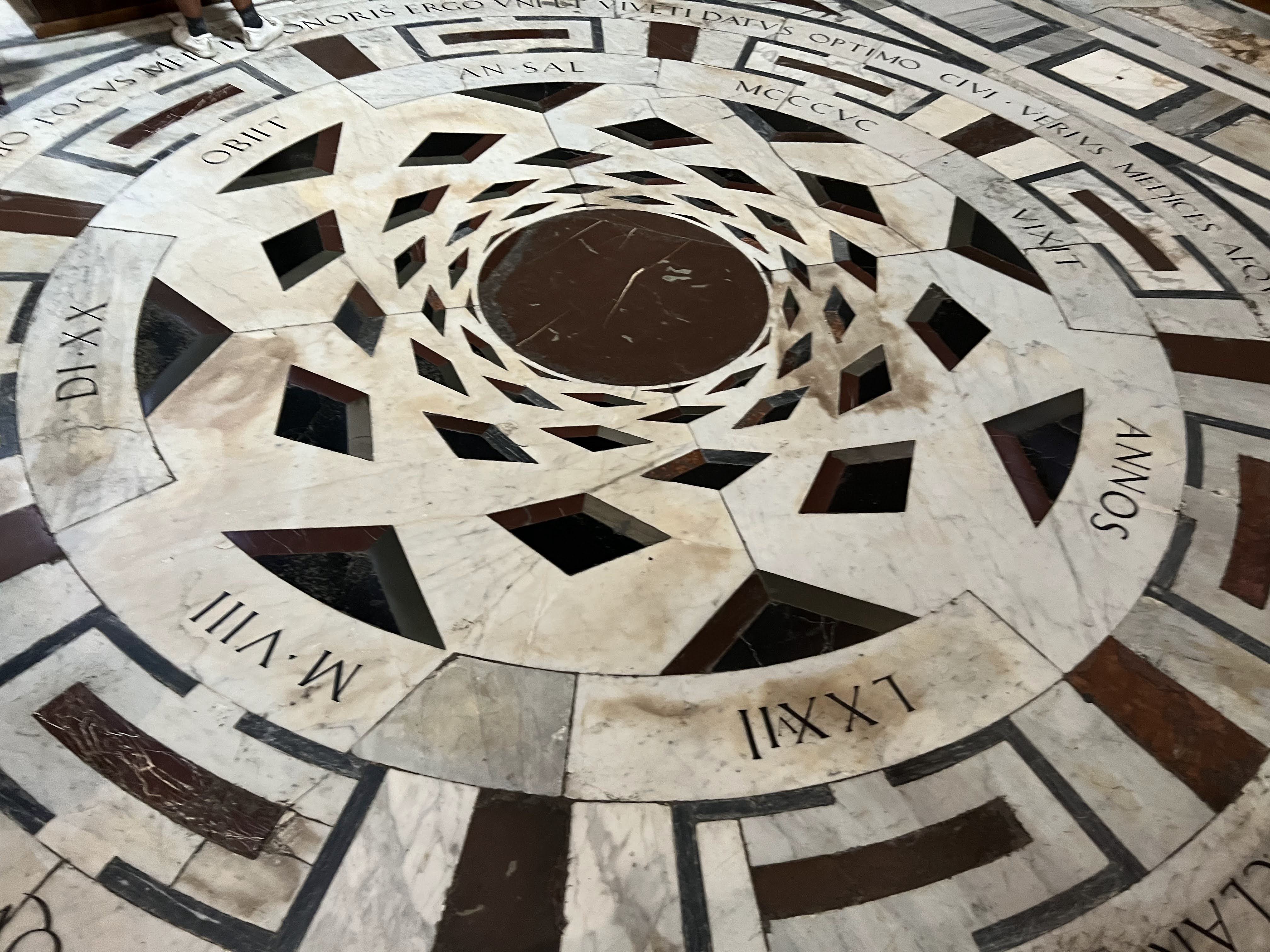
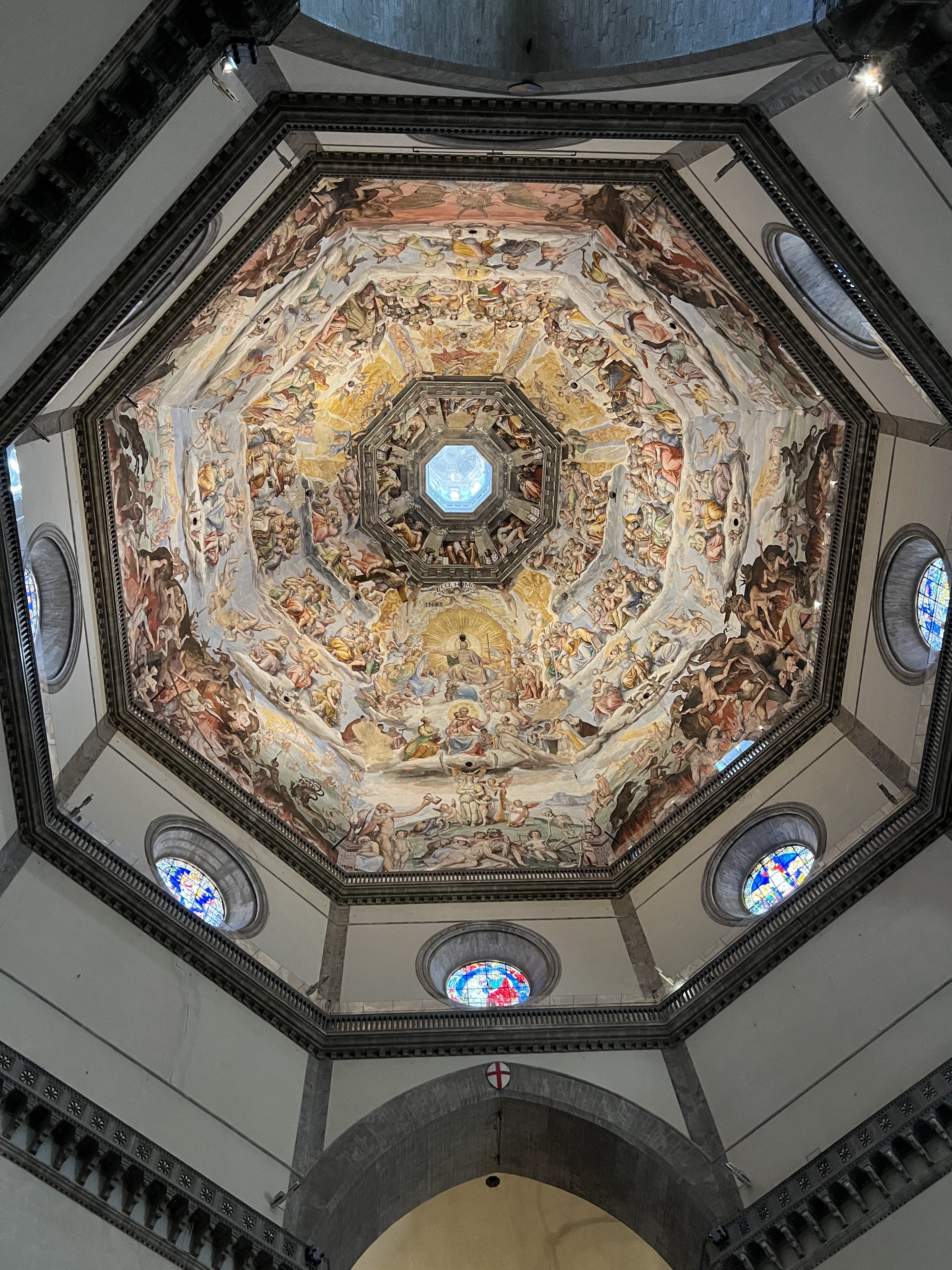
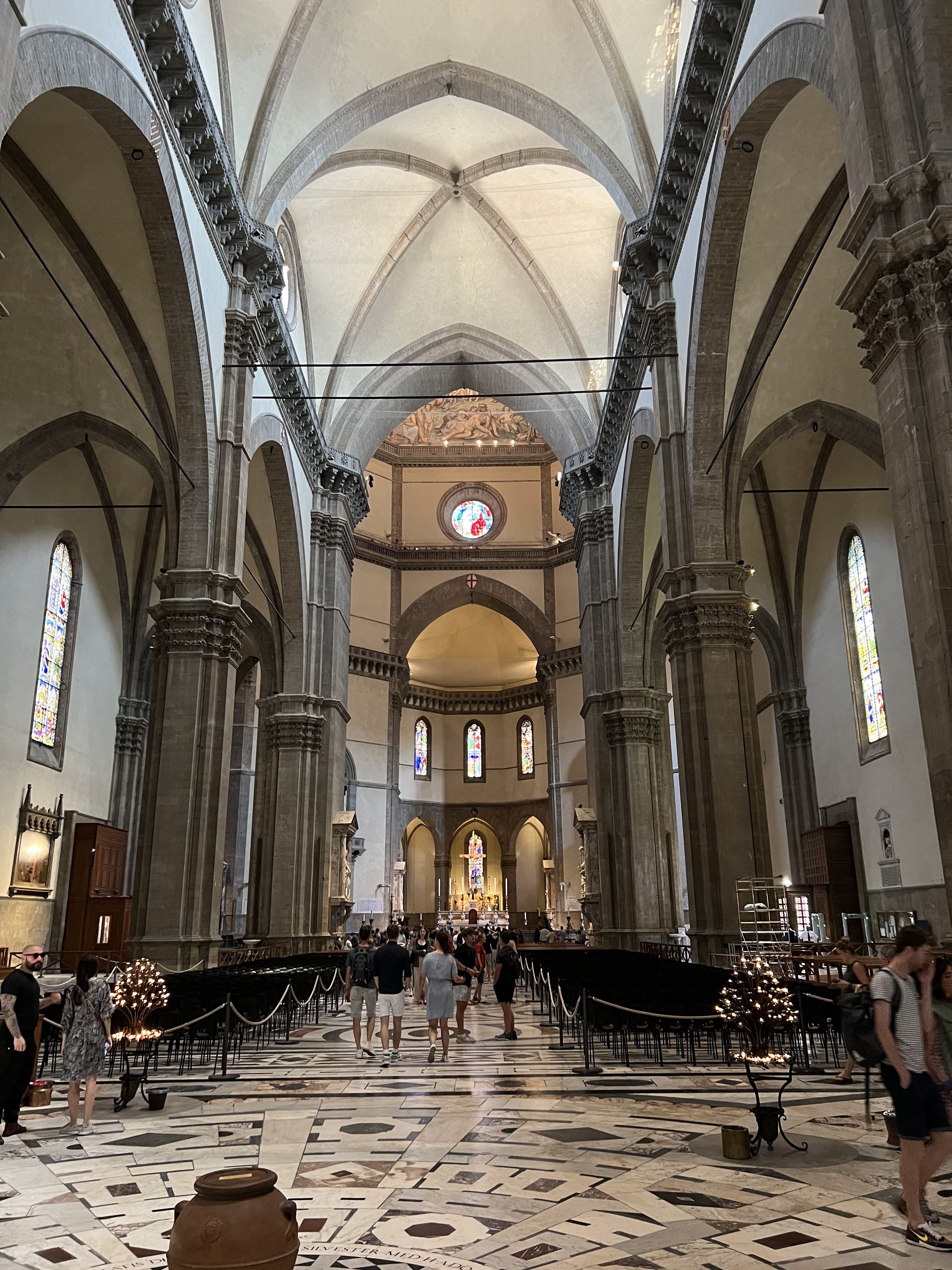
Top right: Ceiling of Il Duomo, by Bruneschelli.
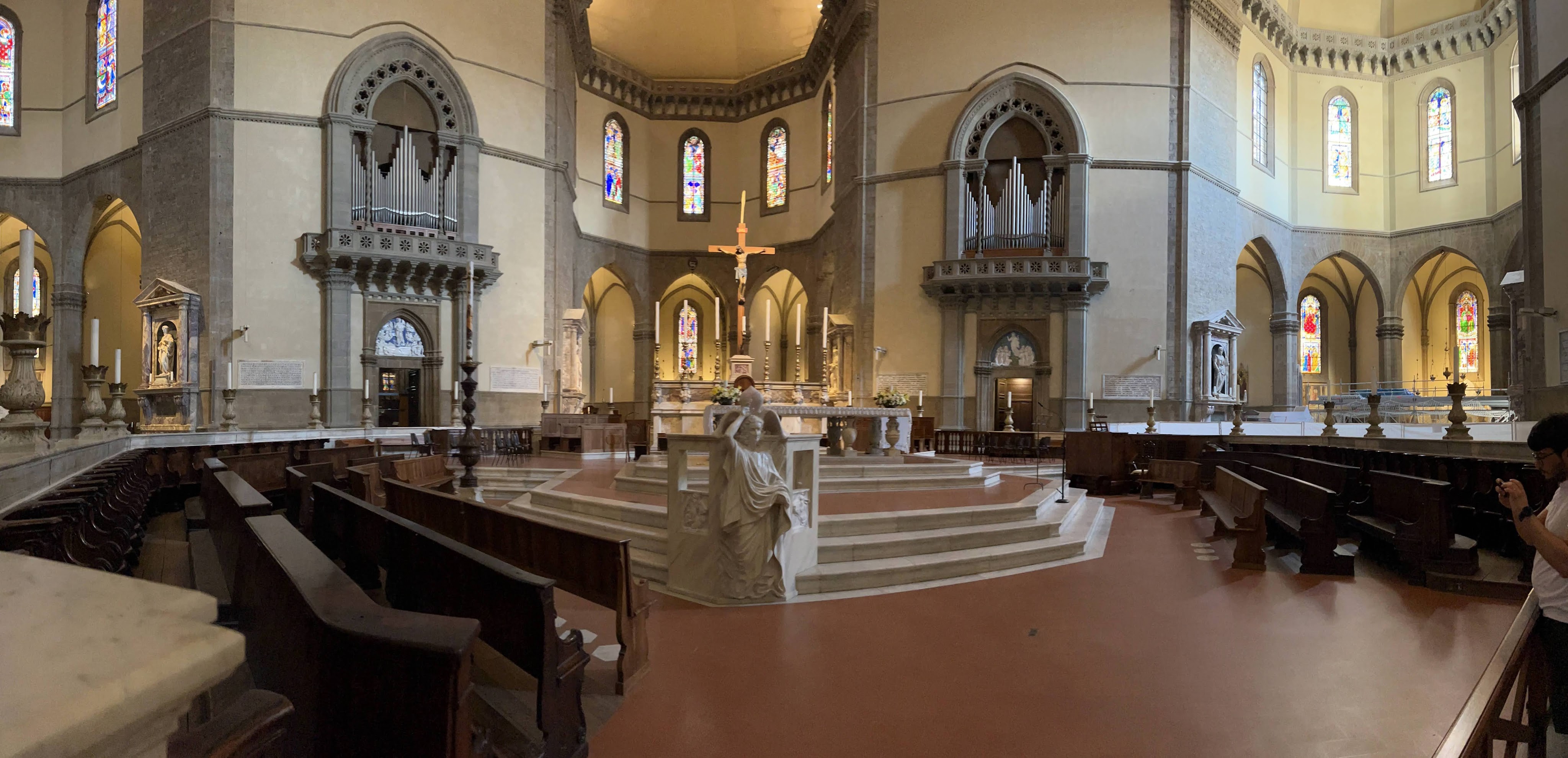
Middle: Panoramic shot that tries to capture all three naves at the end of the church, all tied together by the dome.
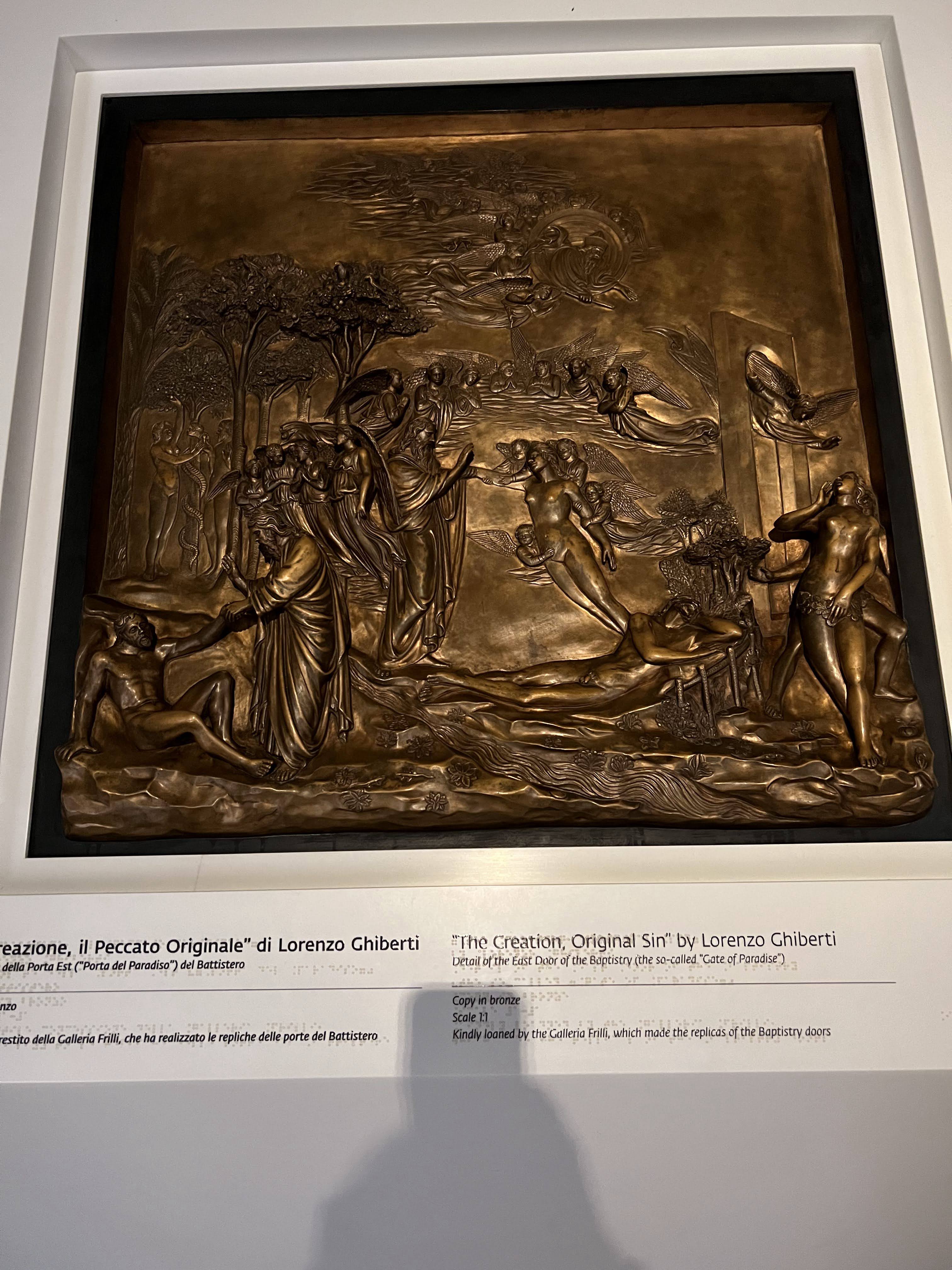
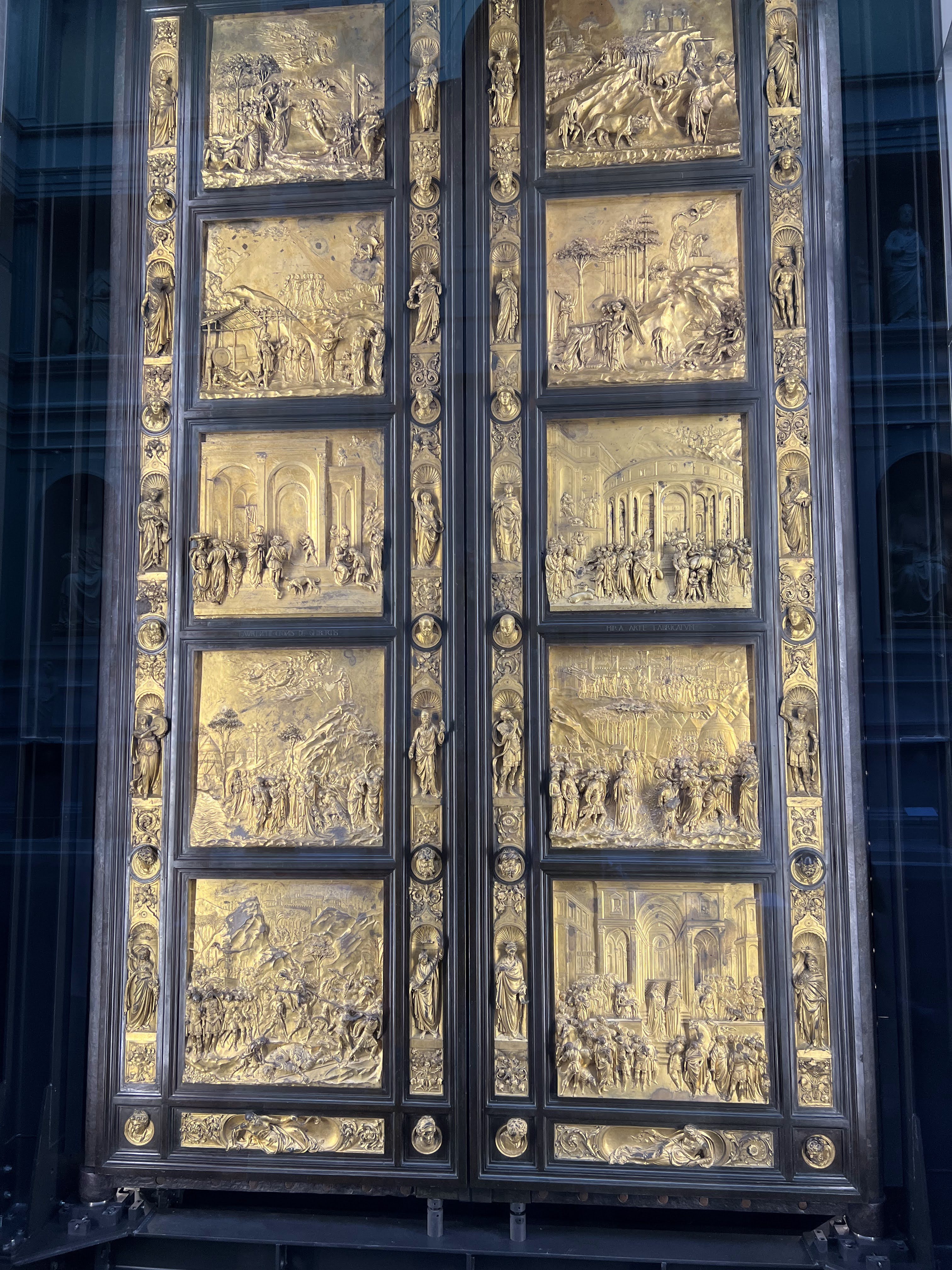

Top left: A bronze copy of one of the many panels on one of the six doors of the Baptistry, this one of The Fall. Stunning detail. This is inside the Museo dell’Opera del Duomo di Firenze, which is adjacent to the piazza complex (essentially just east of Il Duomo)
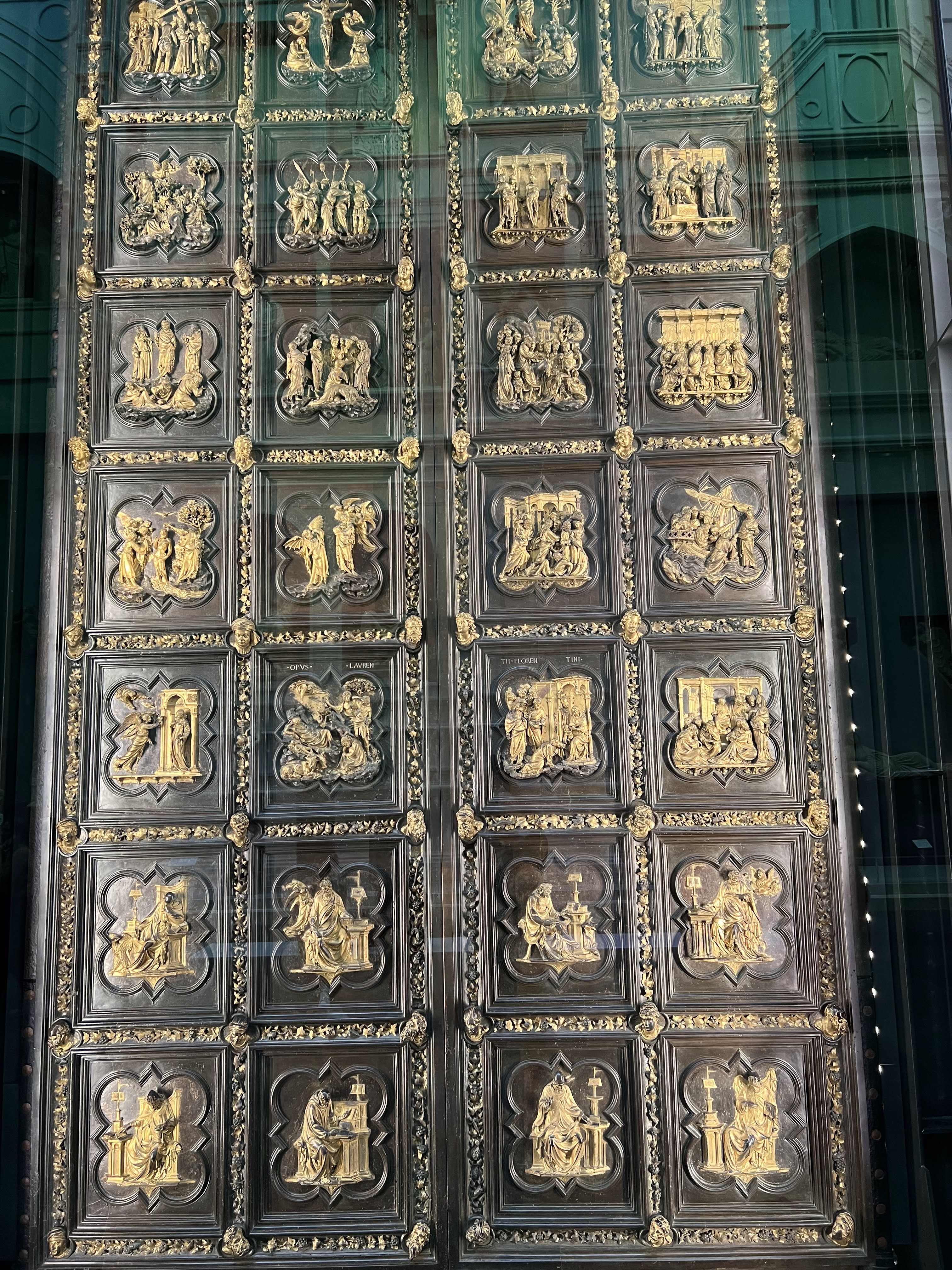
Top middle: One of the original sets of doors to the Baptistry, they took them off and put them in the museum and hung replicas outside.
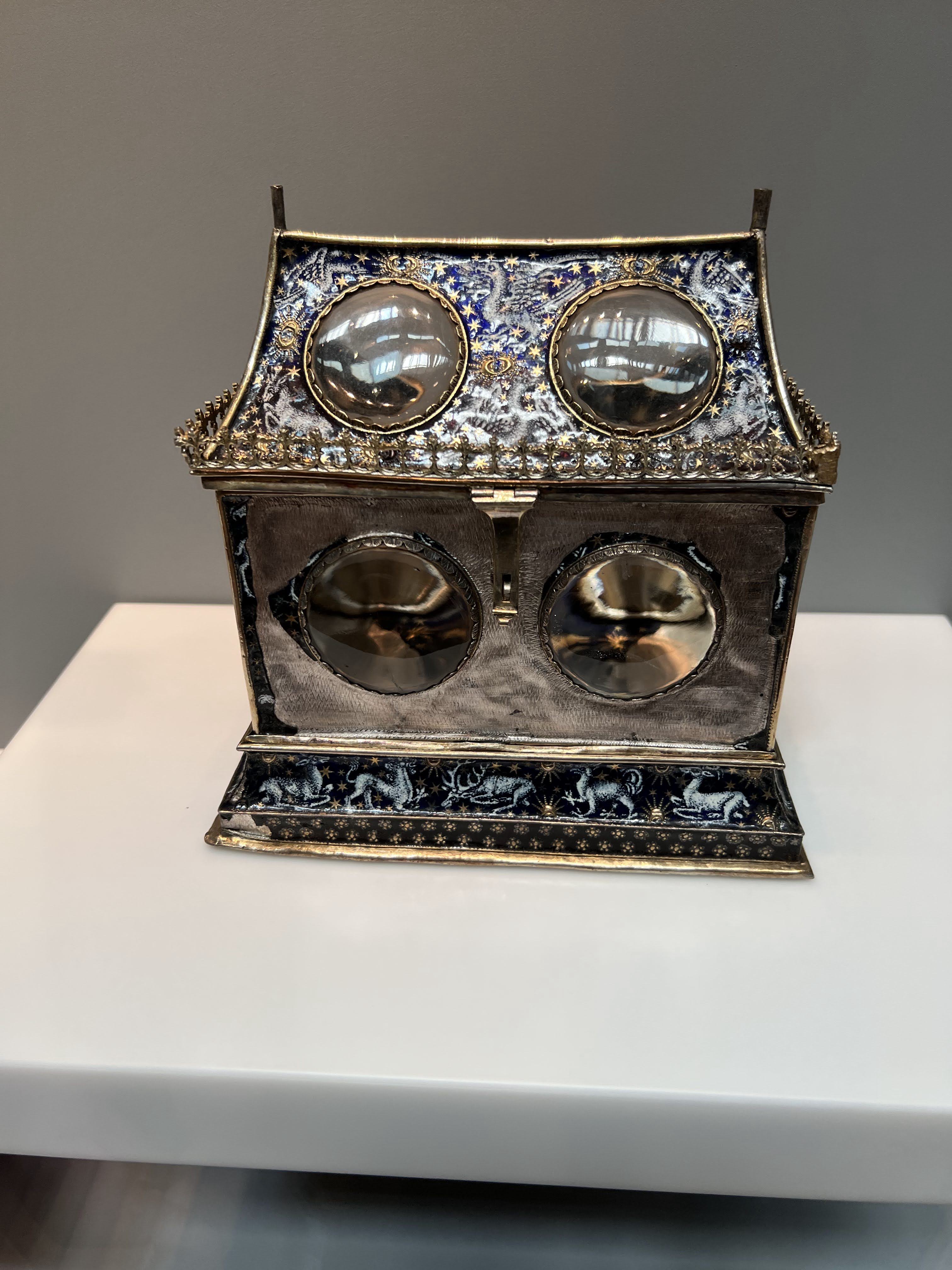
Bottom right: Reliquaries were really a thing back then.
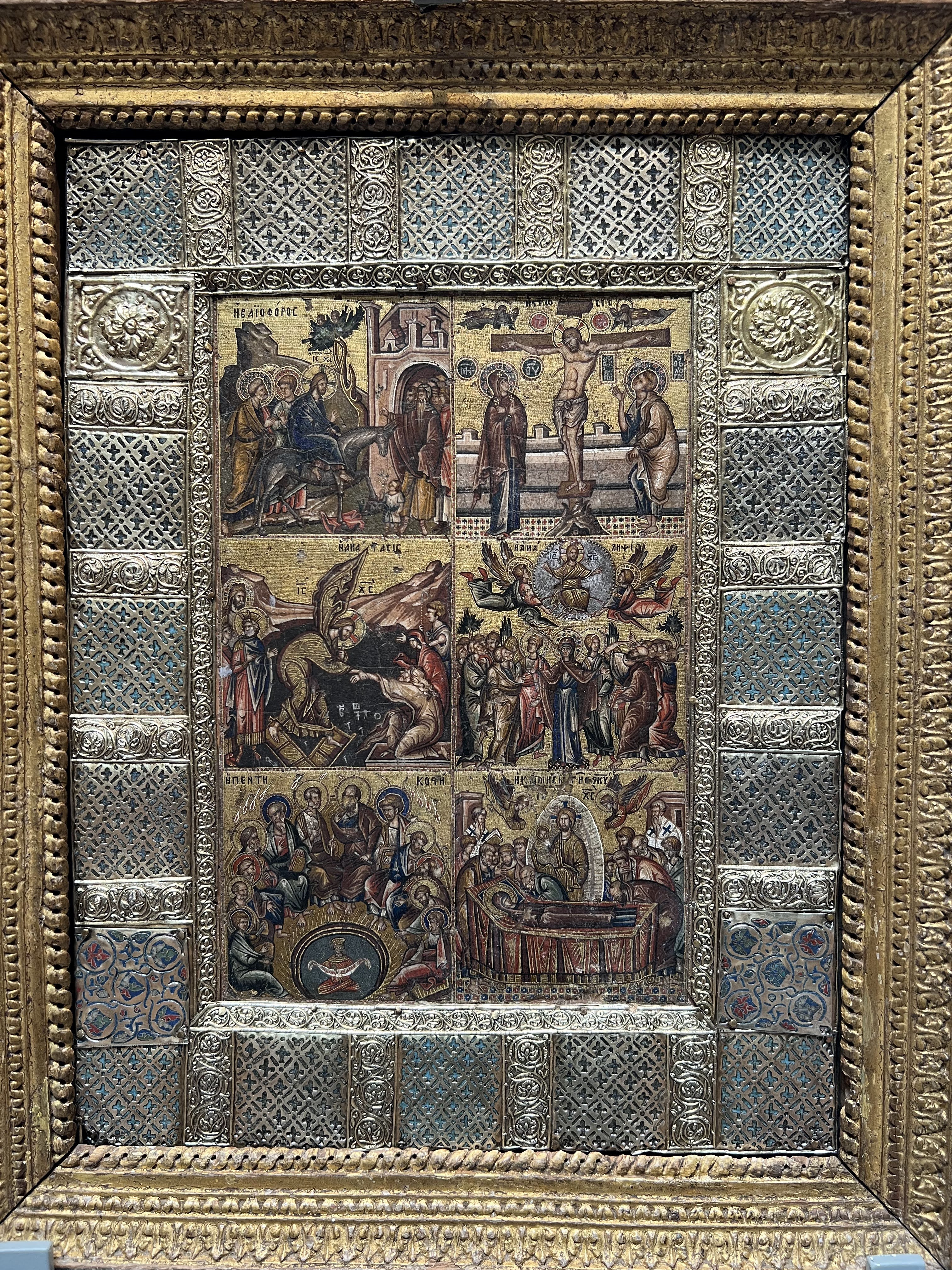
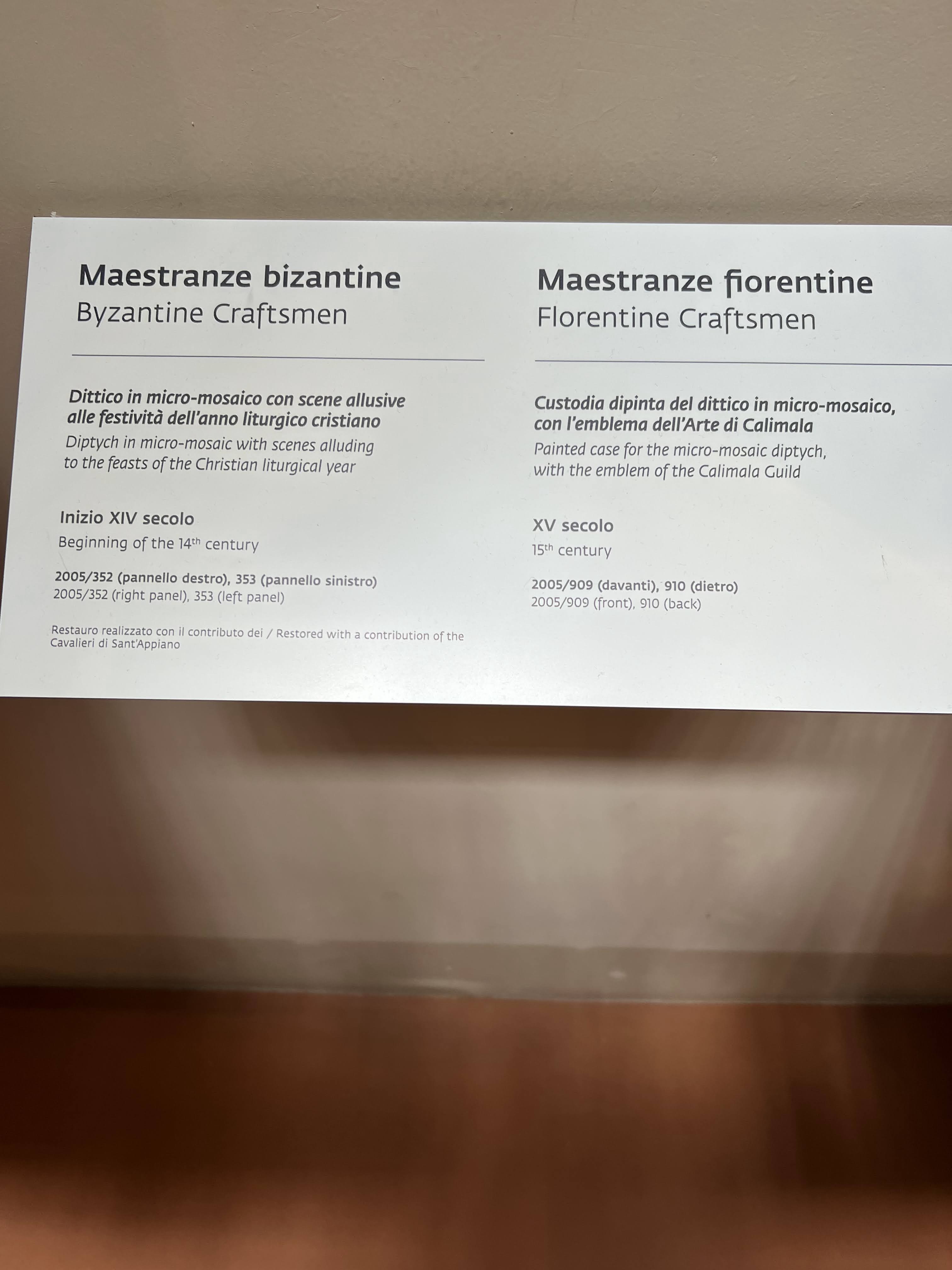
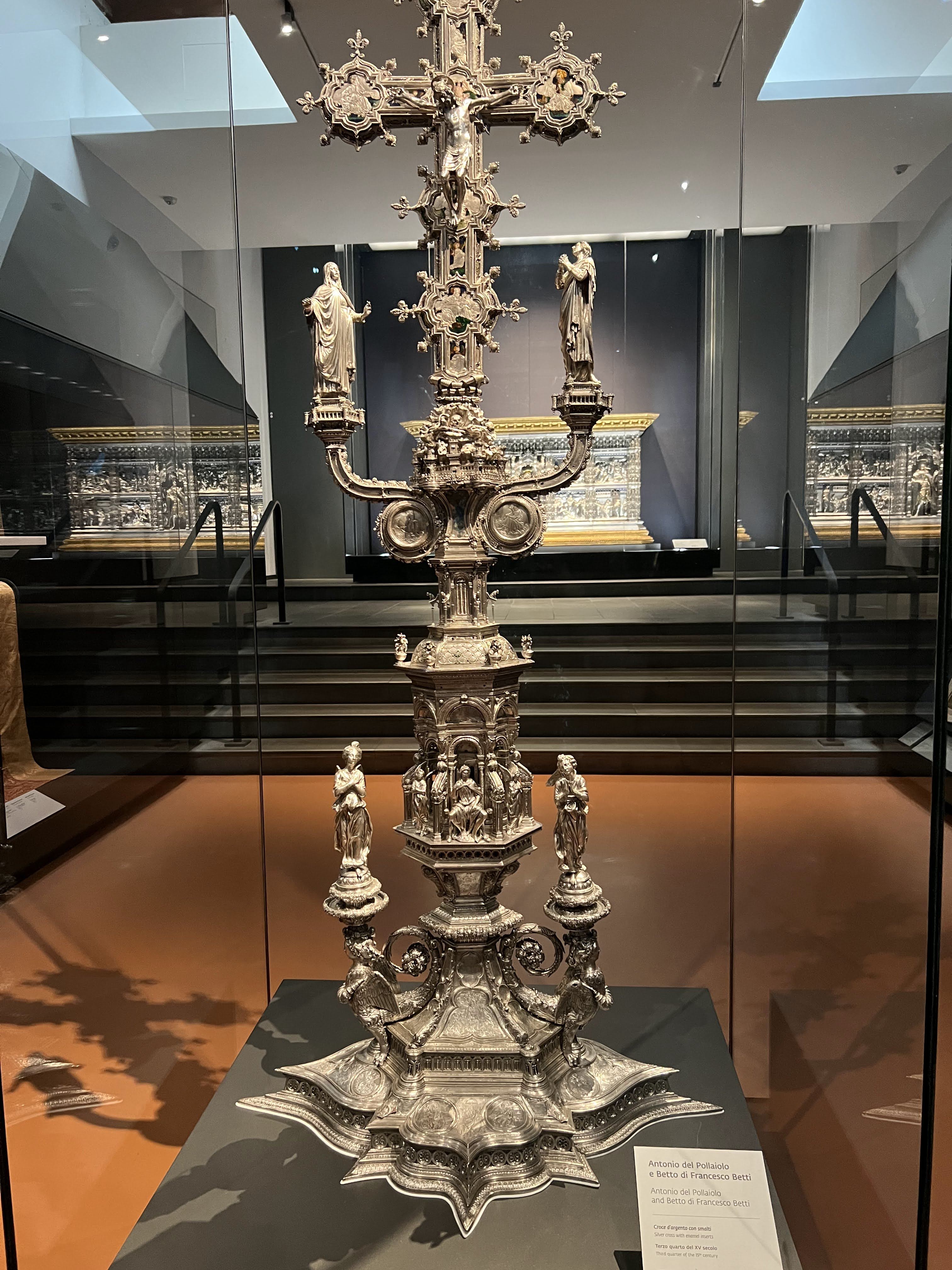
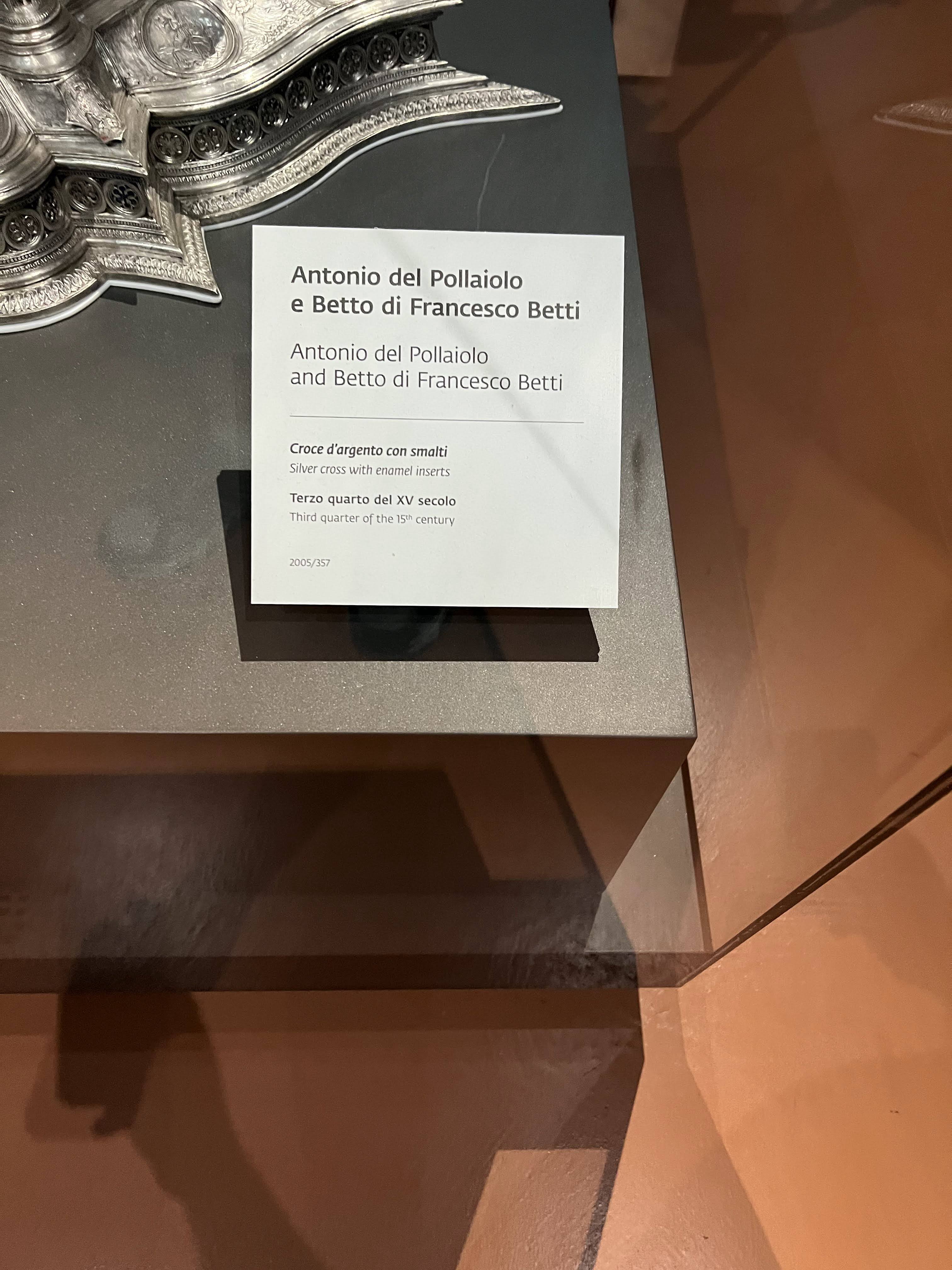
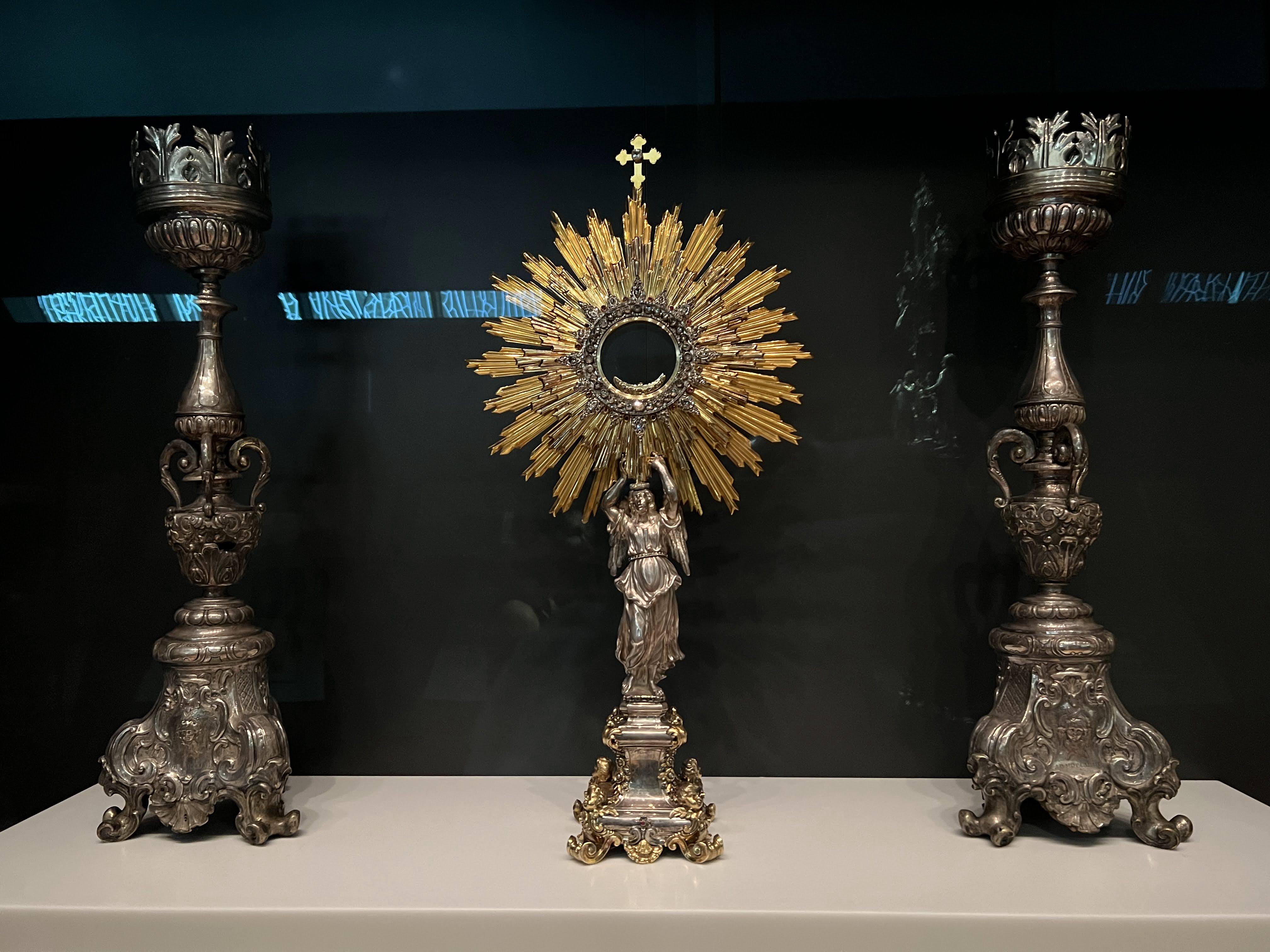
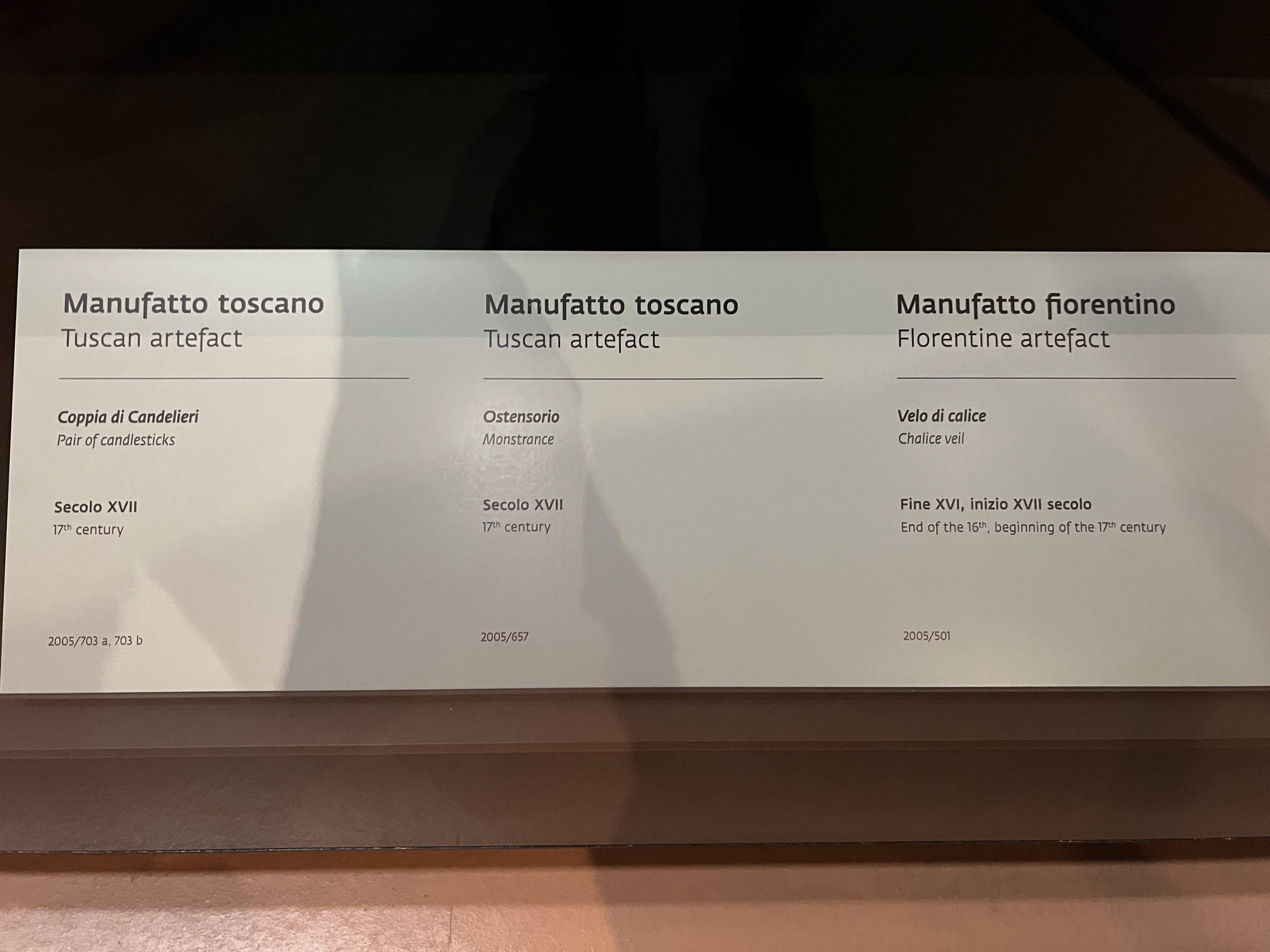
Bottom left: Dang, these republics of northern Italy (Venezia, Milano, Bologna, Firenze) were rich, must have all been carrying Gucci.
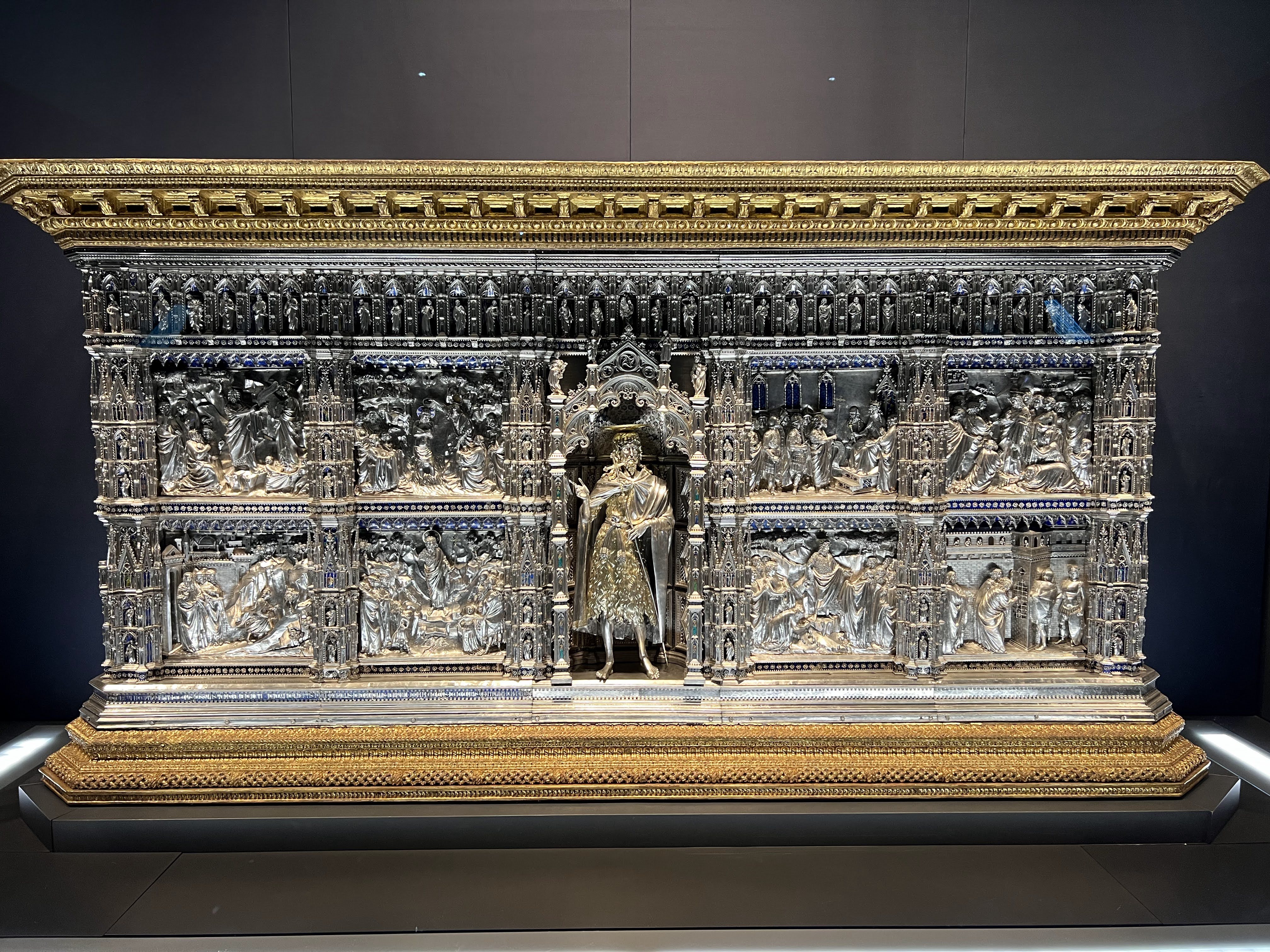
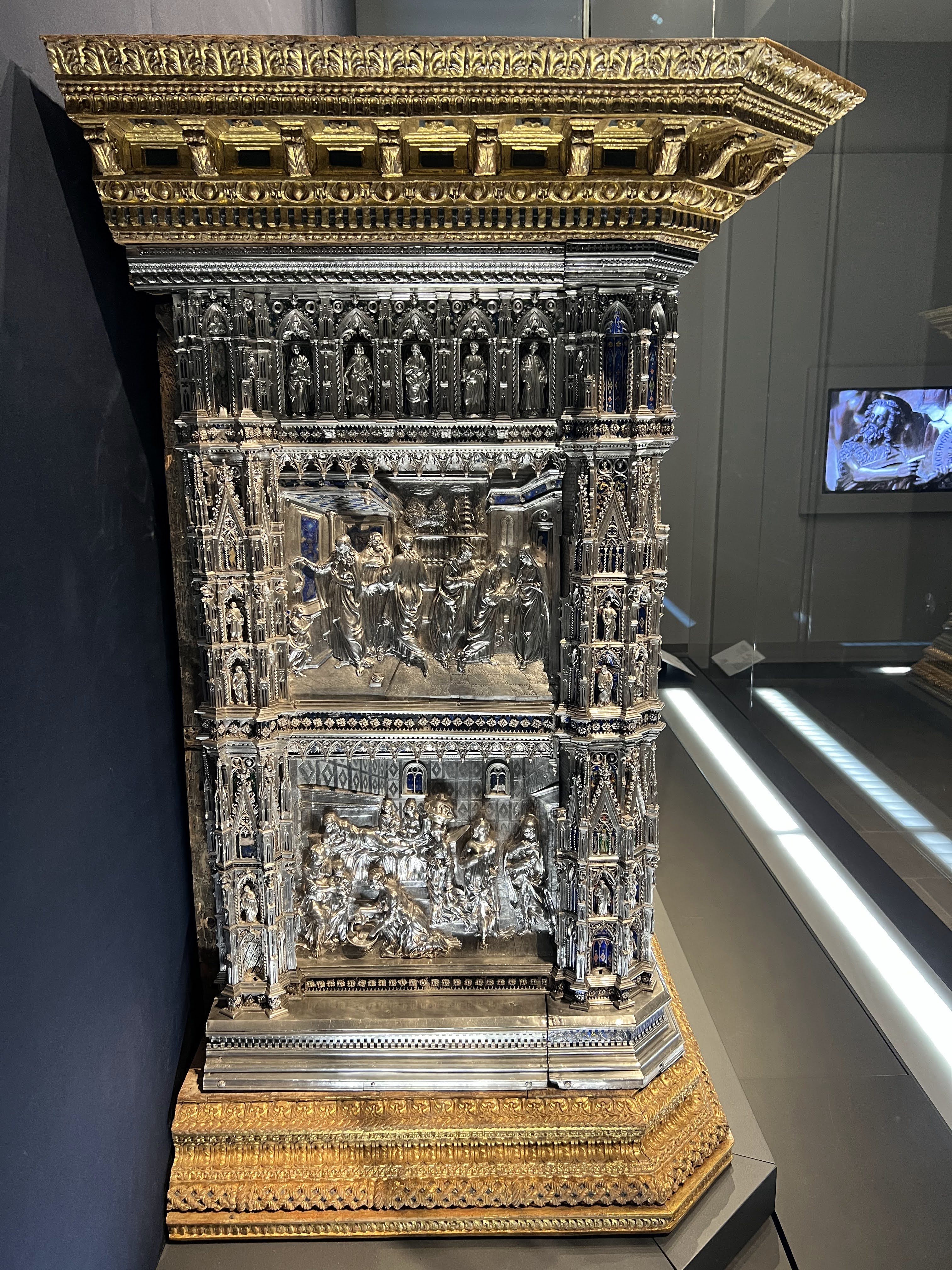
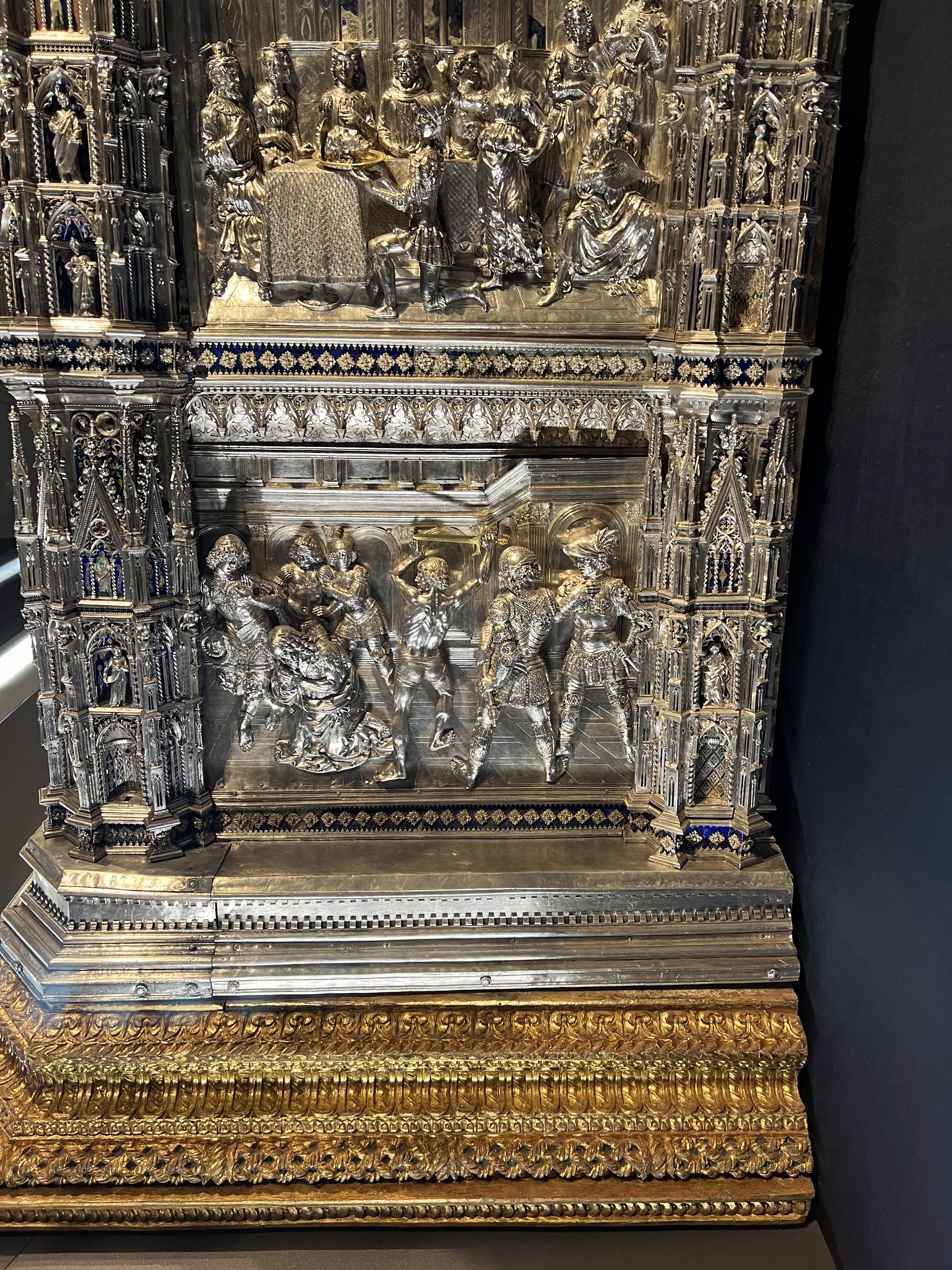
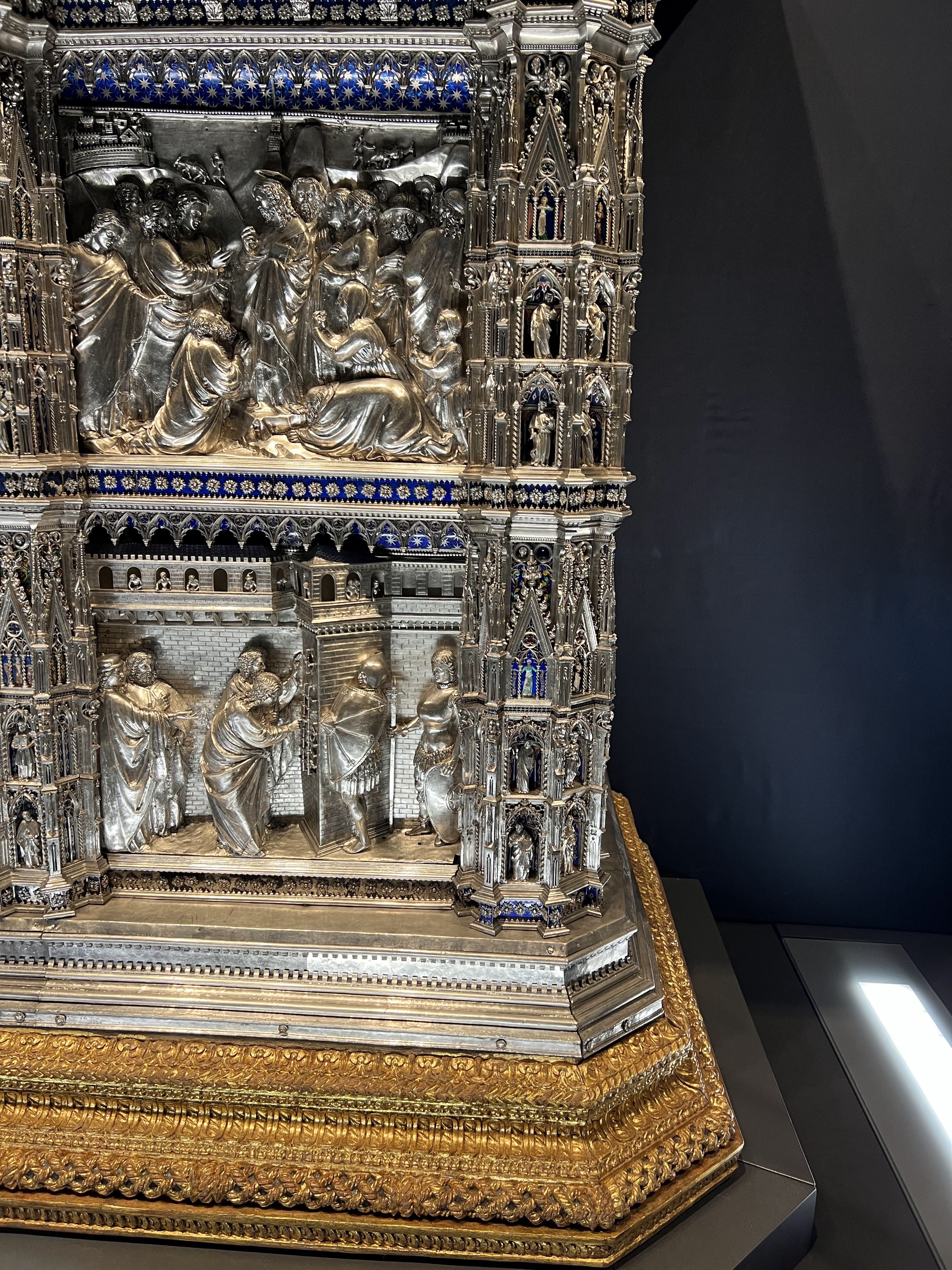
Zoom in on this thing, the detail is incredible. All the panels on this altar contained scenes from the life of John the Baptist.
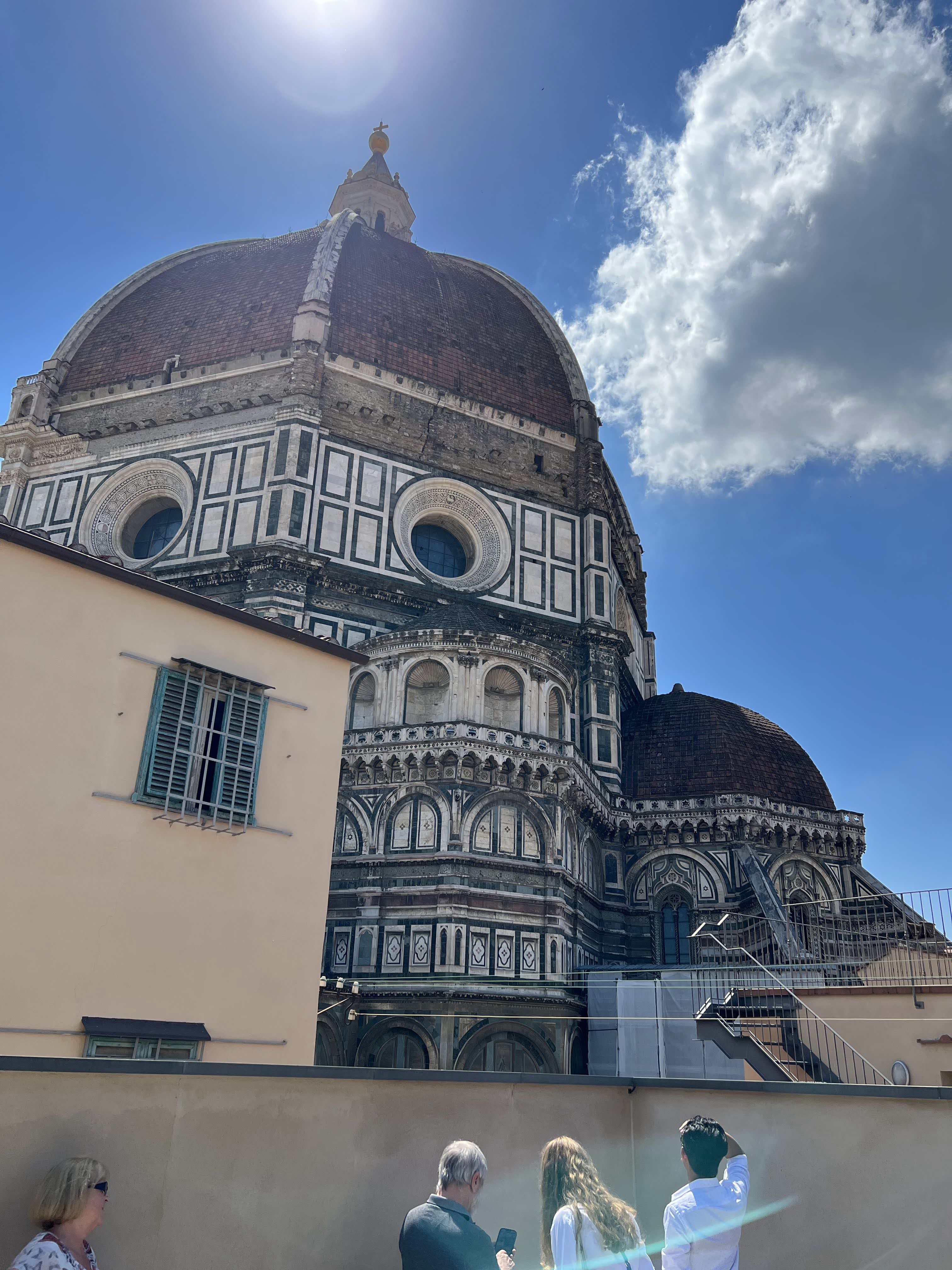
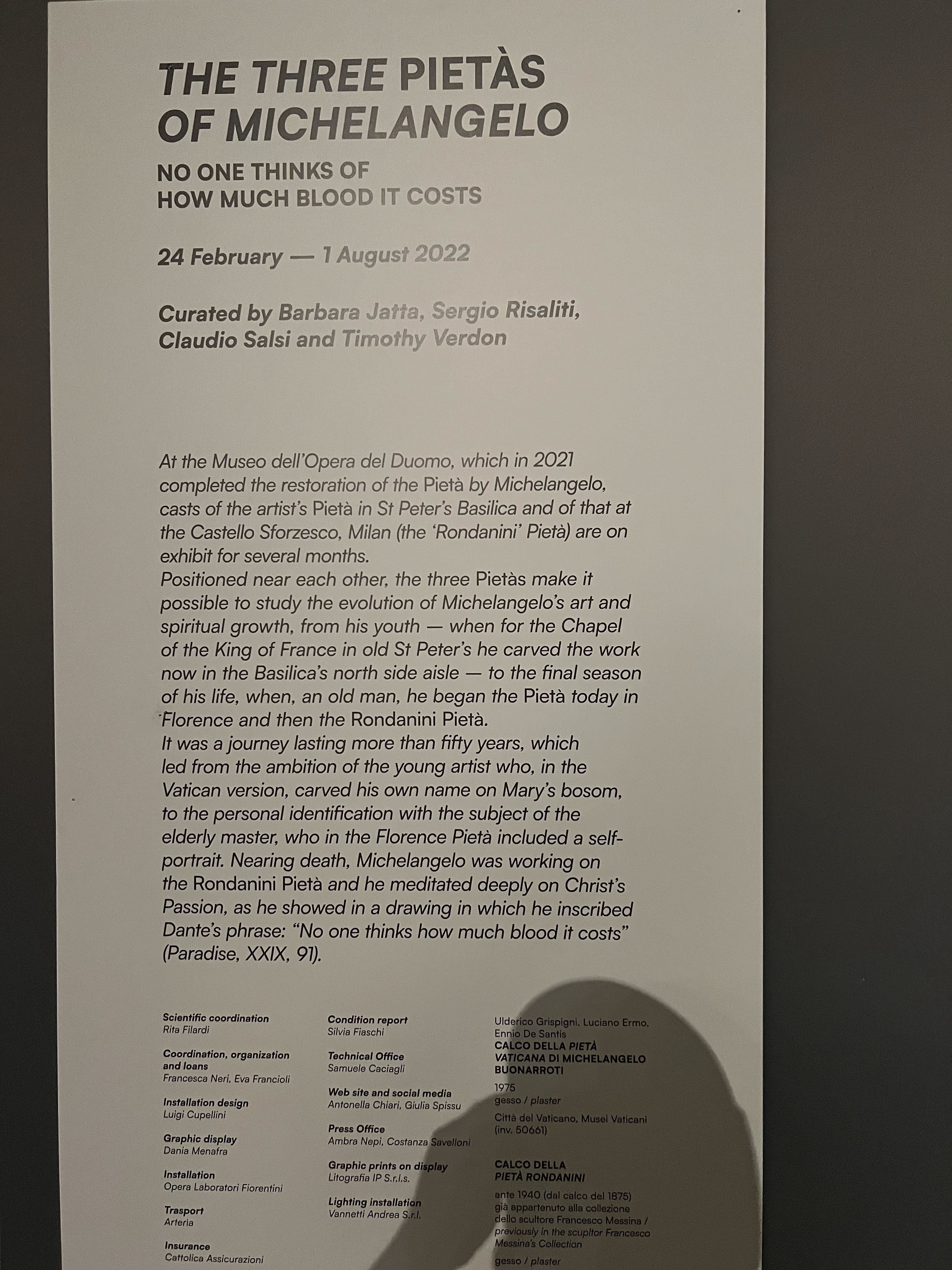
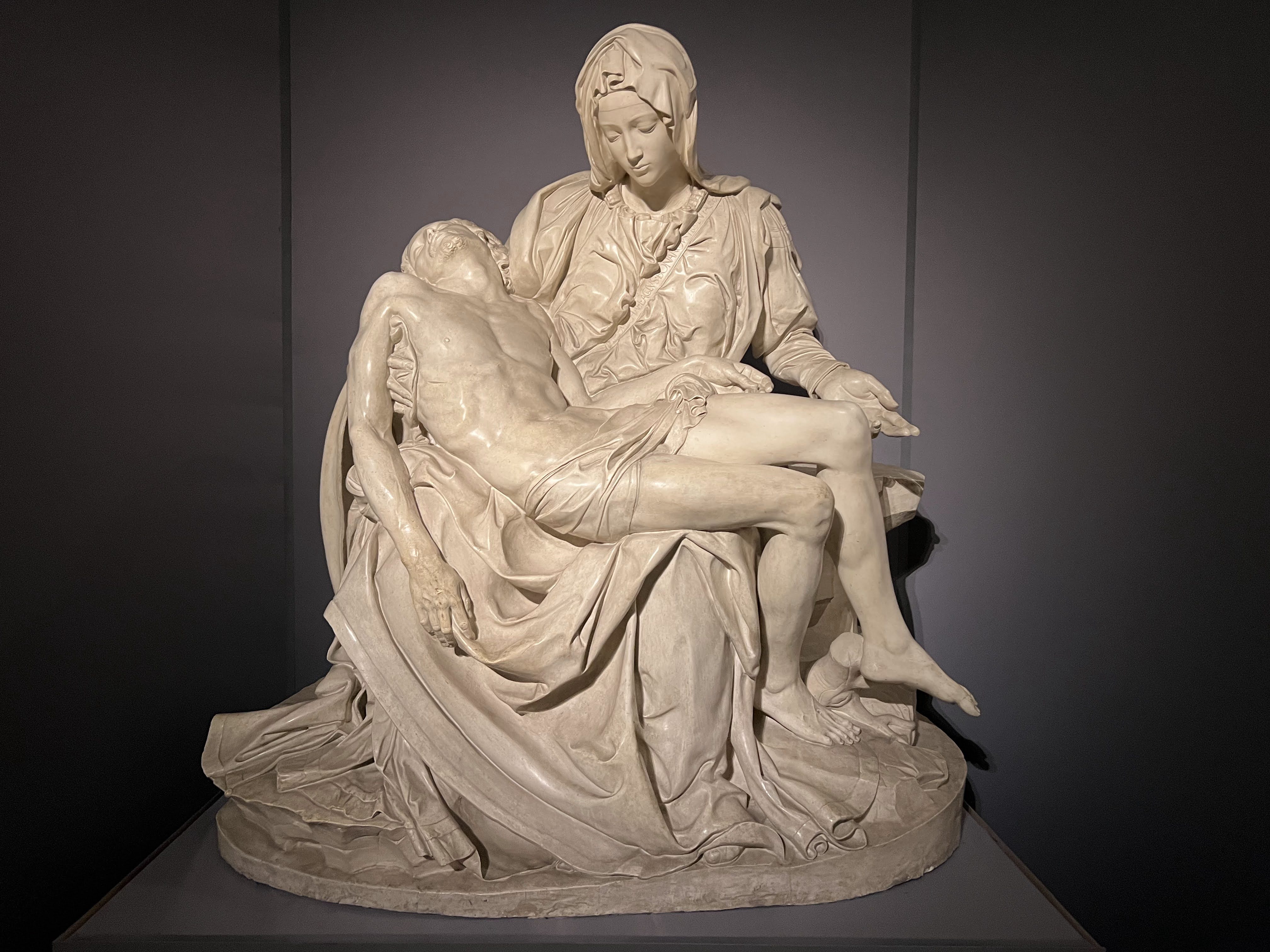
Top left: So this was the top floor of the Museo Dell’Opera, with a nice up-close view of Il Duomo. There was a tour option climb up to the top – the cupola itself is massive – but we weren’t feeling up to the task.
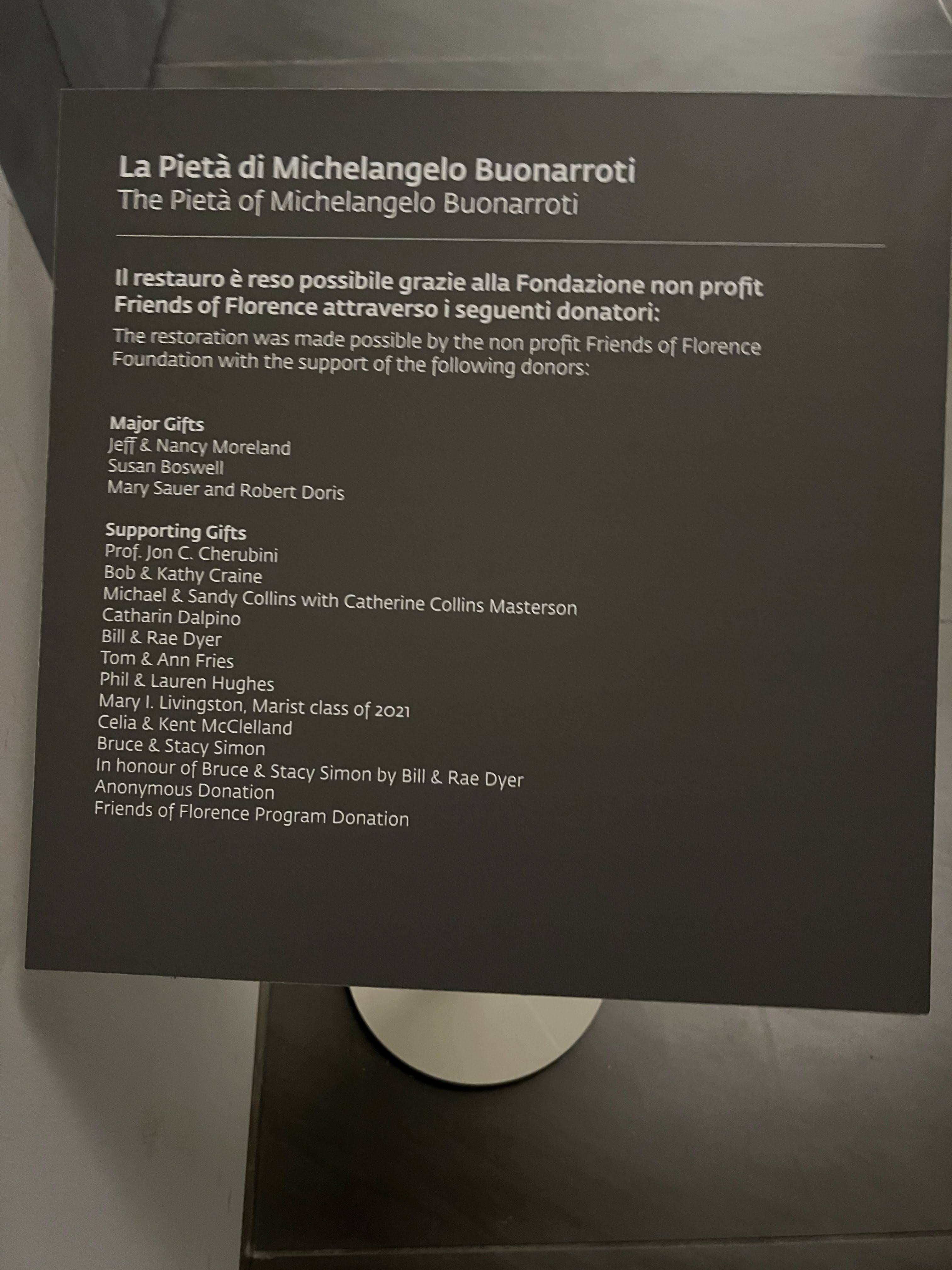
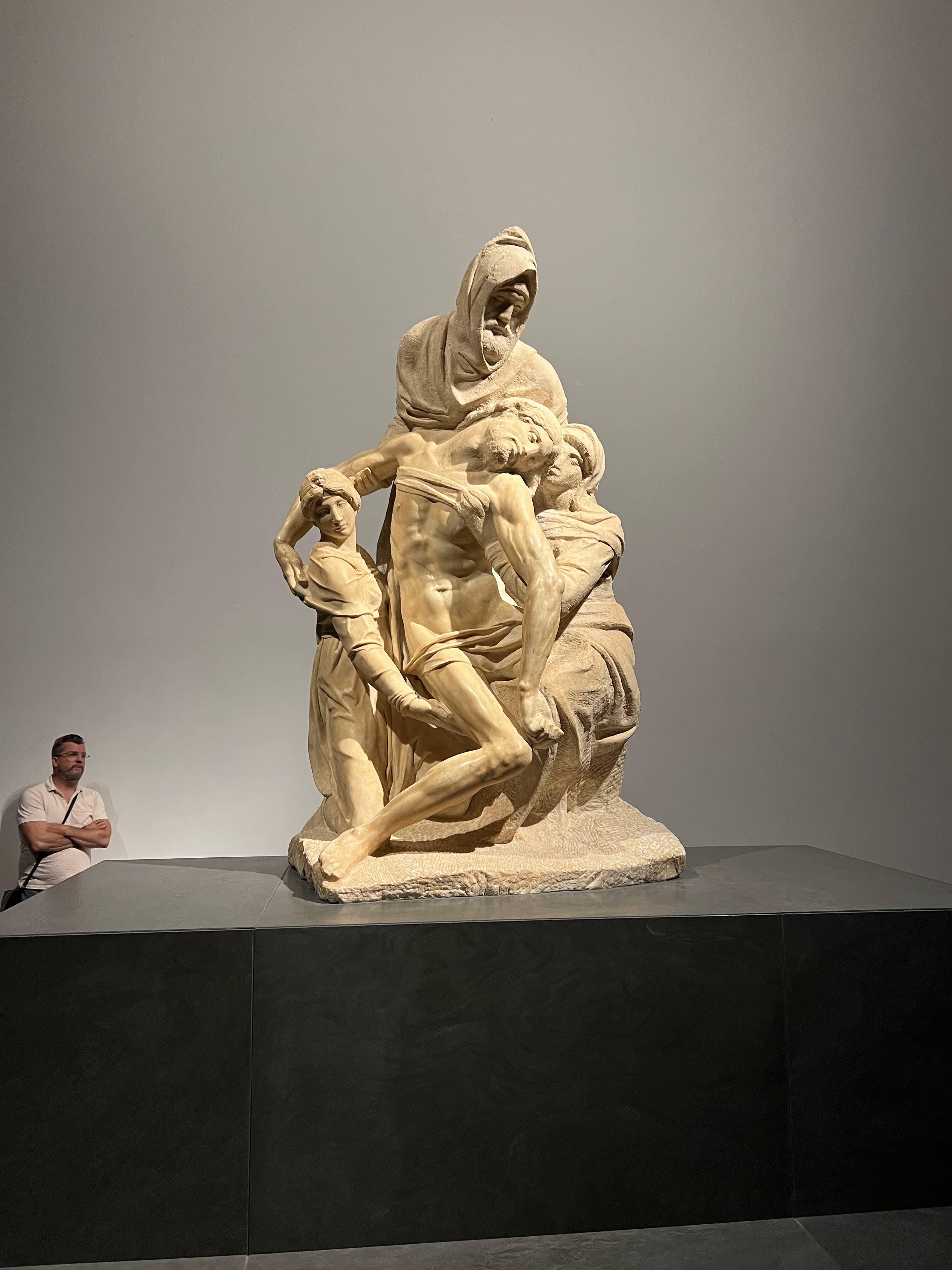
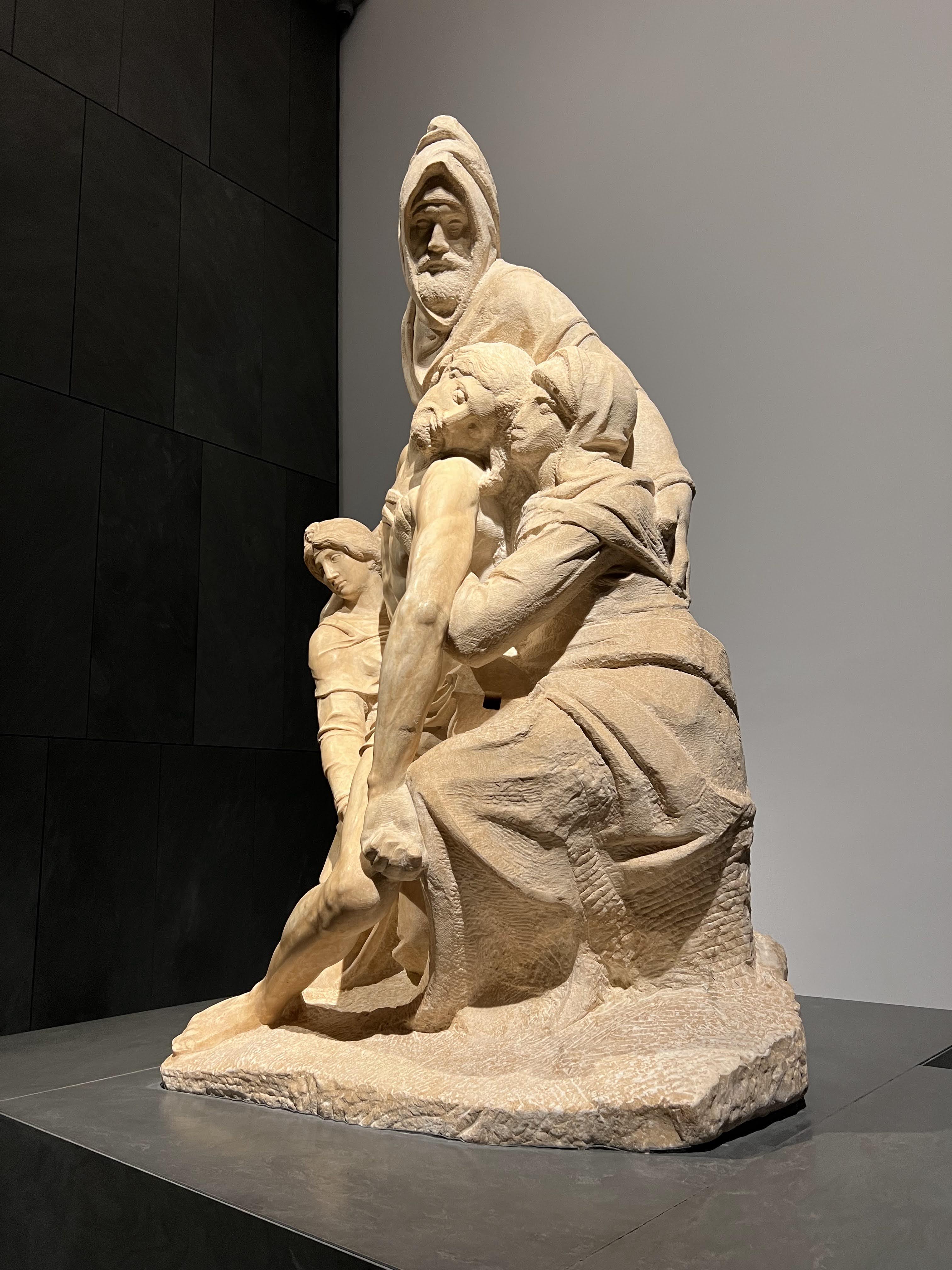
Top middle: This is an original Michelangelo Pieta, just not the famous one. He worked on it later in his life, and actually put himself in the scene, he’s the hooded guy standing in back. As you can see, he didn’t exactly finish it before he died.
Bottom right: A replica of the famous Pieta, the original sits in Saint Peter’s Basilica in the Vatican.
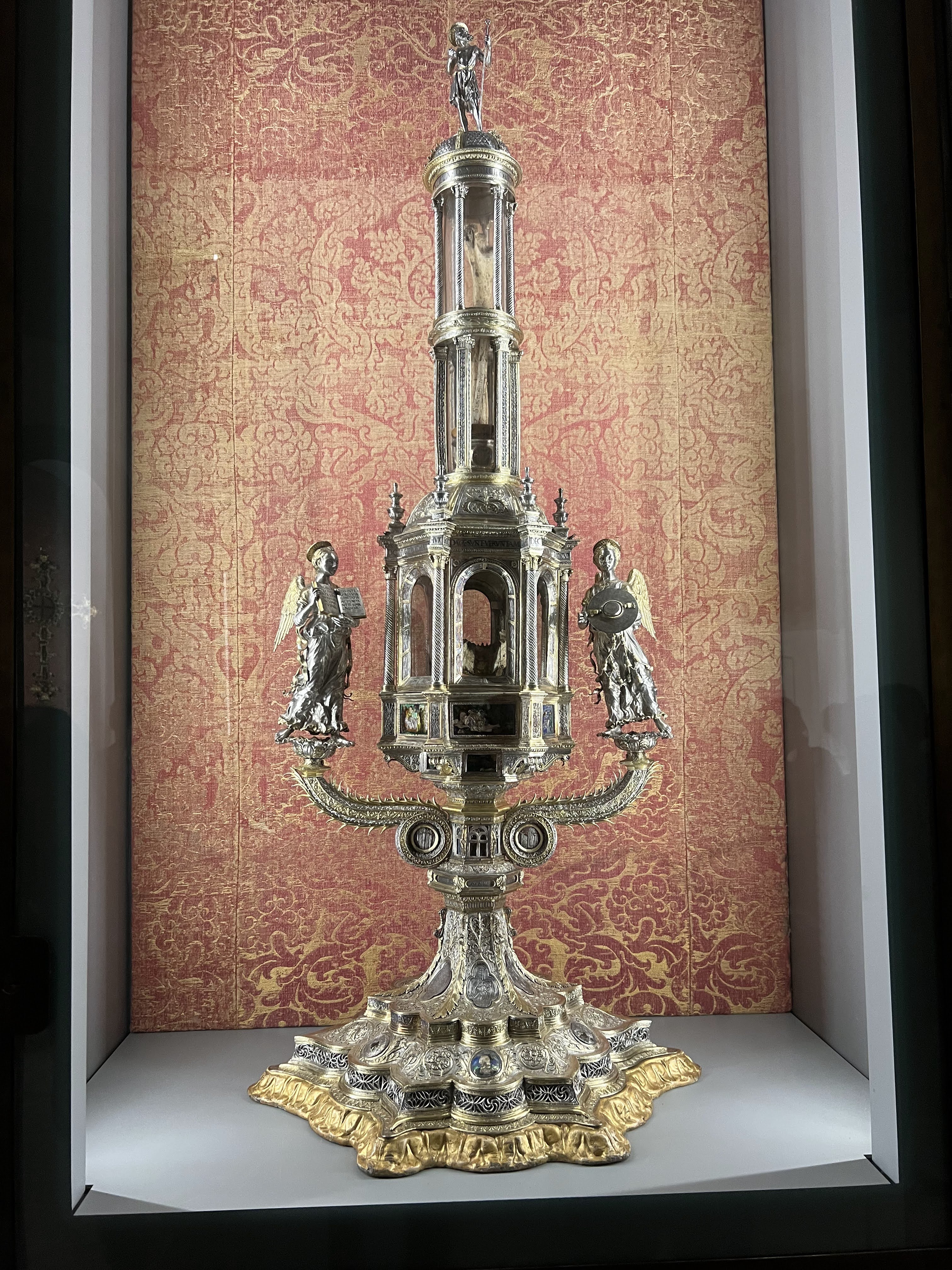
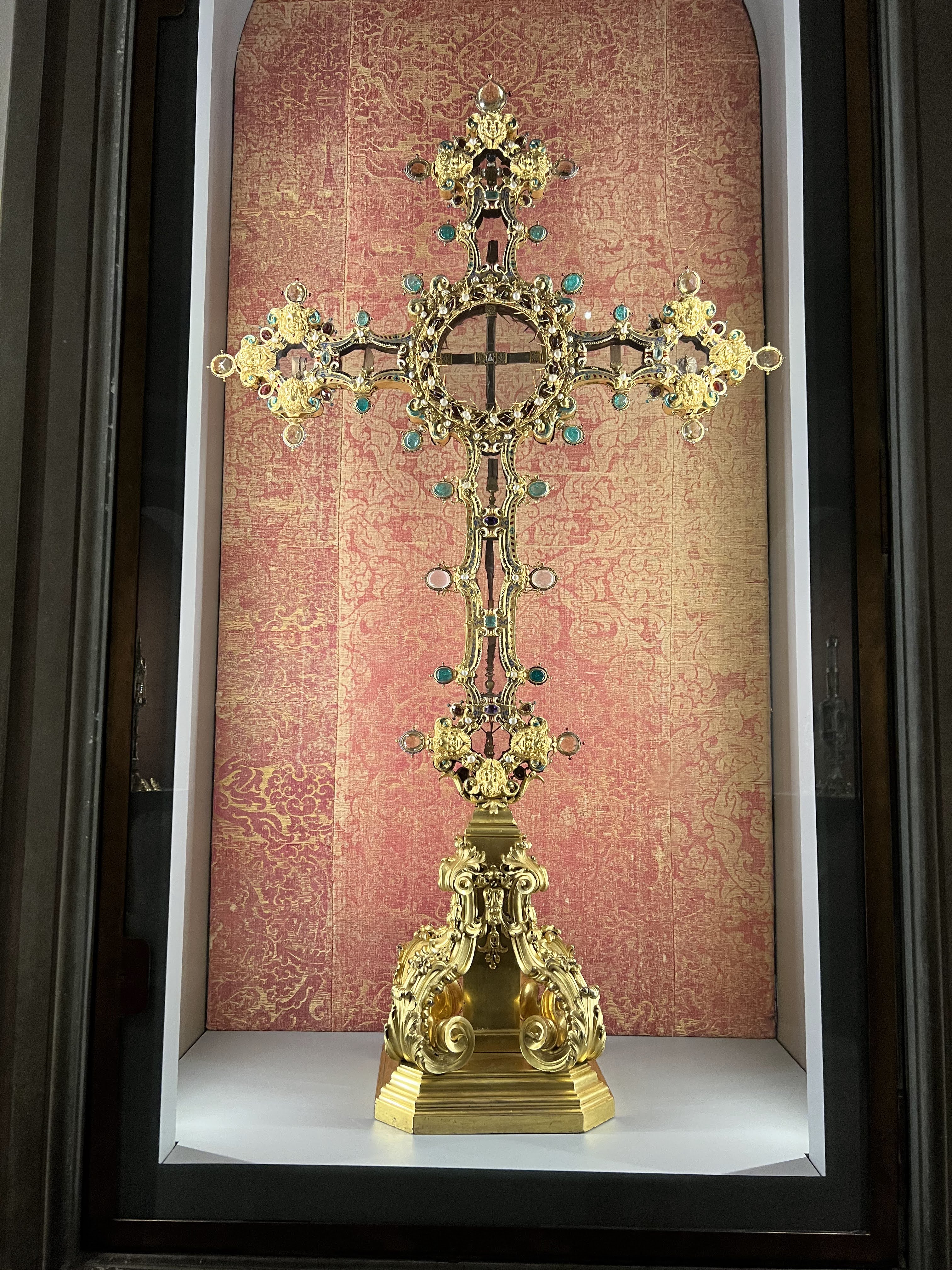
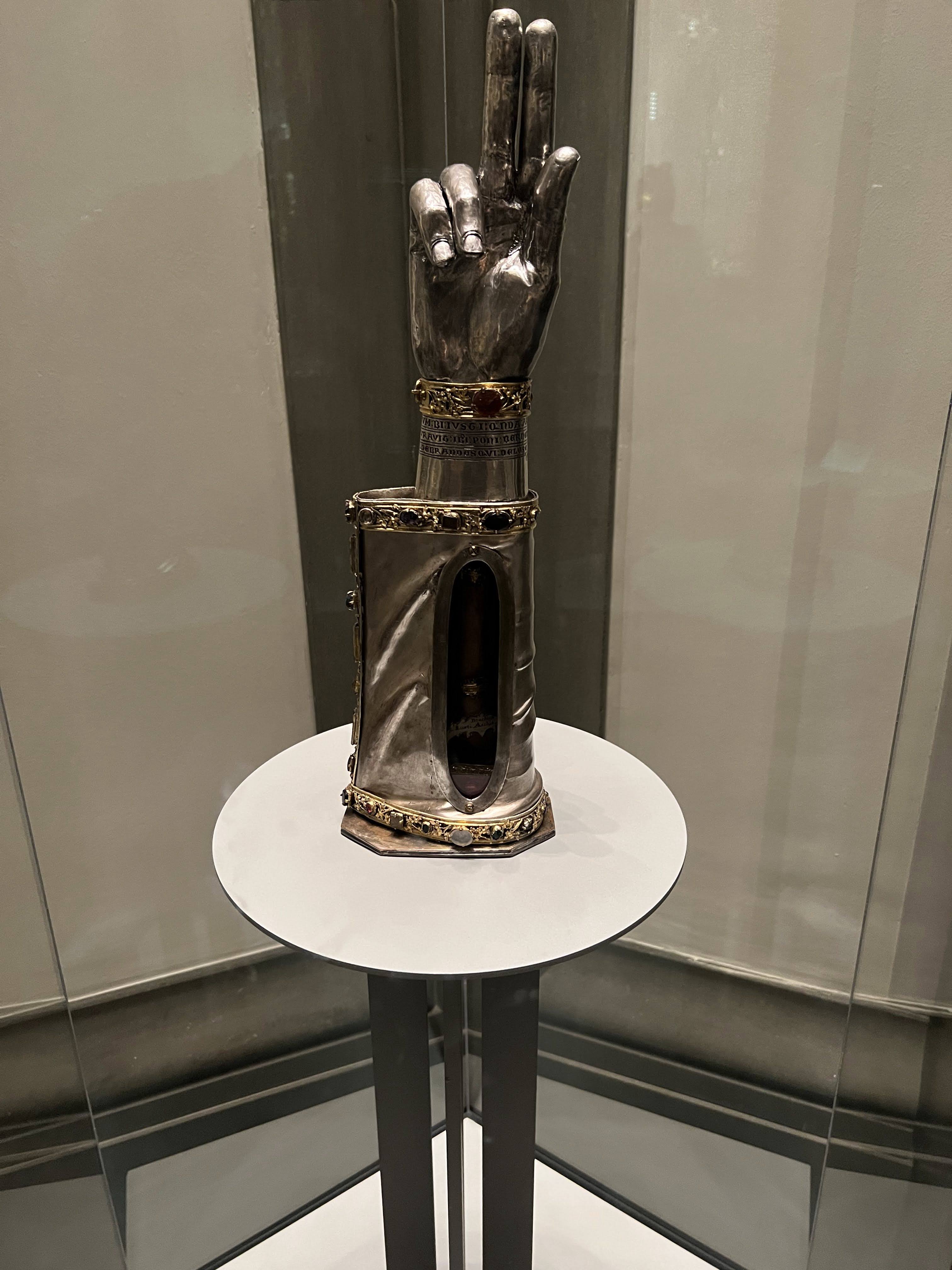
Left: Another reliquary – that’s an actual fragment of bone, reputedly from some saint.
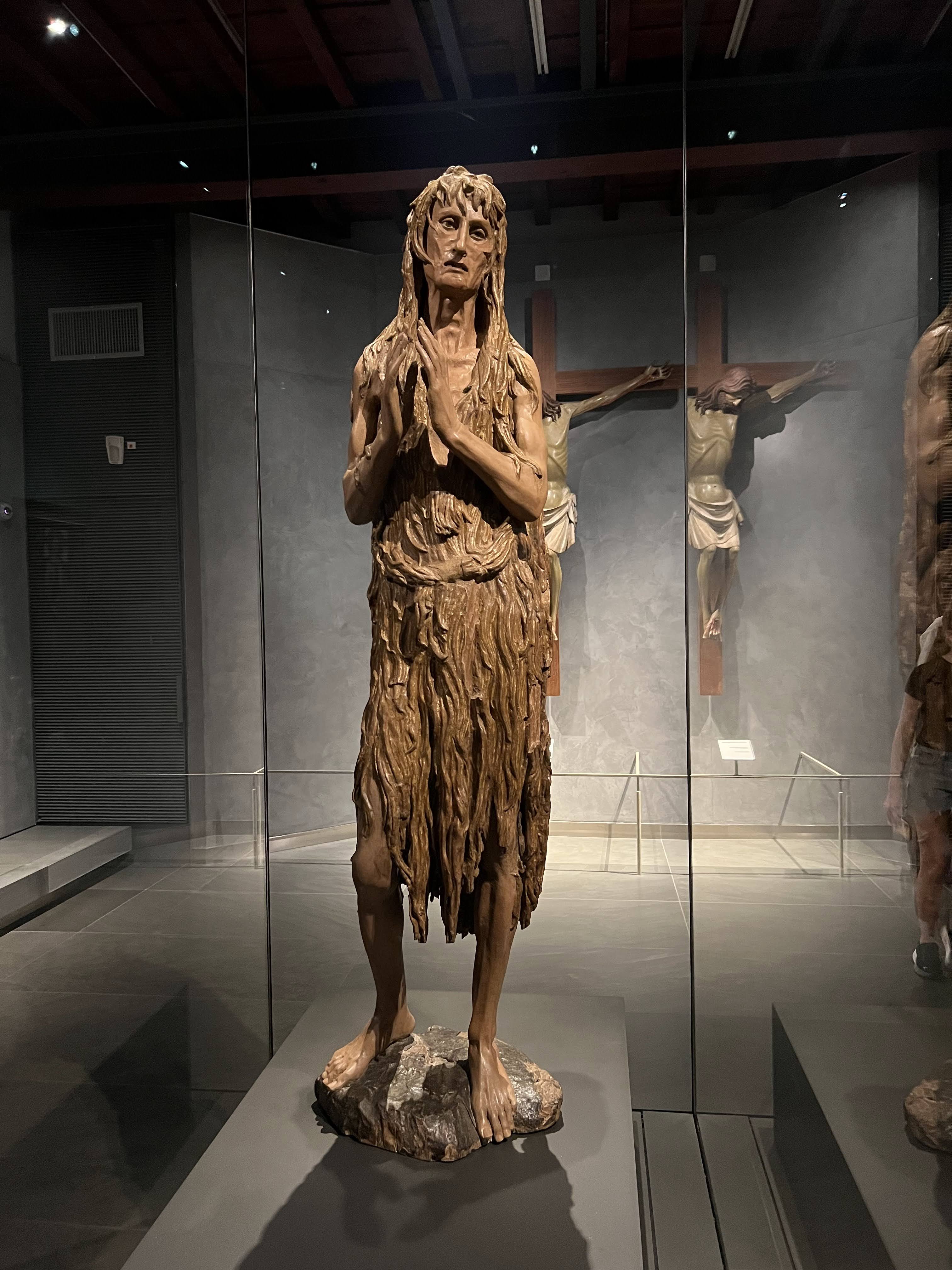
Right: Wikipedia: “The Penitent Magdalene is a wooden sculpture of Mary Magdalene by the Italian Renaissance sculptor Donatello, created around 1453–1455. The sculpture was probably commissioned for the Baptistery of Florence. The piece was received with astonishment for its unprecedented realism.”
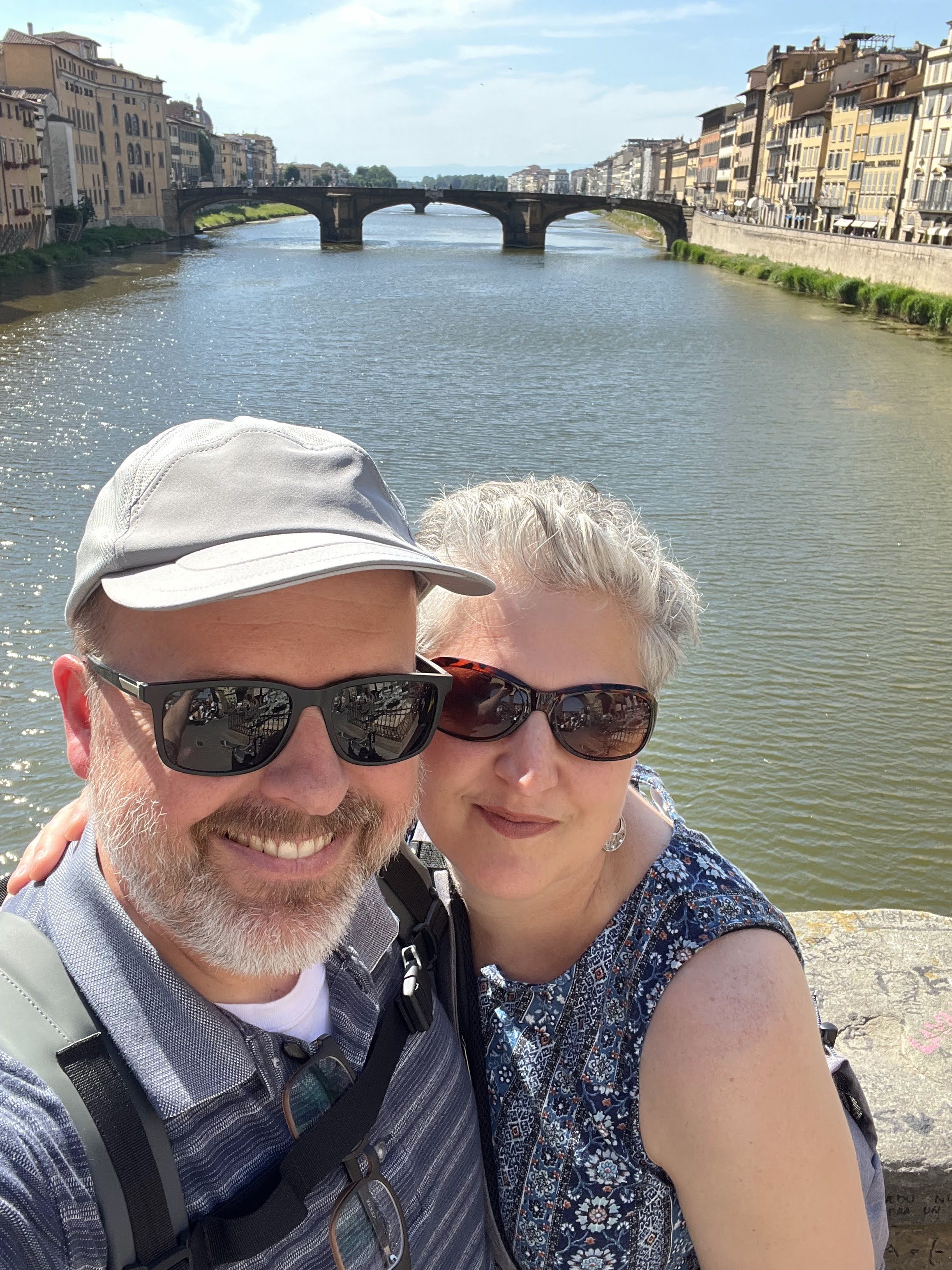
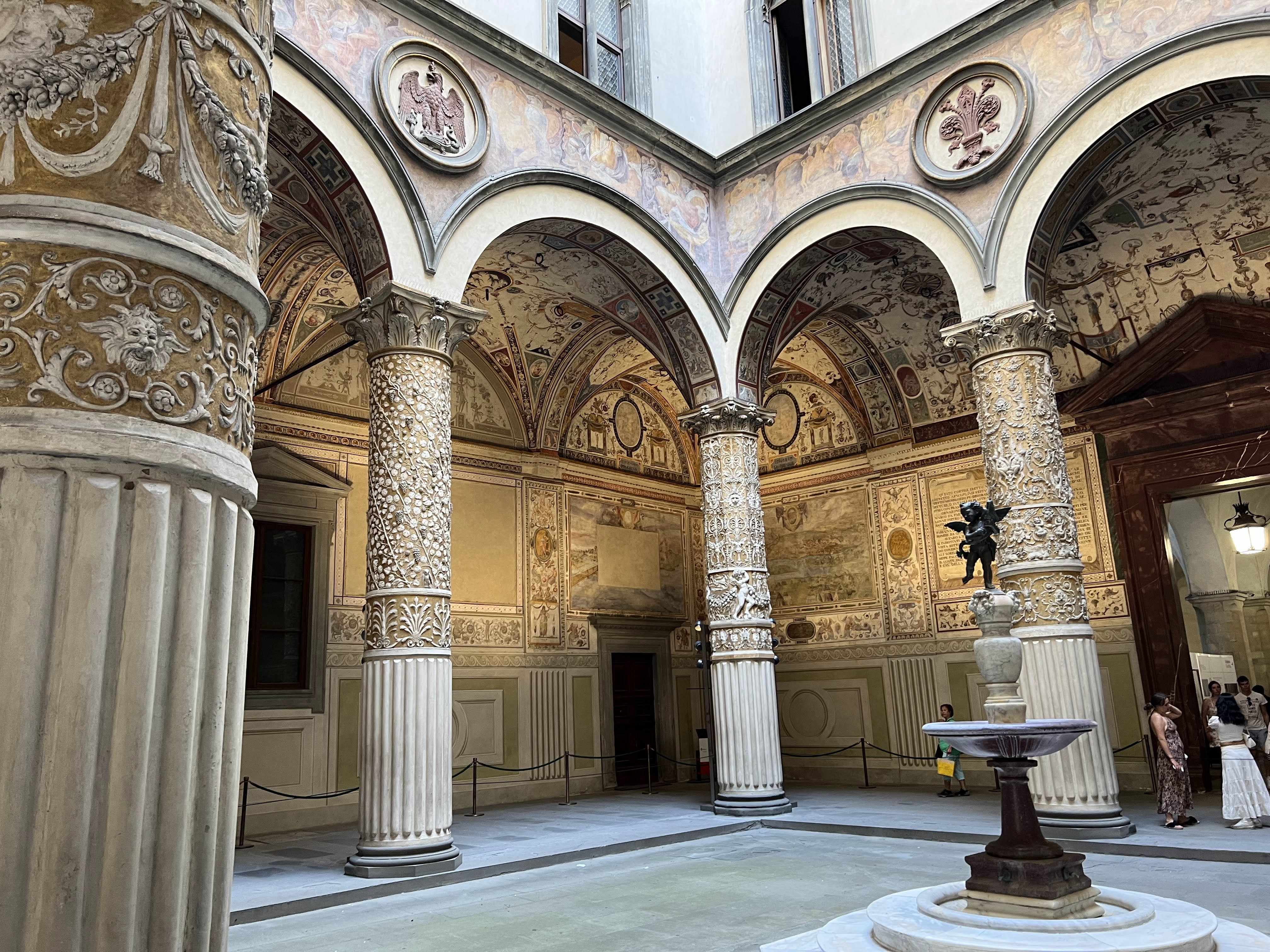
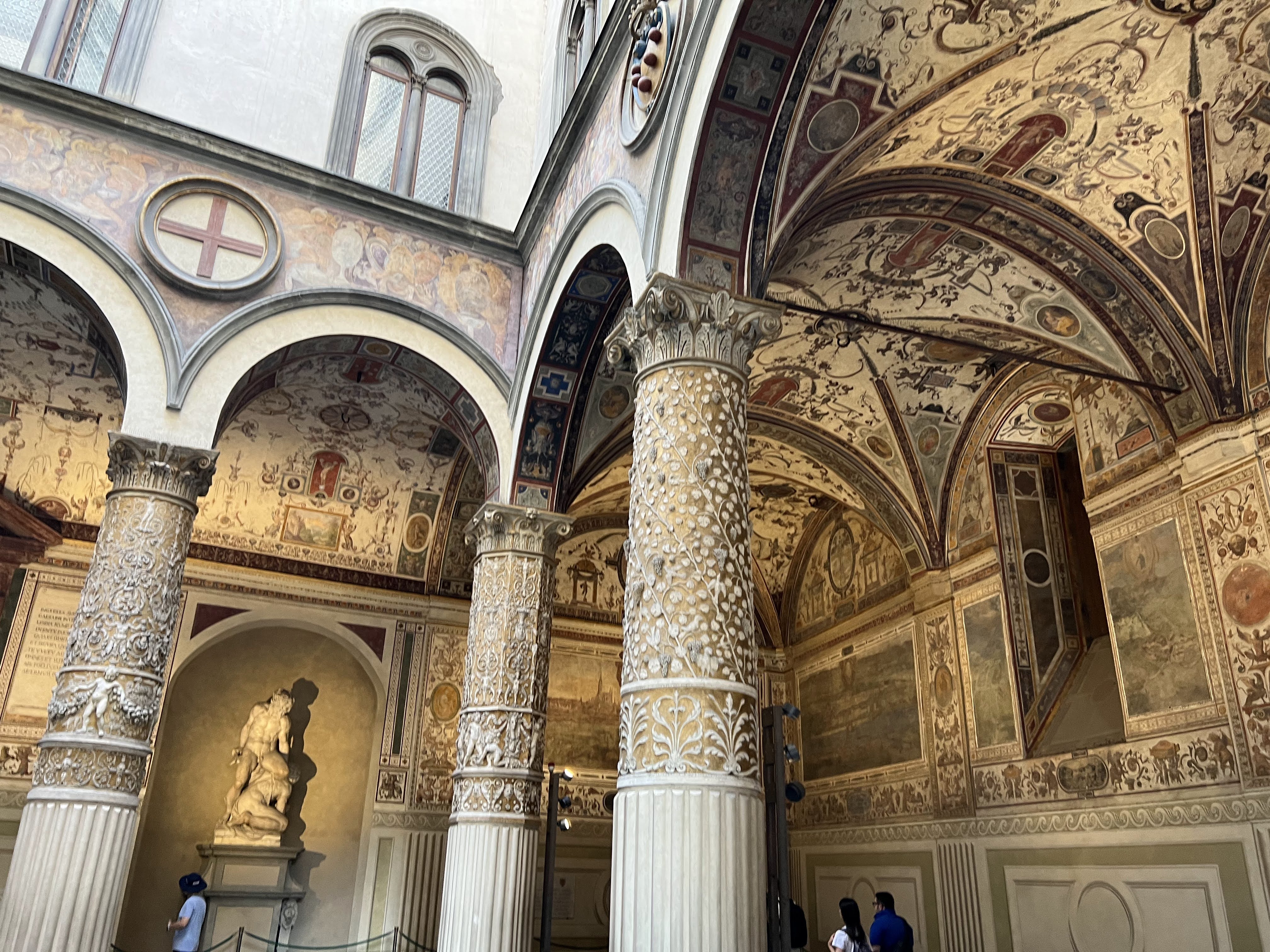
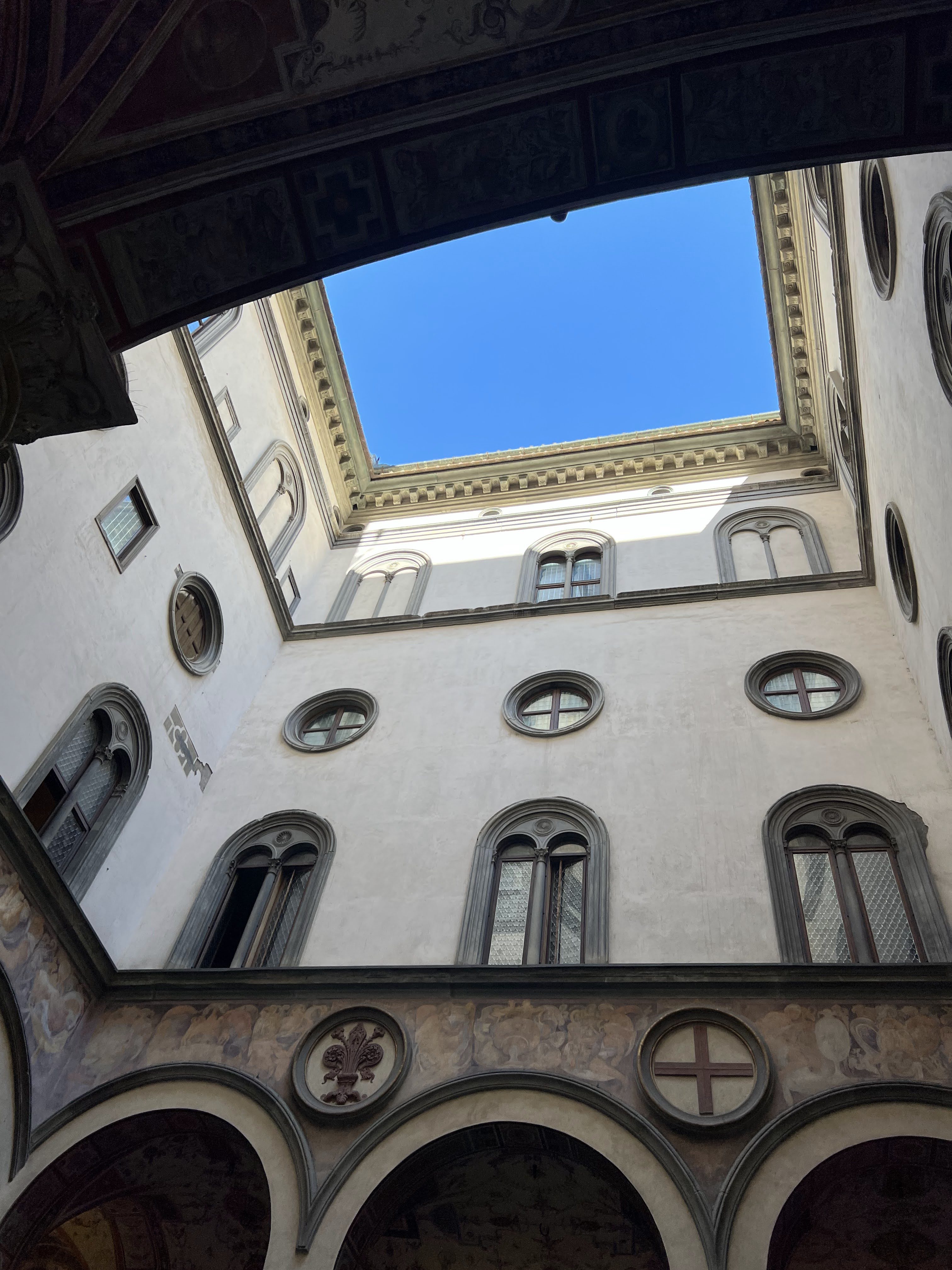
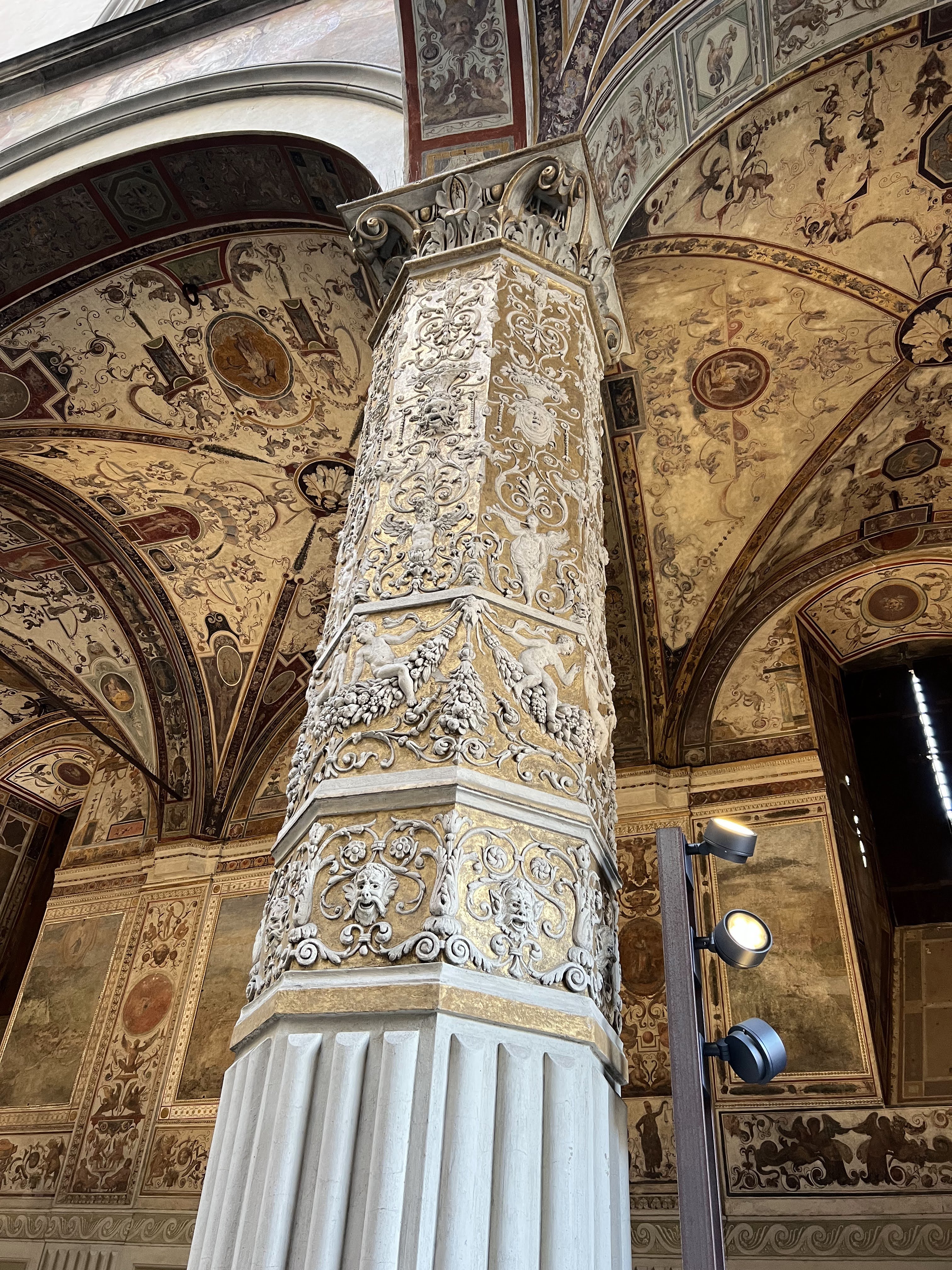
Top left: standing on the Ponte Vecchio, which is a famous old stone bridge over the River Arno, with shops built onto it (mostly more luxury goods).
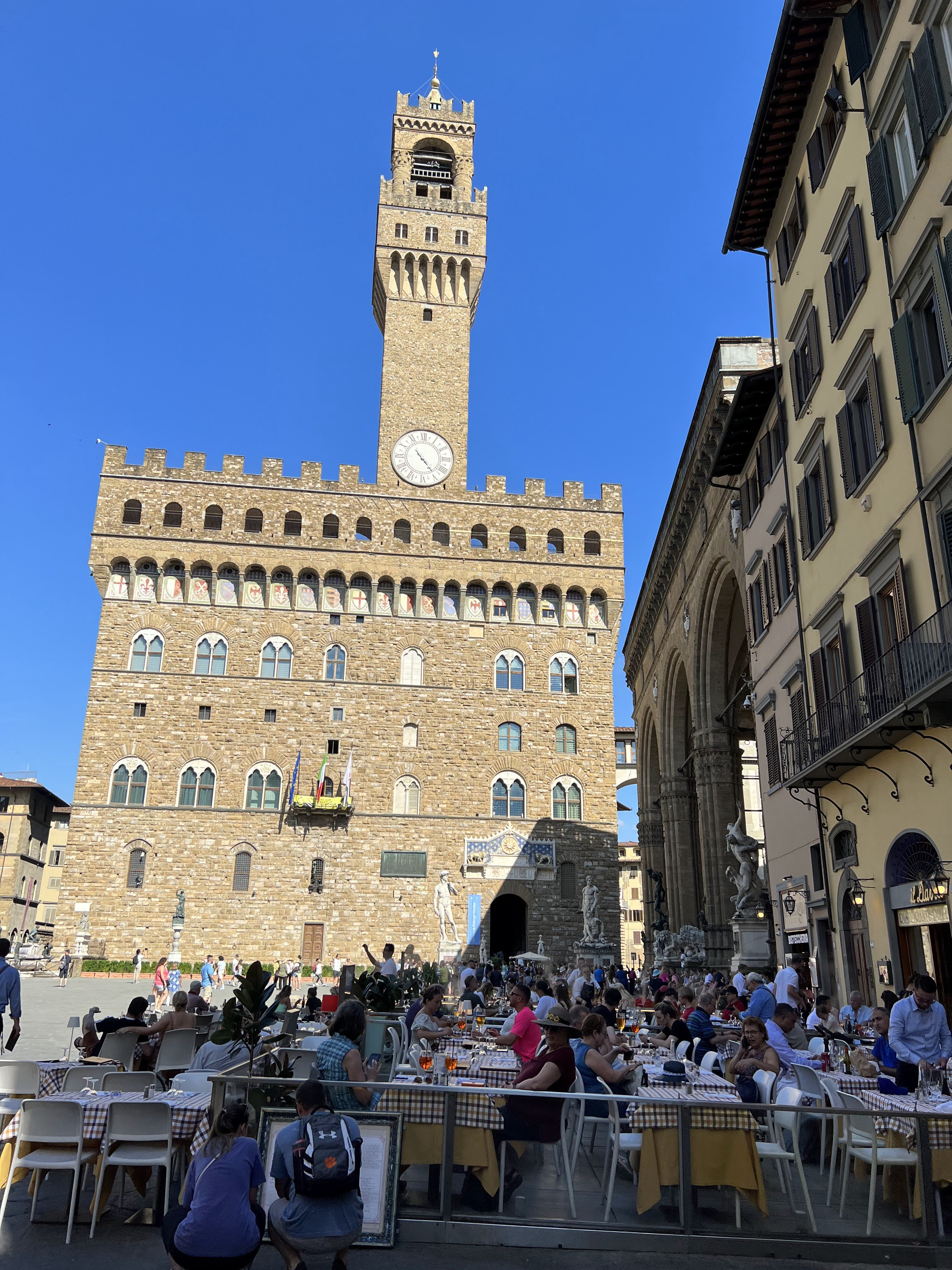
Top right: standing in the Piazza Vecchio, which Google Maps calls “the city’s heart, a square dominated by the 14th-century crenellated tower of the Palazzo Vecchio.” The statue of David on the left side of the entrance is a replica, but the original was actually placed there for many years before it was moved to the Accademia.
Bottom left: inside of the Palazza Vecchio.
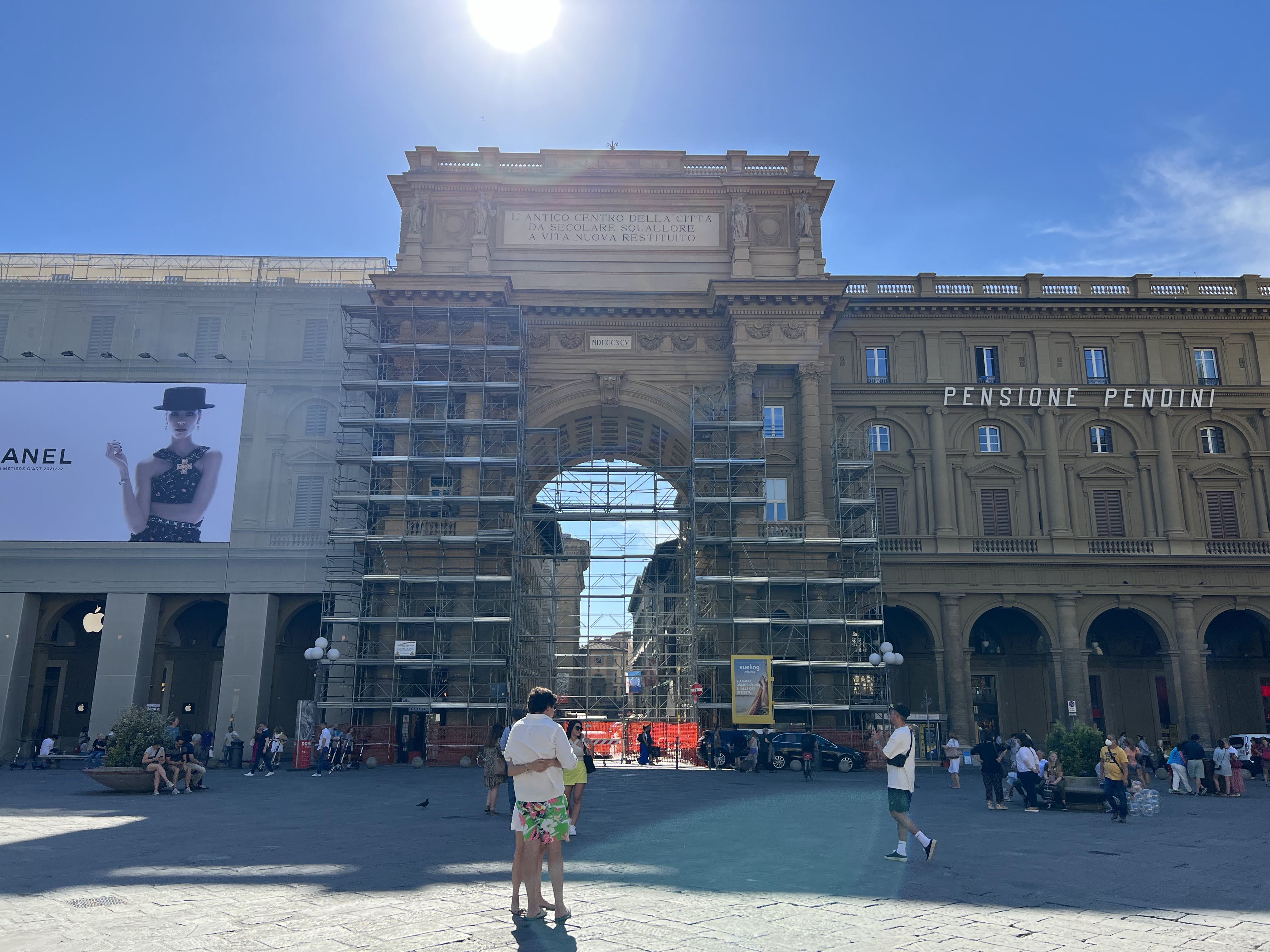

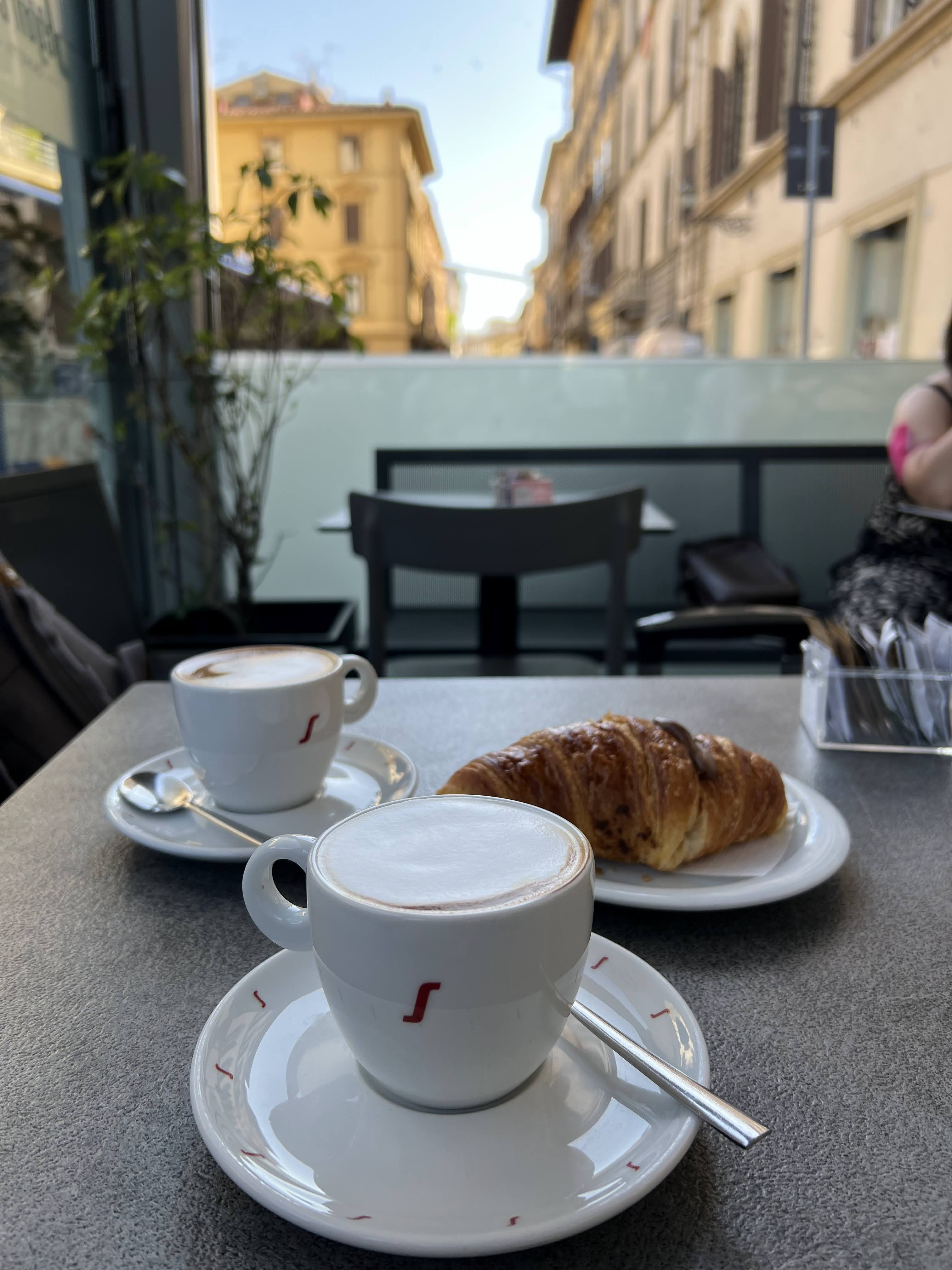
Left: A view from our table at dinner the second night in Florence. We just picked it at random out of what felt like hundreds of these places. Of course, the food was ALLSUM.
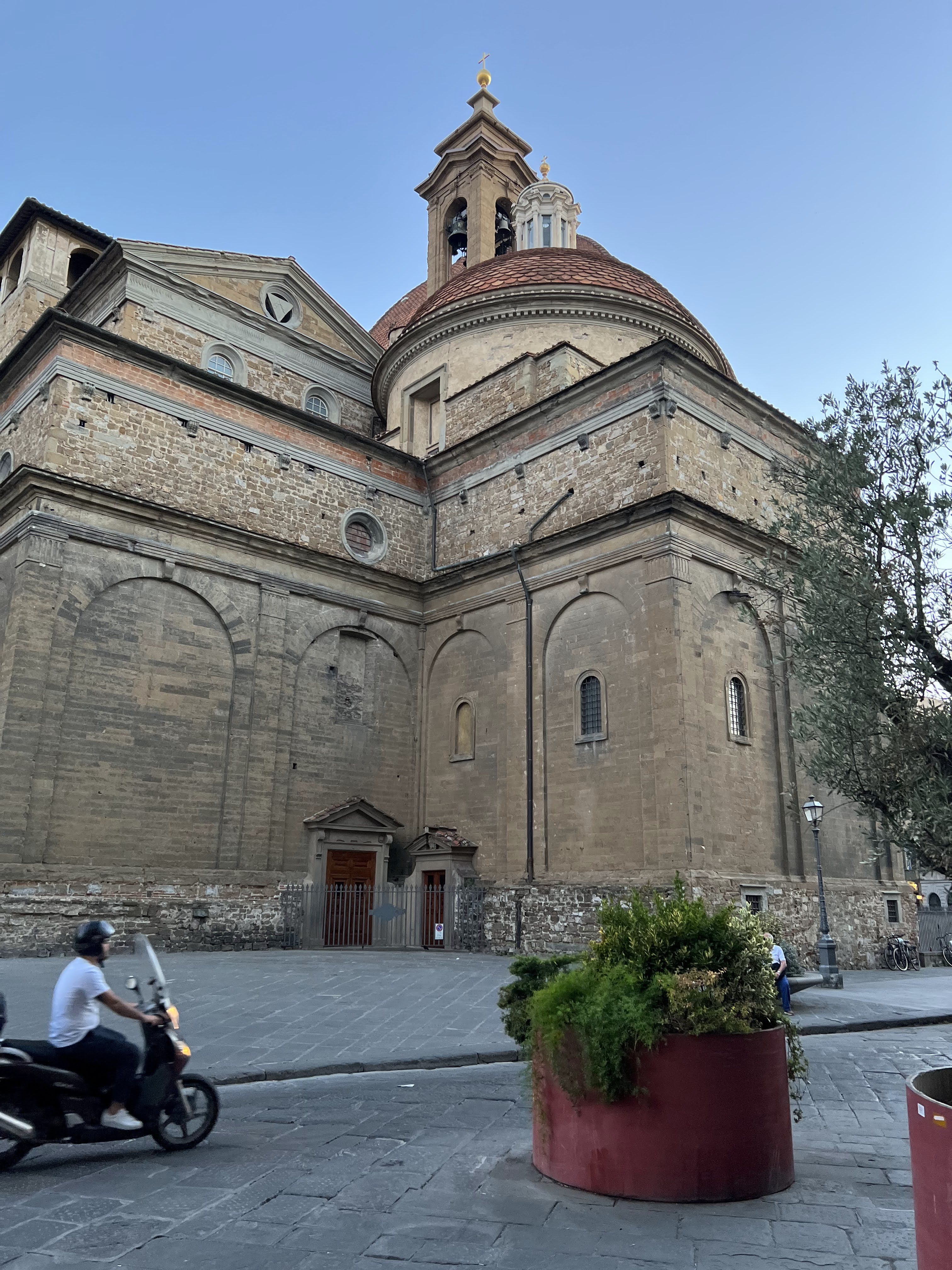
Middle left: Basilica di San Lorenzo. I was really taken with this place.
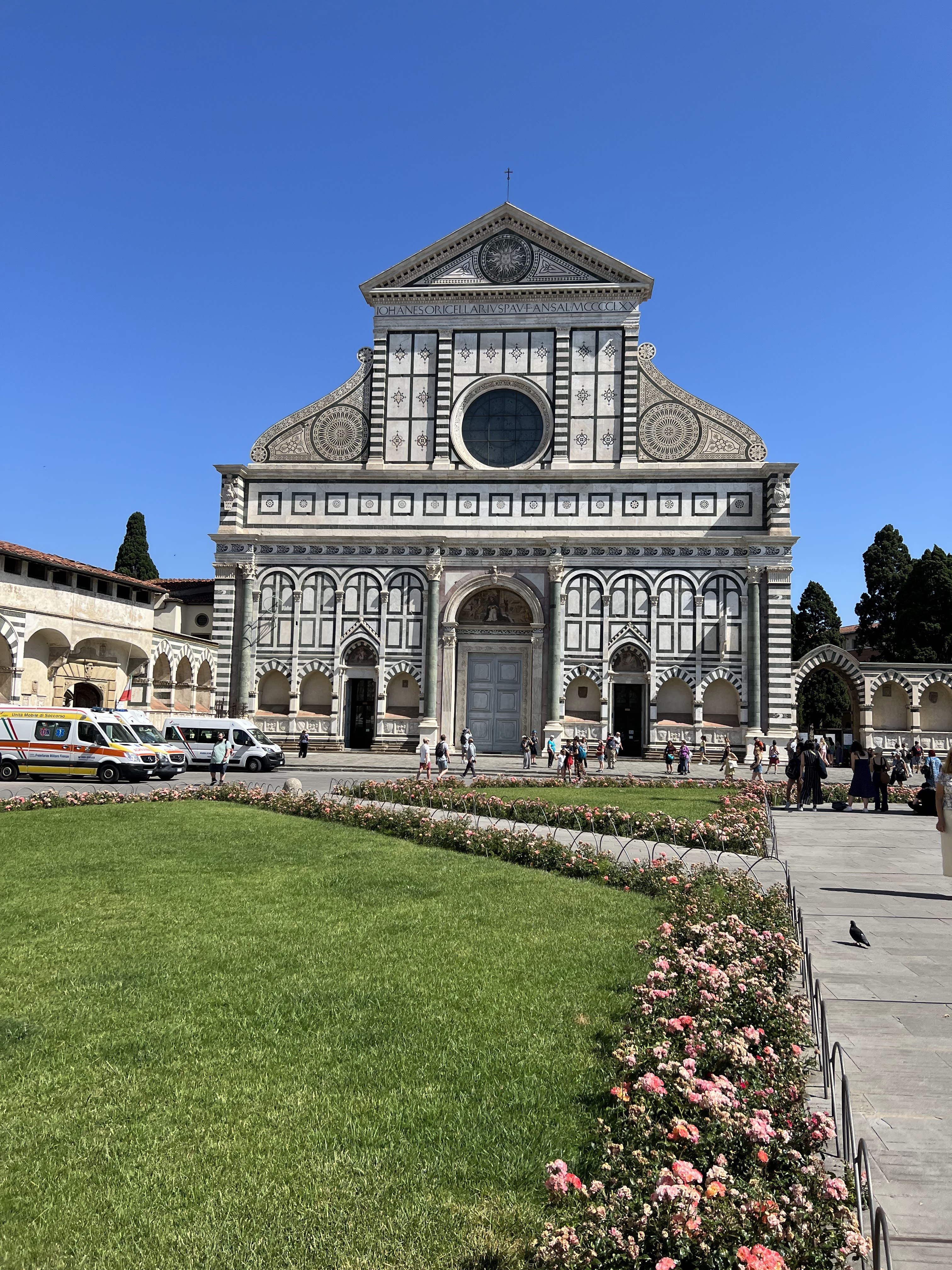
Right: Basilica of Santa Maria Novella, for which the main train station is named. By this point we had given up on renting a car from Firenze to Milano and were walking to the train station.
*Editor’s Note: Right, so here it is important to note that despite some good planning on paper, there is always the possibility that once you’re on the ground, you find that you need to call an audible and change plans. Mark pinged Jordan early Thursday morning with a new idea: cancel the second car reservation and get on board the “train” train. That is to say, commit fully to the train lifestyle. Granted, there is something magical about puttering around Europe in a little manual transmission Fiat, but with the changing ratio of city to country over time, the destinations on this trip lent themselves to railway travel. So, all the way over in Budapest, Jordan went ~boop beep click~ and cancelled the Avis reservation, and Mark and Susan hit up the Florence Santa Maria Novella station for the next train to VARENNA!
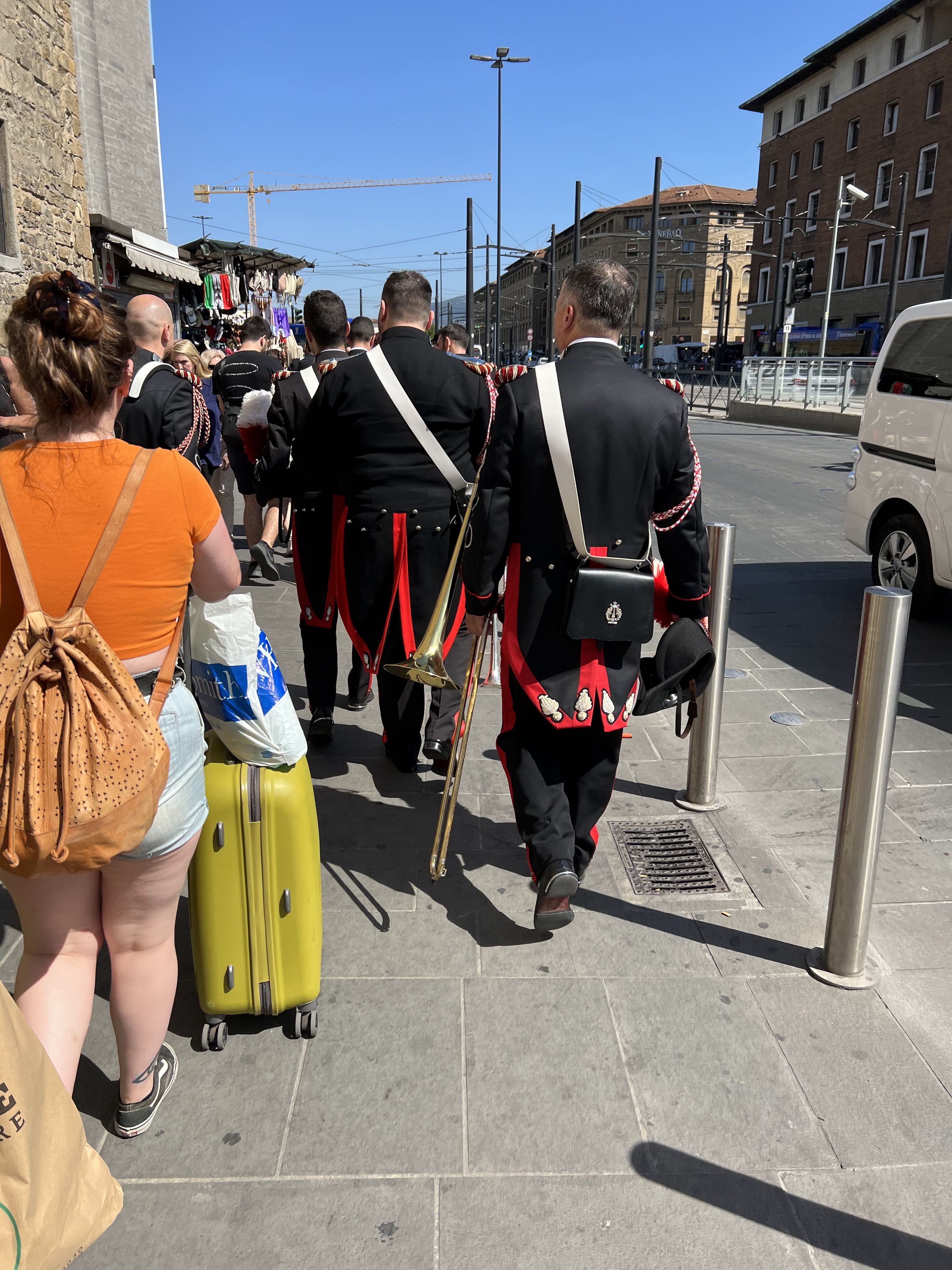
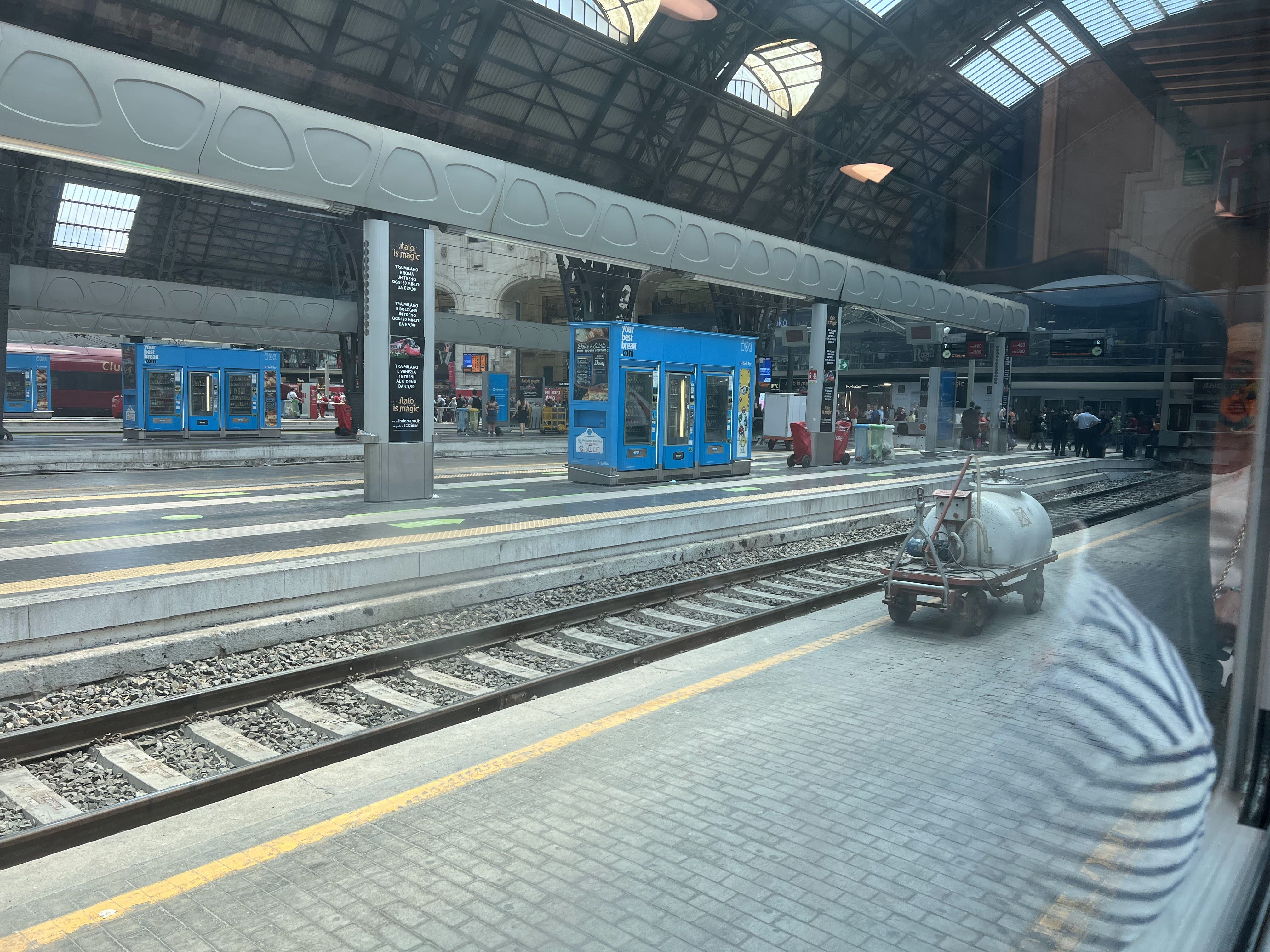
Left: The day we left Firenze was actually the anniversary of the founding of the Italian Republic, we didn’t know this so we wondered what all the military bands were for.
Top right: Yes, “italo is magic.”
 MOR'NA MILE AWEE