May 29 – May 31, 2022
*Editor’s note: I’ll say this once and only once, not to be repeated elsewhere on this blog. The events of May 29th, 2022, as they transpired in the Dublin airport can only be described as straight out of Dante’s unwritten 8th circle of hell. We would not discover until several days later, per an NYT article, that we unwittingly participated in the worst day in Dublin airport history. Post-Covid, the world was eager for hot, fresh, summer travel, as were we, and all these eager travelers merged into a giant, sweating, understaffed mass that Sunday morning. Pushed like rats through the worst lab maze of all time, one that had a clear tantalizing end we simply could not reach, we waited 2 hours to clear security alone. Mark, Susan, Jordan, and Sam emerged victorious from this gauntlet, but only barely. Flights were made, but lines were drawn. In the future, Pecks will be avoiding RyanAir almost as doggedly as AirCanada.
Now that’s out of the way. So, the plan for Mark and Susan’s week in Italy had been given some bare-bones structure by Jordan (lodgings, transportation, etc.) but Mark developed the itinerary and they filled it in as they went. The rough plan was for Mark and Susan to fly into Venice from Edinburgh and stay for a few days, rent and drive a car to Florence, and again, after a few days, drive another car to Varenna on Lake Como. They would then take a train from Lake Como to Zurich and fly home from there. In retrospect, they would probably have preferred to devote more time to fewer large cities, or pick a more car-friendly countryside route and kept one rental car the whole trip. But these reflections serve only as constructive feedback for future Italian adventures, and it’s also very hard to mess up Italy in any way.
We now defer to our guest writer, Mark, for commentary on photos, and will leave more dramatic narration for other posts.
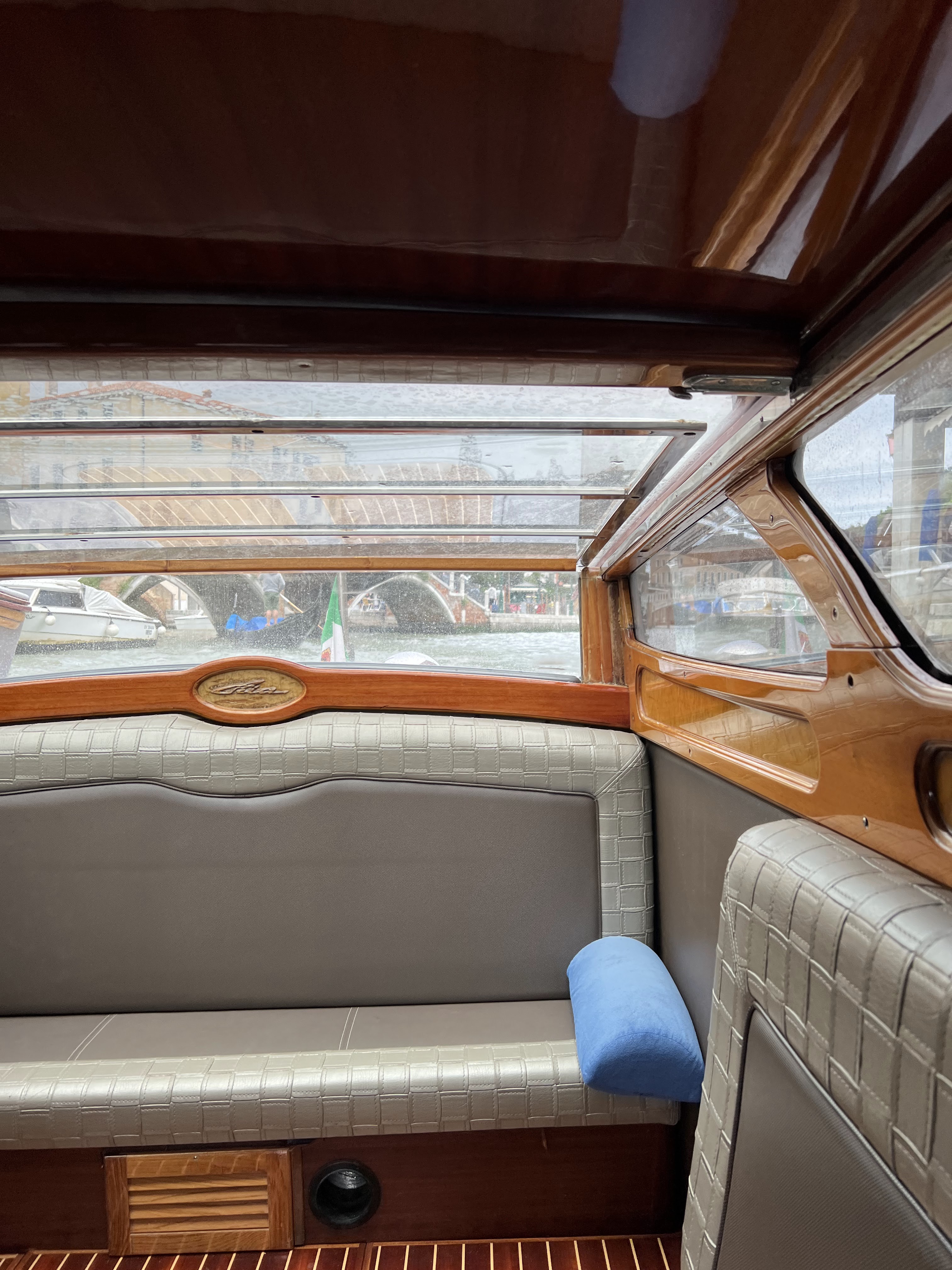
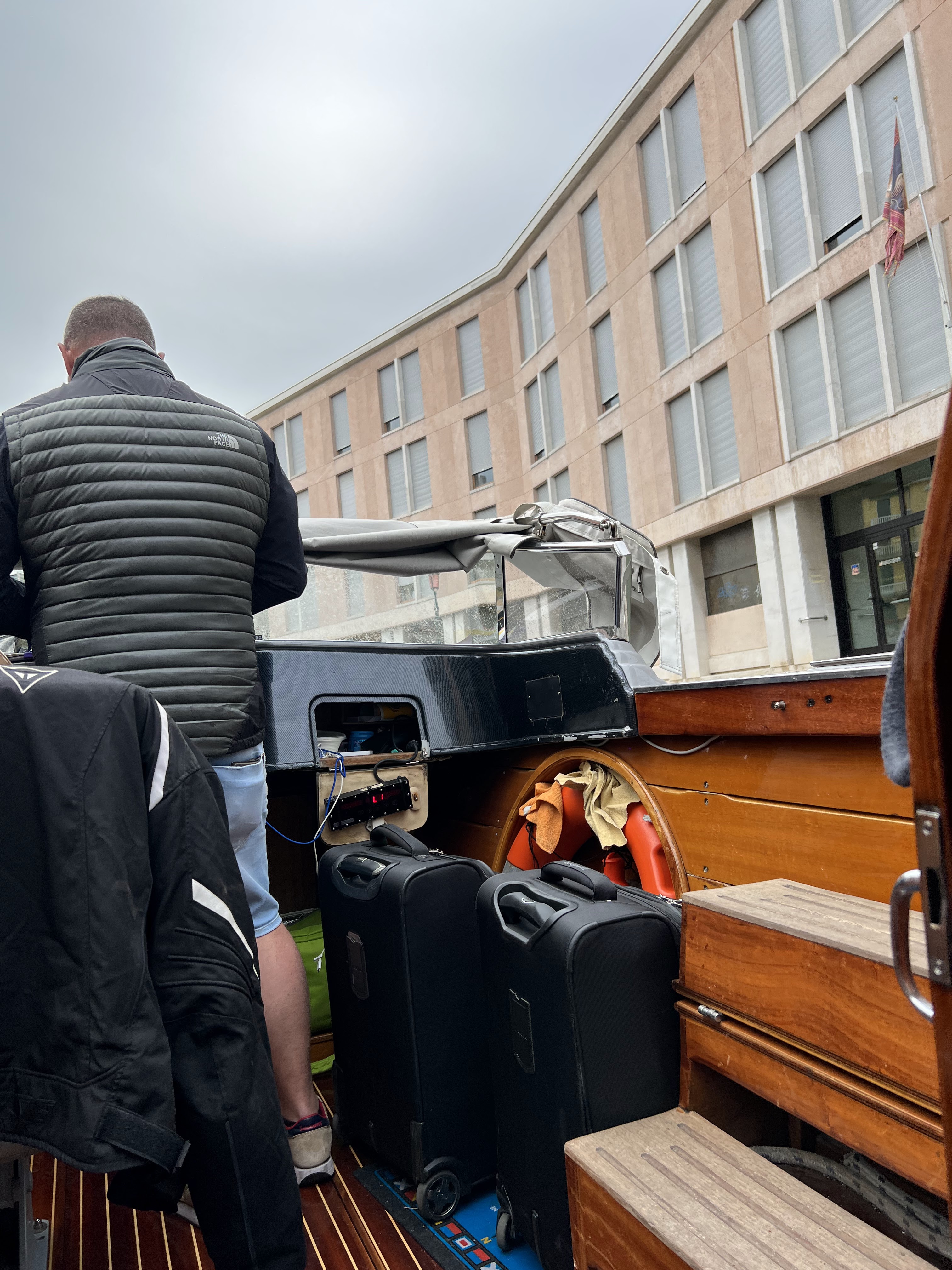
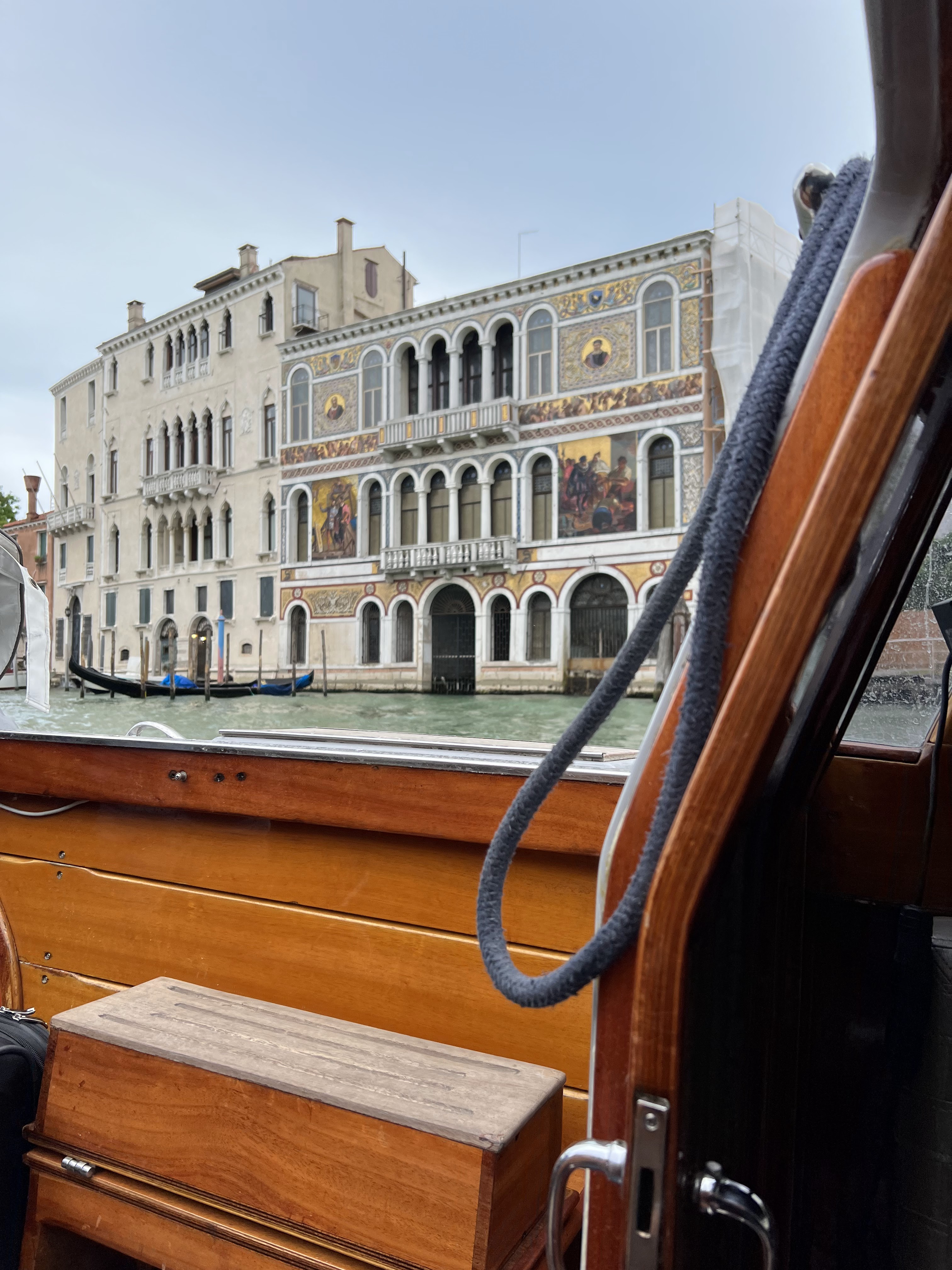
The water taxis that run along the Grand Canal in Venice are really nice, like overgrown Chris-Crafts from the 60’s before they started to use fiberglass. Also kind of expensive, we took this one from the train/bus/taxi terminal to our hotel and it was €60. On the way back two days later, we took a water bus instead. The taxi drivers all know each other and holler at each other in Italian as they pass. It’s one thing to know intellectually that there are no cars in Venice, it’s another thing to experience waterways and boats in person.
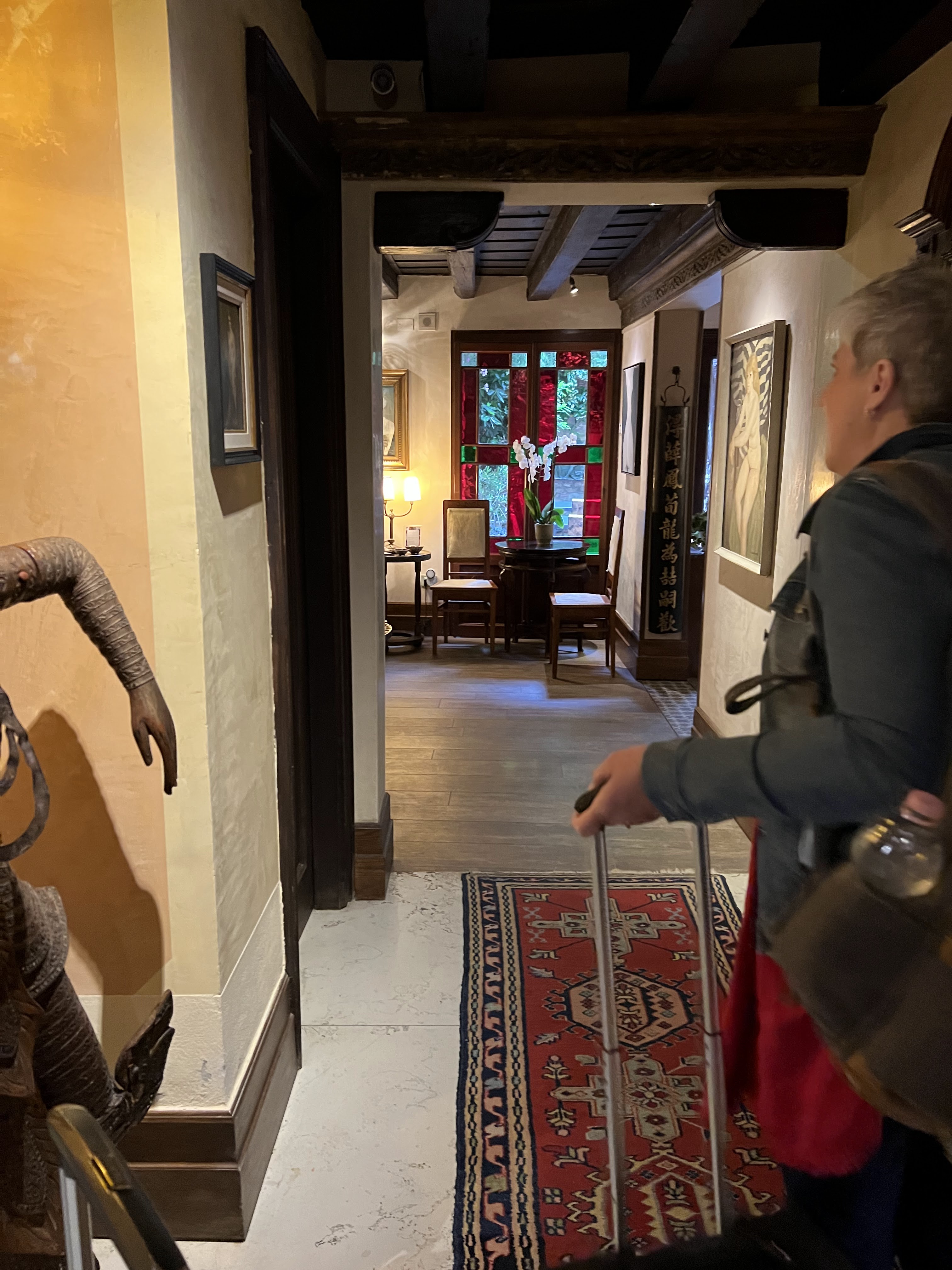
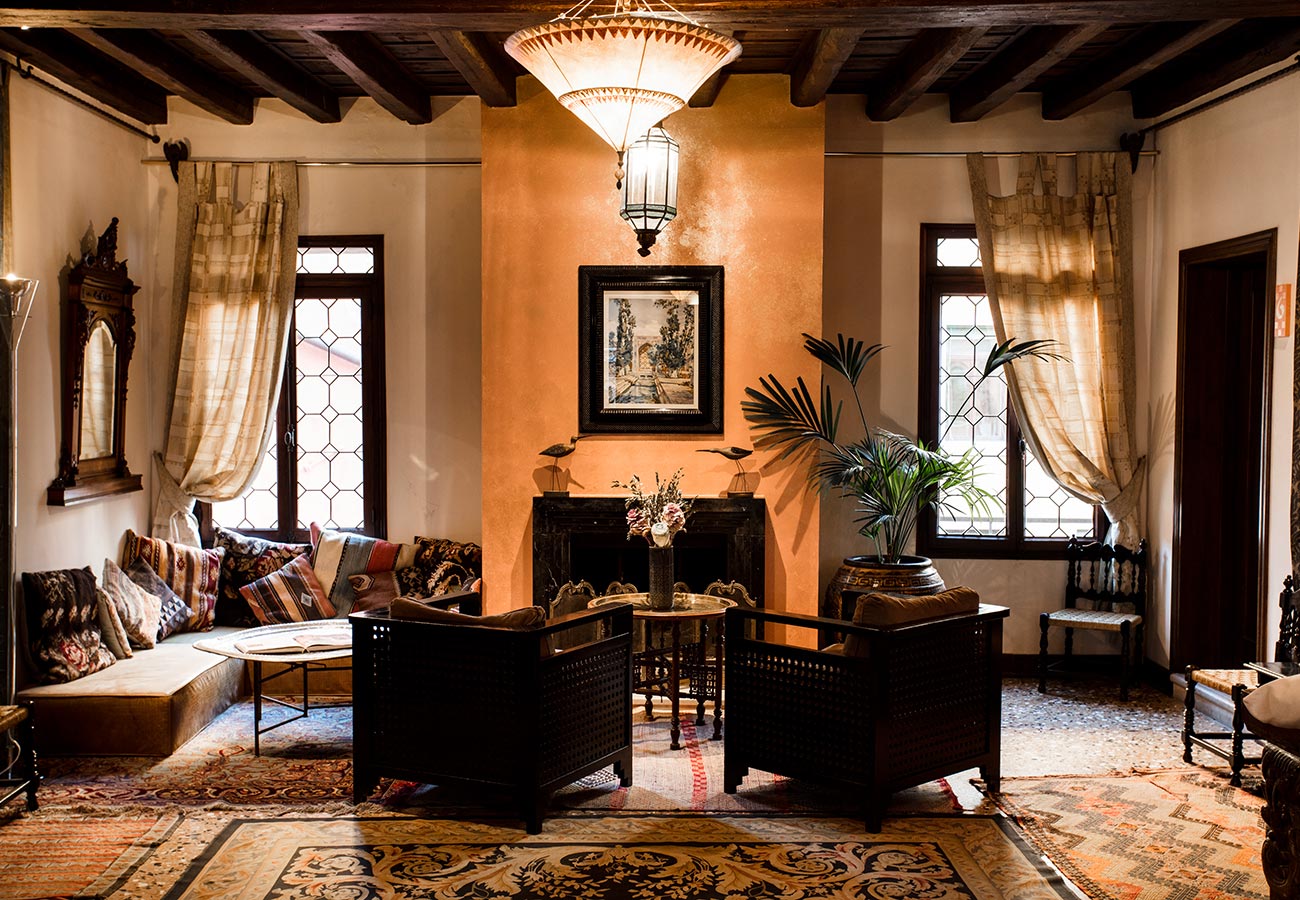
We stayed at the Hotel Novecento (Nova-Chento) in Venice. A delightful boutique hotel, we loved it.
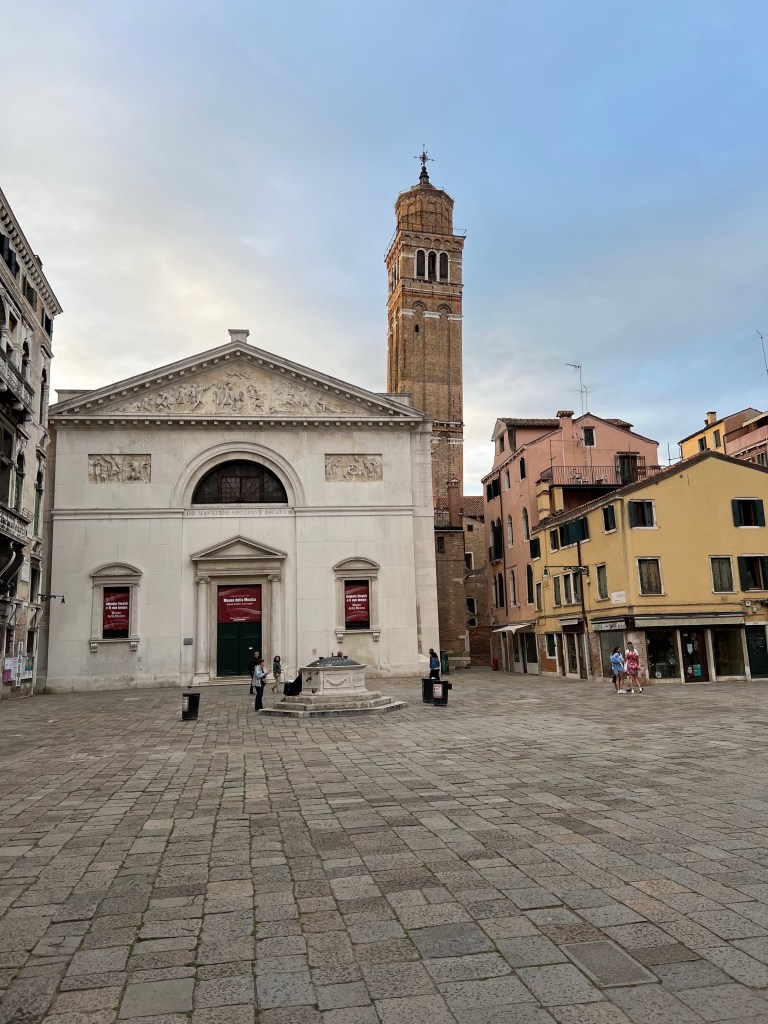
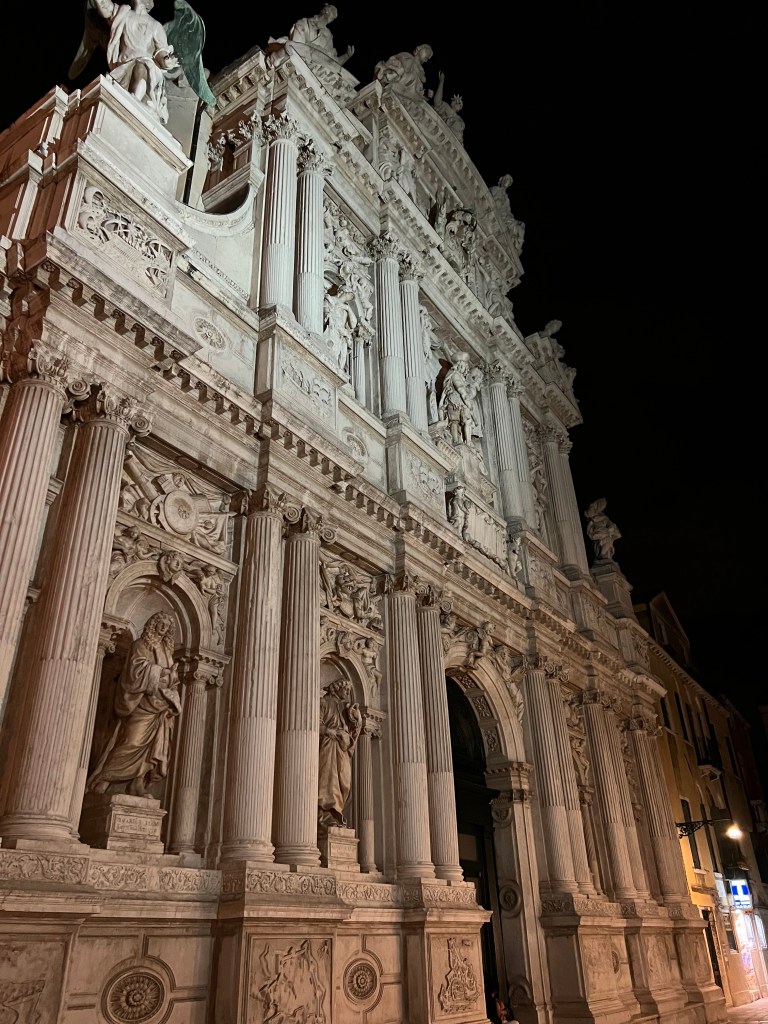
Regarding the above church/museum, we pulled this from Wikipedia: “San Maurizio is a Neoclassical-style, deconsecrated church located in the campo San Maurizio in the sestiere of San Marco of the city of Venice, Italy. It now is a Museum focusing on the music of Baroque Venice. A church was present at the site before the first reconstruction in the 16th century.” We poked our heads in there at one point because we heard there were fabulous stringed instruments on display, and there were – but you had to pay to walk around … OR you could come to a concert that night with musicians playing the very instruments, very beautiful, and concert admission got you walking around privileges. We thought that would be a cool thing to do but a little too … aspirational … to think we’d be able to stay awake the whole concert. Also, the tower is the Campanile di Santo Stefano.

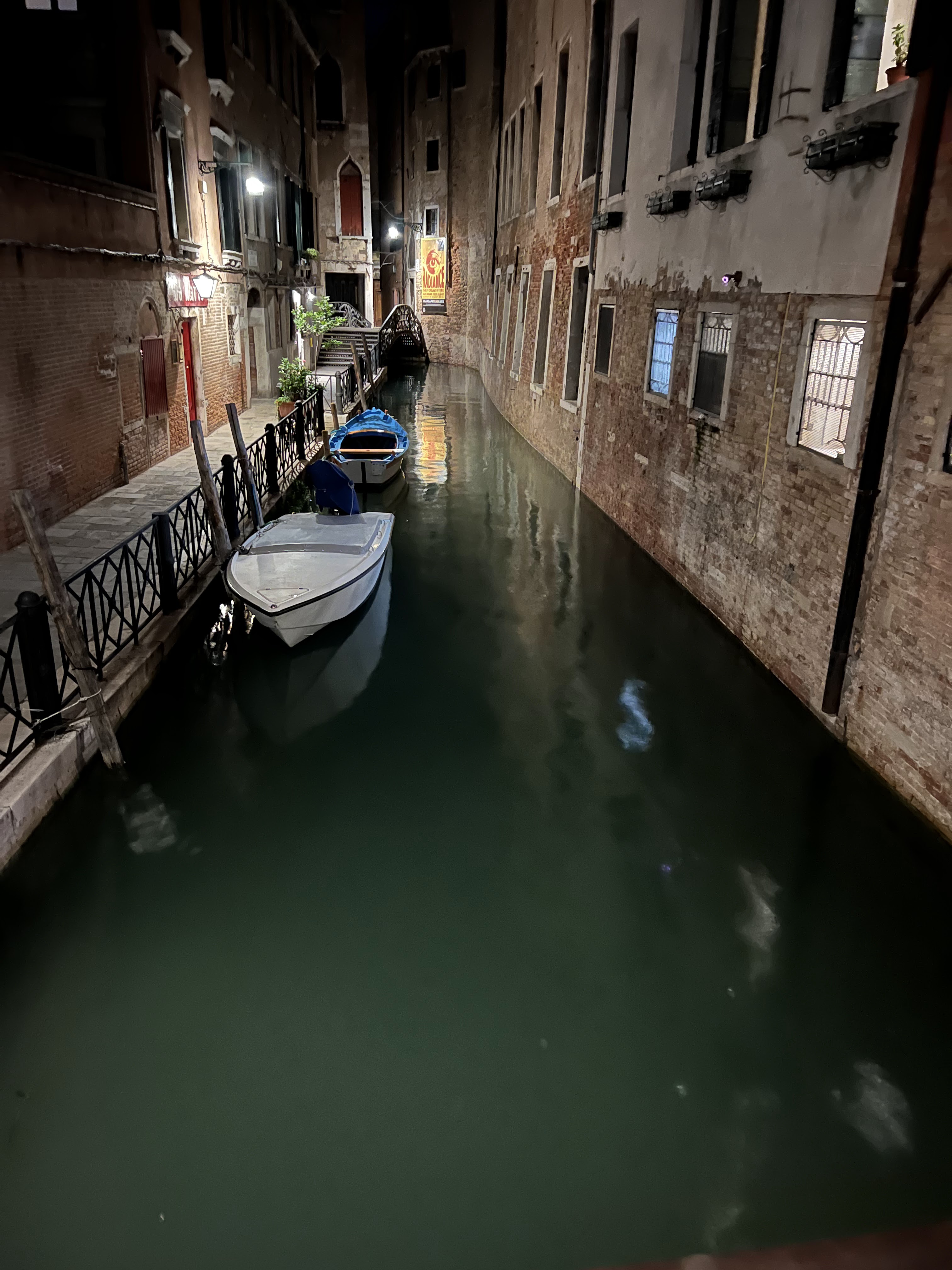

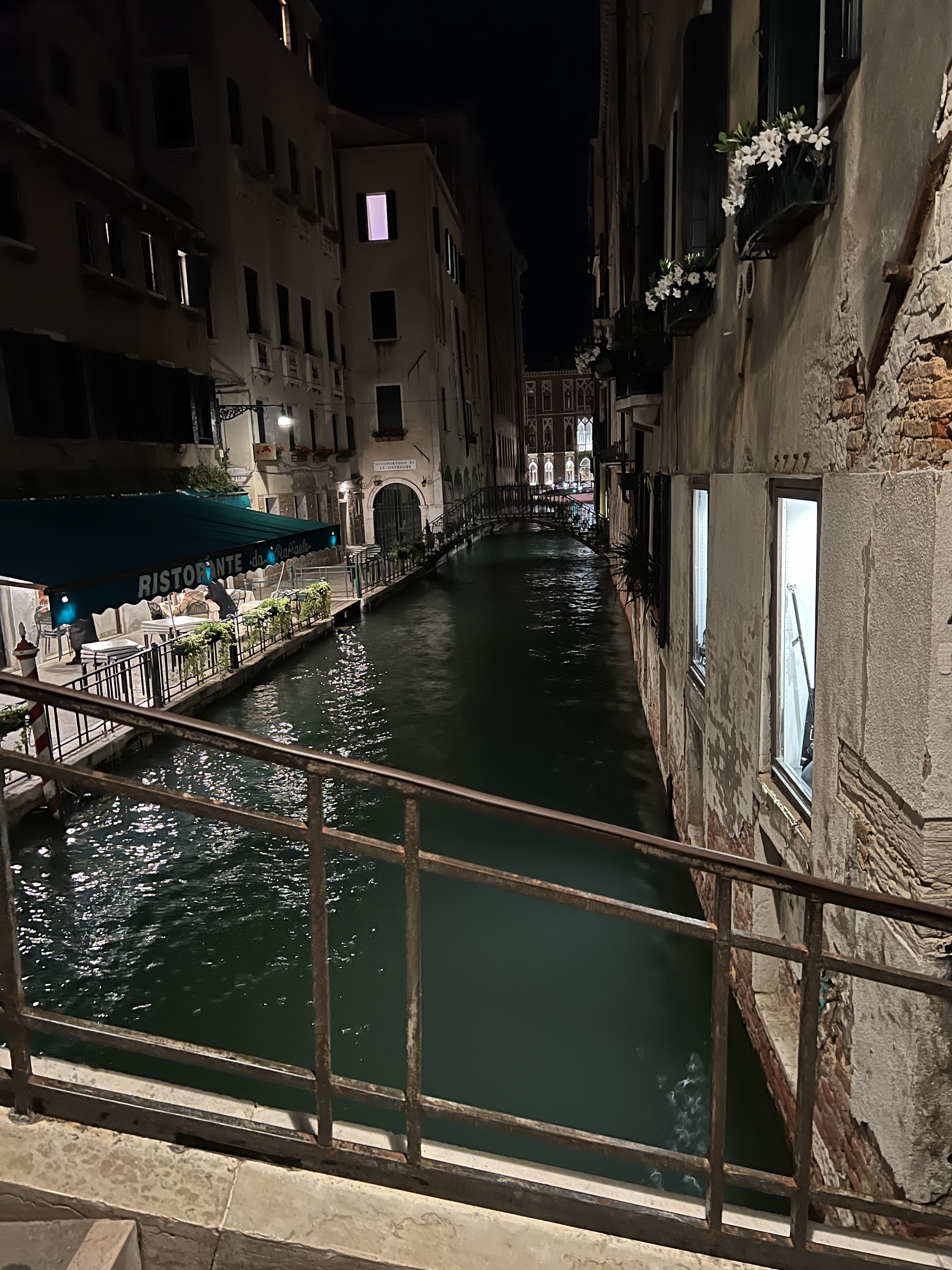
The canals are everywhere, I can’t believe this is an actual place in the world. I mean, I know it is, it’s why we went there, it was just so incredible to experience it in person. Of course, to get from street to street you have to cross the canals, so there are as many bridges as there are canals, and they’re all different, with different levels of ambition … but generally the steps are broad, deep and easy to navigate. Like they’ve been hosting tourists for centuries or something.
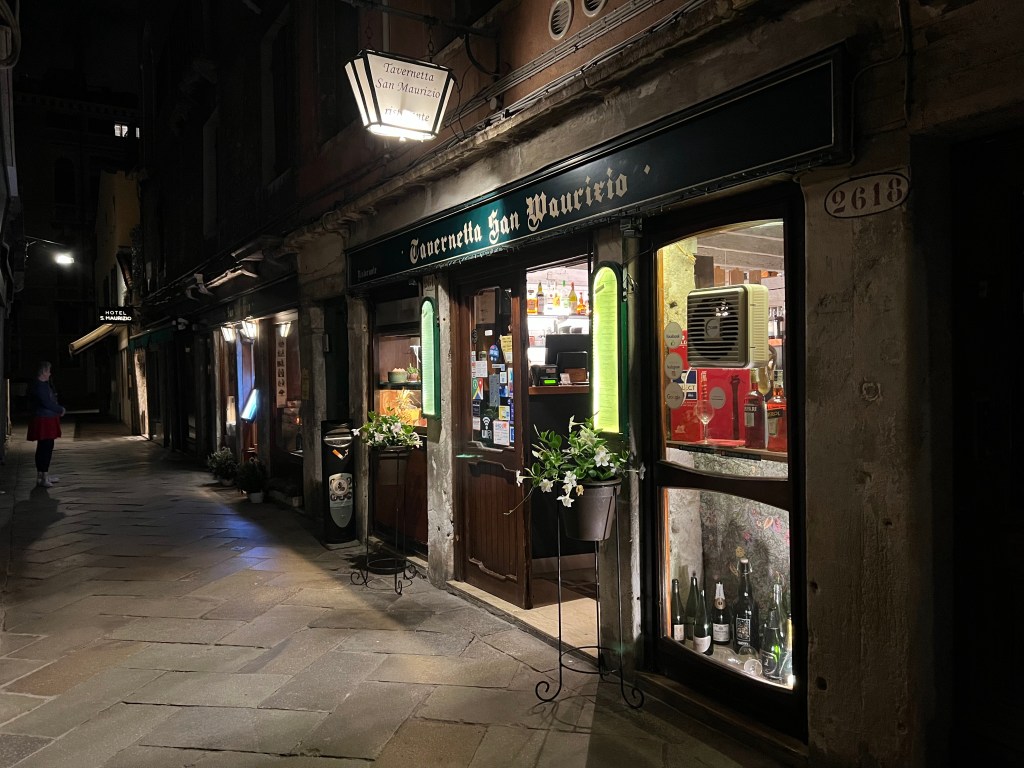
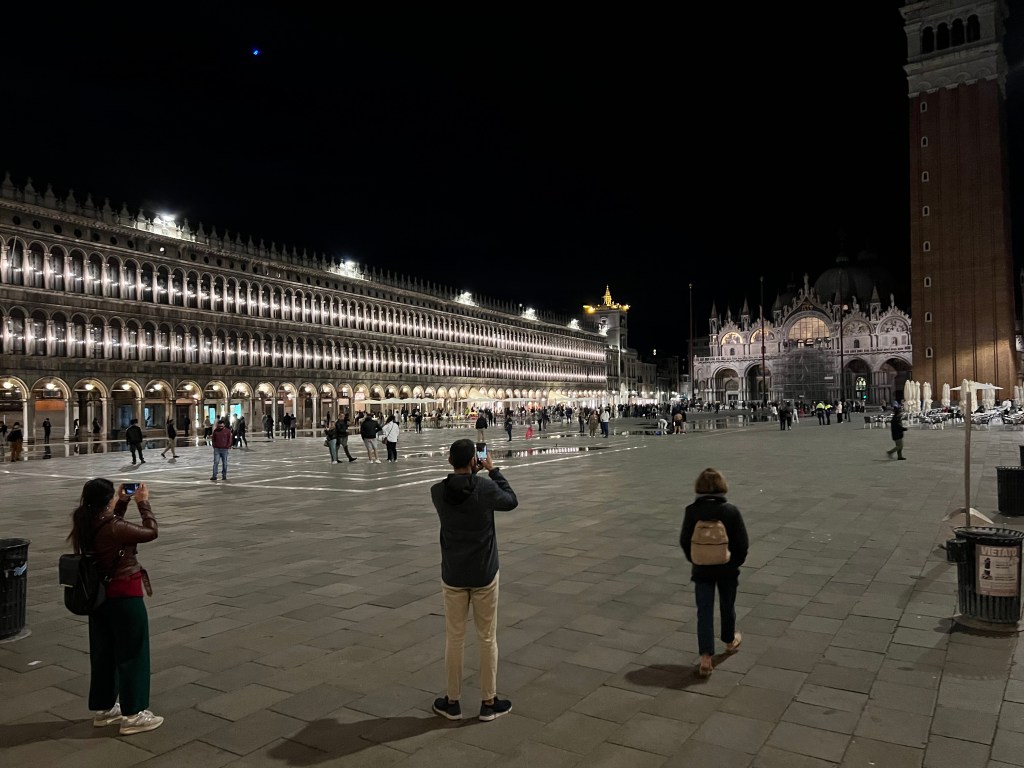
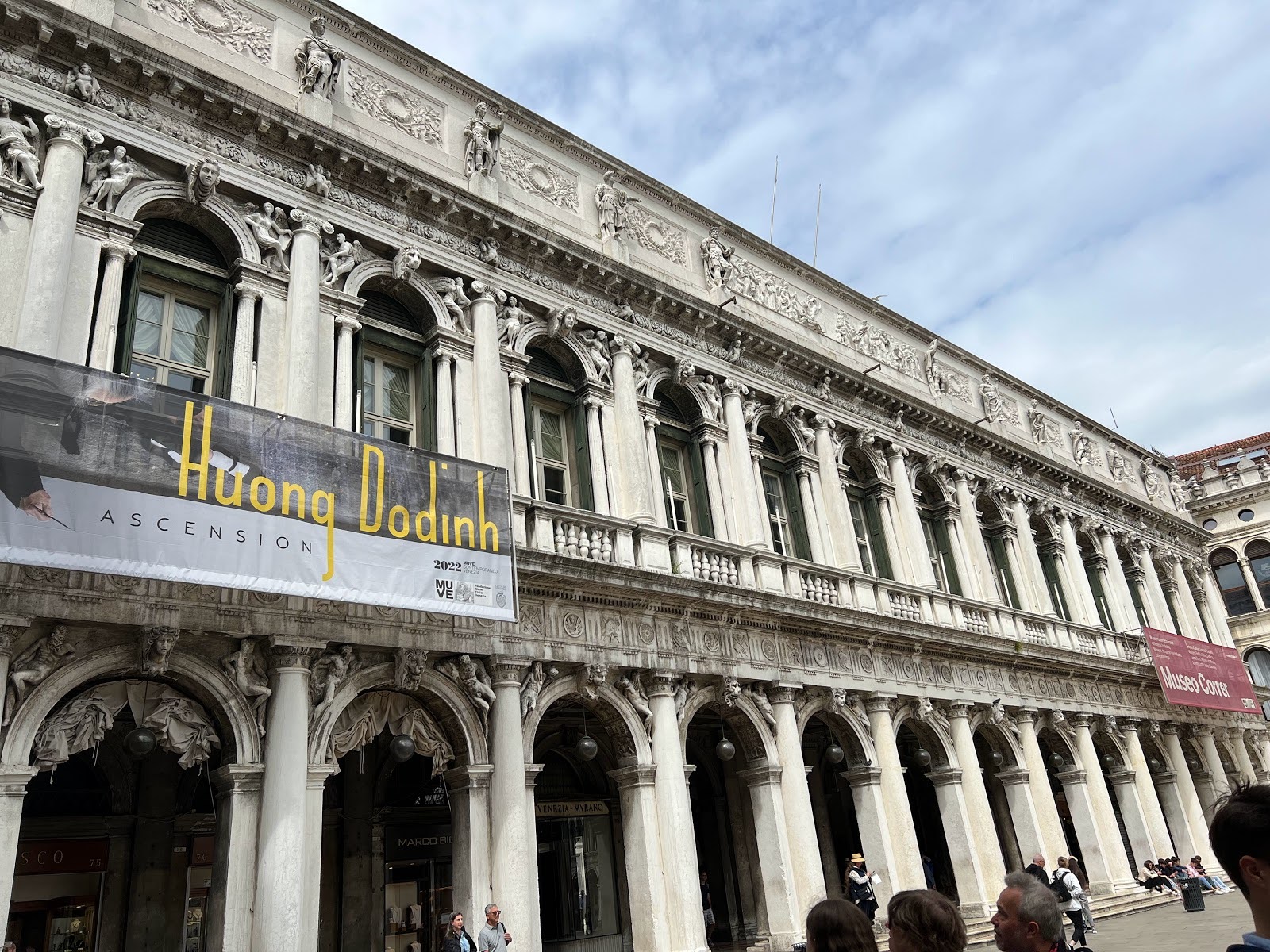
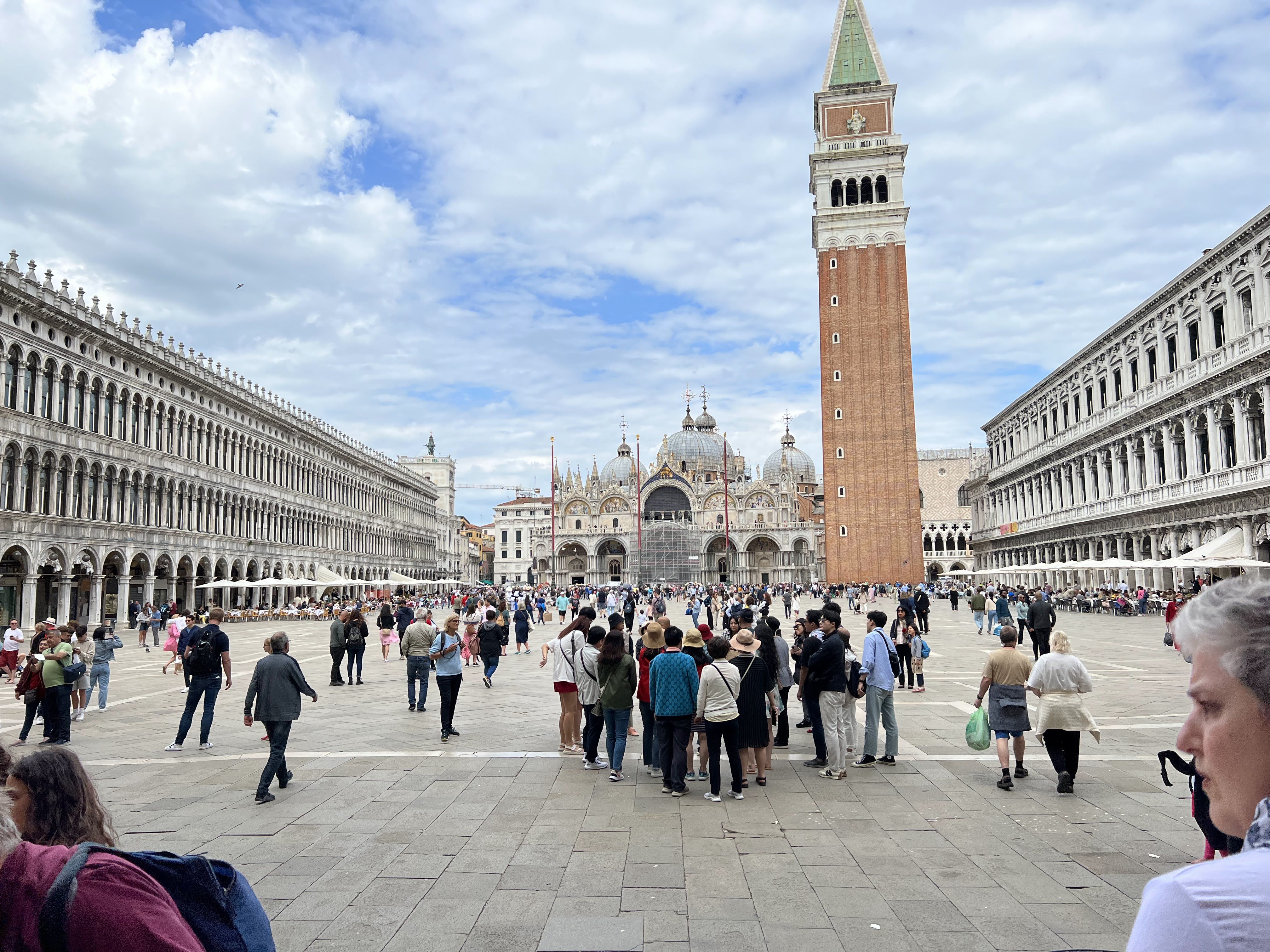
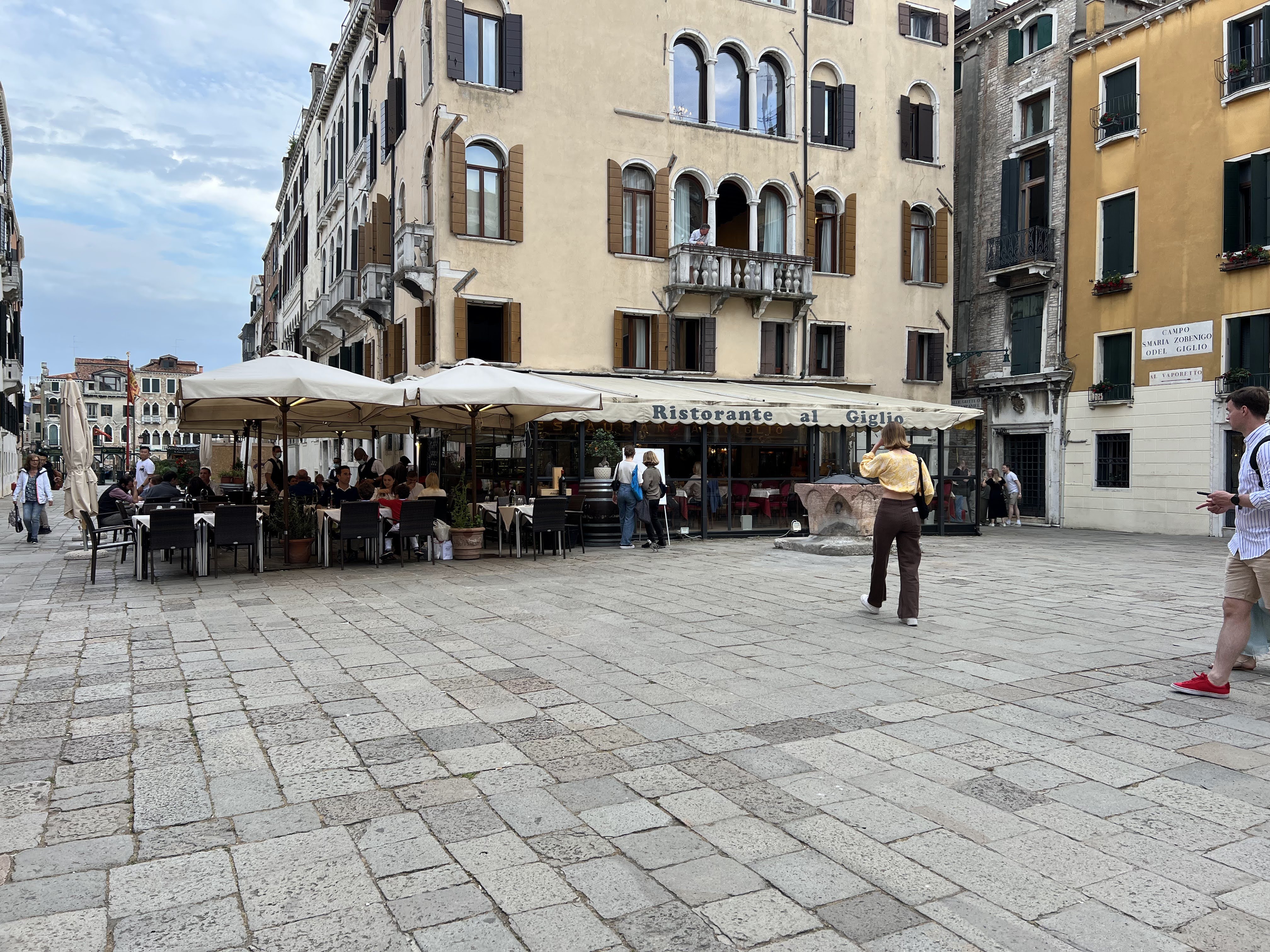
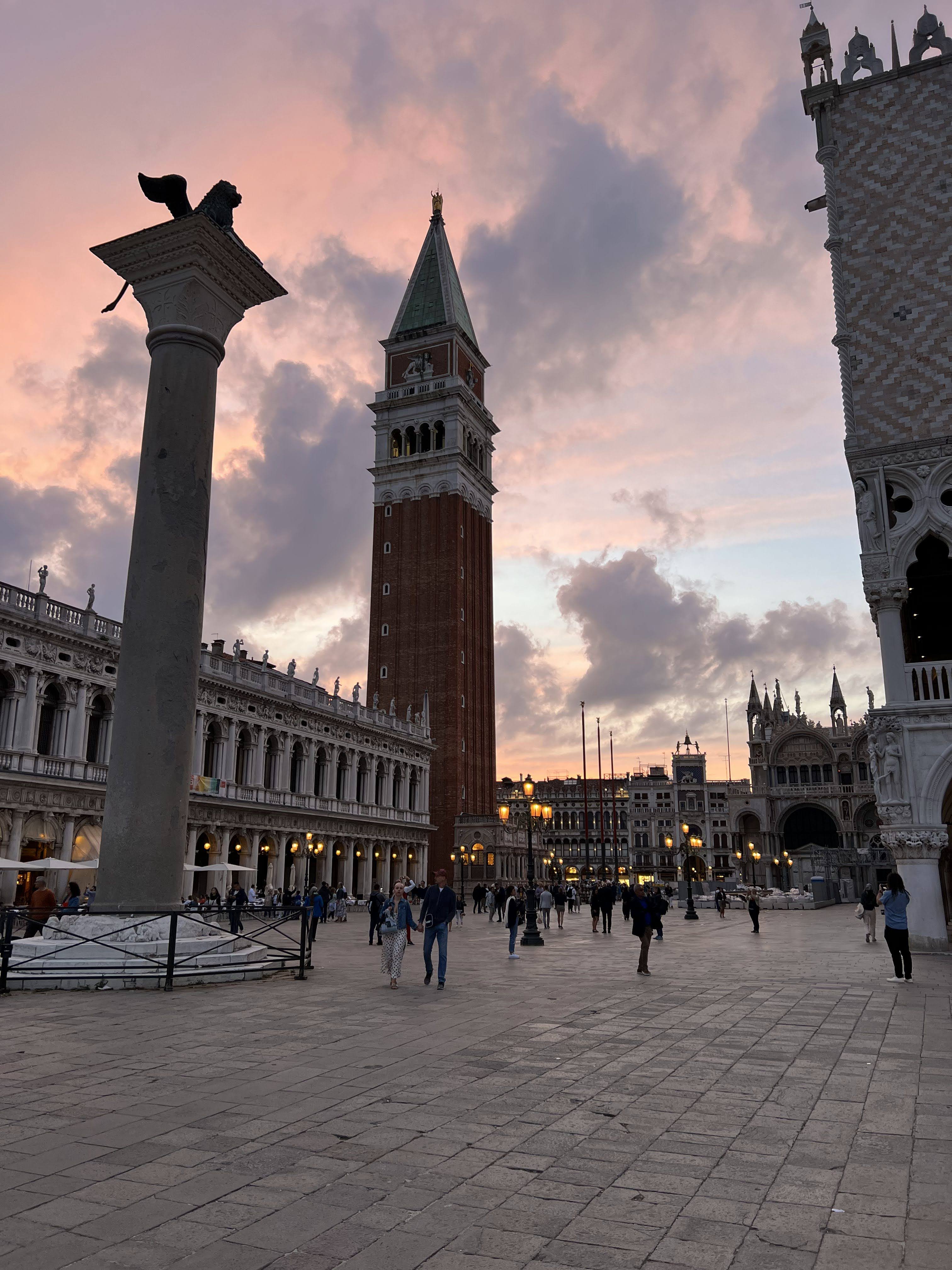
Piazza de San Marco at night. Everyone had their phones out all the time taking pictures. The tower to the right is the campanile (bell tower) and the Basilica de San Marco is right next to it. To the left, the long building with shops is one of the three Procuratie, formerly administrative buildings that are now museum spaces on the upstairs floors. There are at least three restaurants in this part of the piazza with their own bands or orchestras. The piazza is large enough that generally, when you’re close to one band, you don’t hear the others – but in certain spots you can hear several at once. You can also see Chiesa di Santa Maria del Giglio in the top middle photo and Tavernetta San Maurizio – where we had dinner the first night (top right photo). As you’d imagine, it’s just off the Piazza de San Maurizio, which is outside the Église San Maurizio.
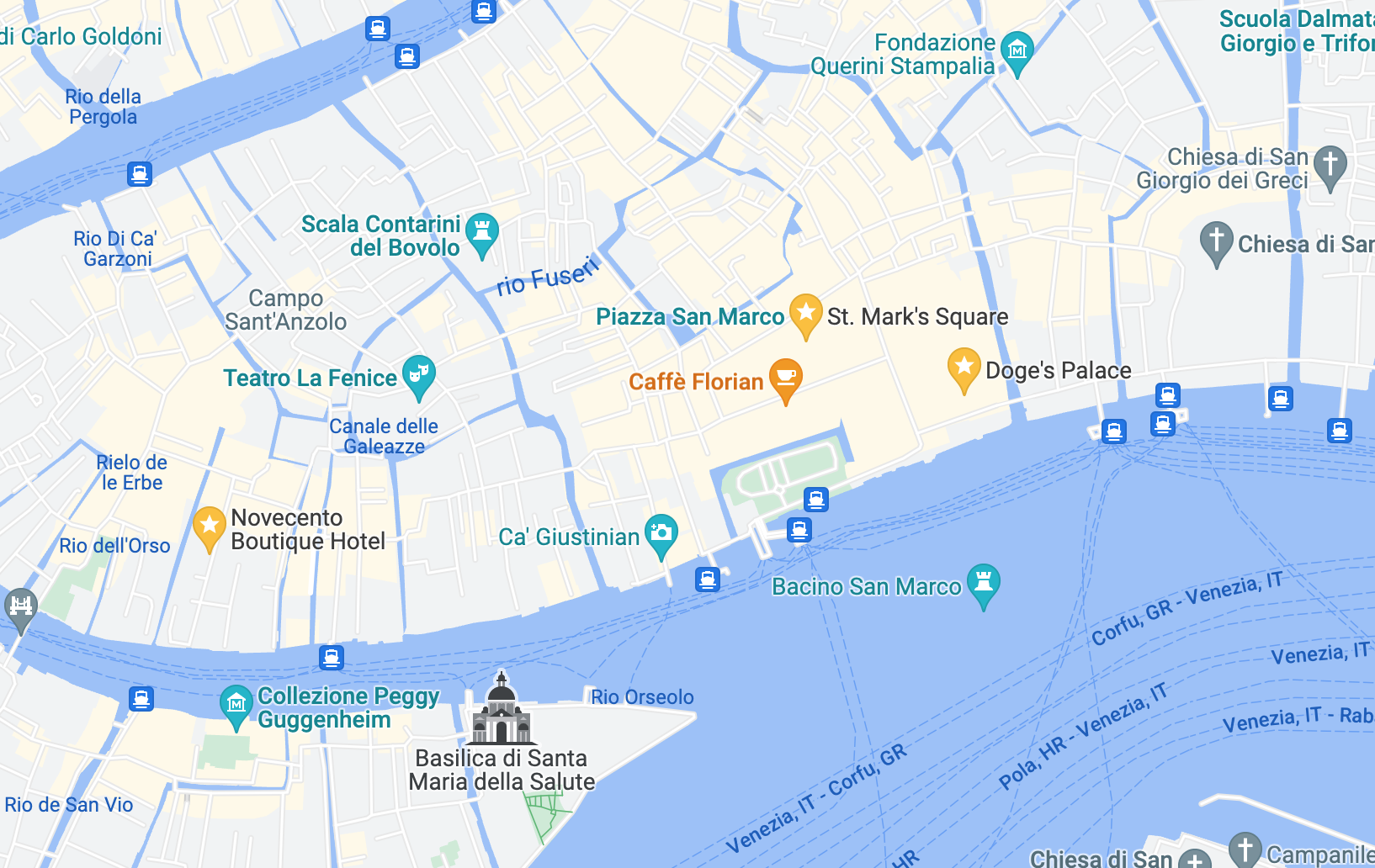
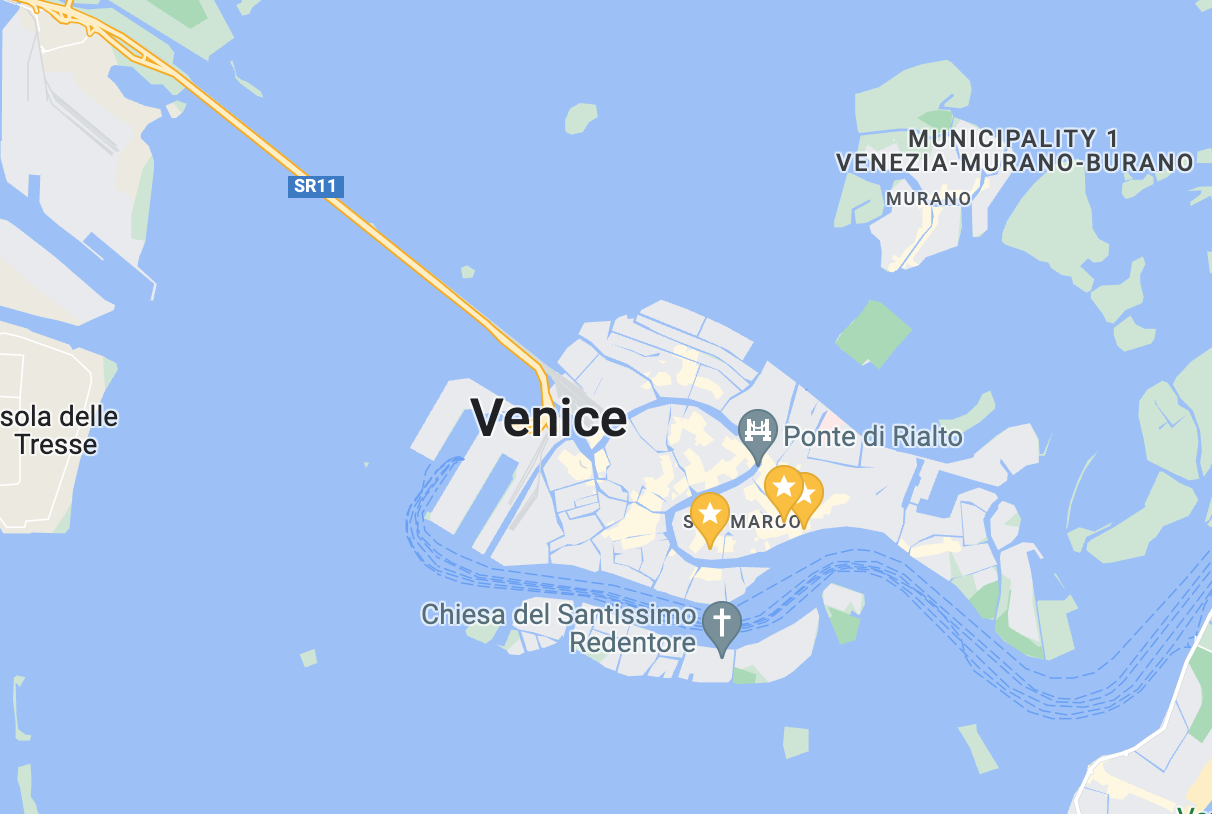
Venice, though small by square area, contains multitudes. Here you can see the main area we were able to cover in a couple days, particularly our hotel, Piazza de San Marco (St. Mark’s Square), and the Doge’s Palace.
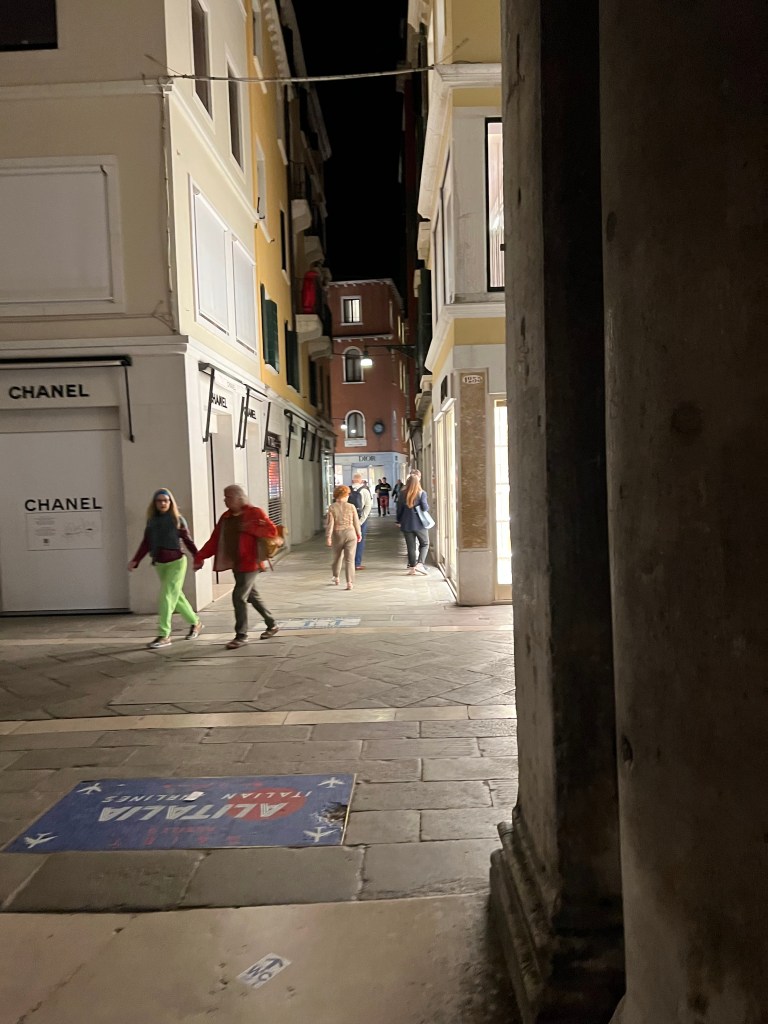
The first night after dinner we realized there was a route, following streets over bridges and through piazzas, between our hotel and the Piazza de San Marco – we must have walked that half a dozen times or more (see top left photo). We basically followed the people and the fancy shops. I’m not normally a window-shopper but that was actually a really fun thing to do here.
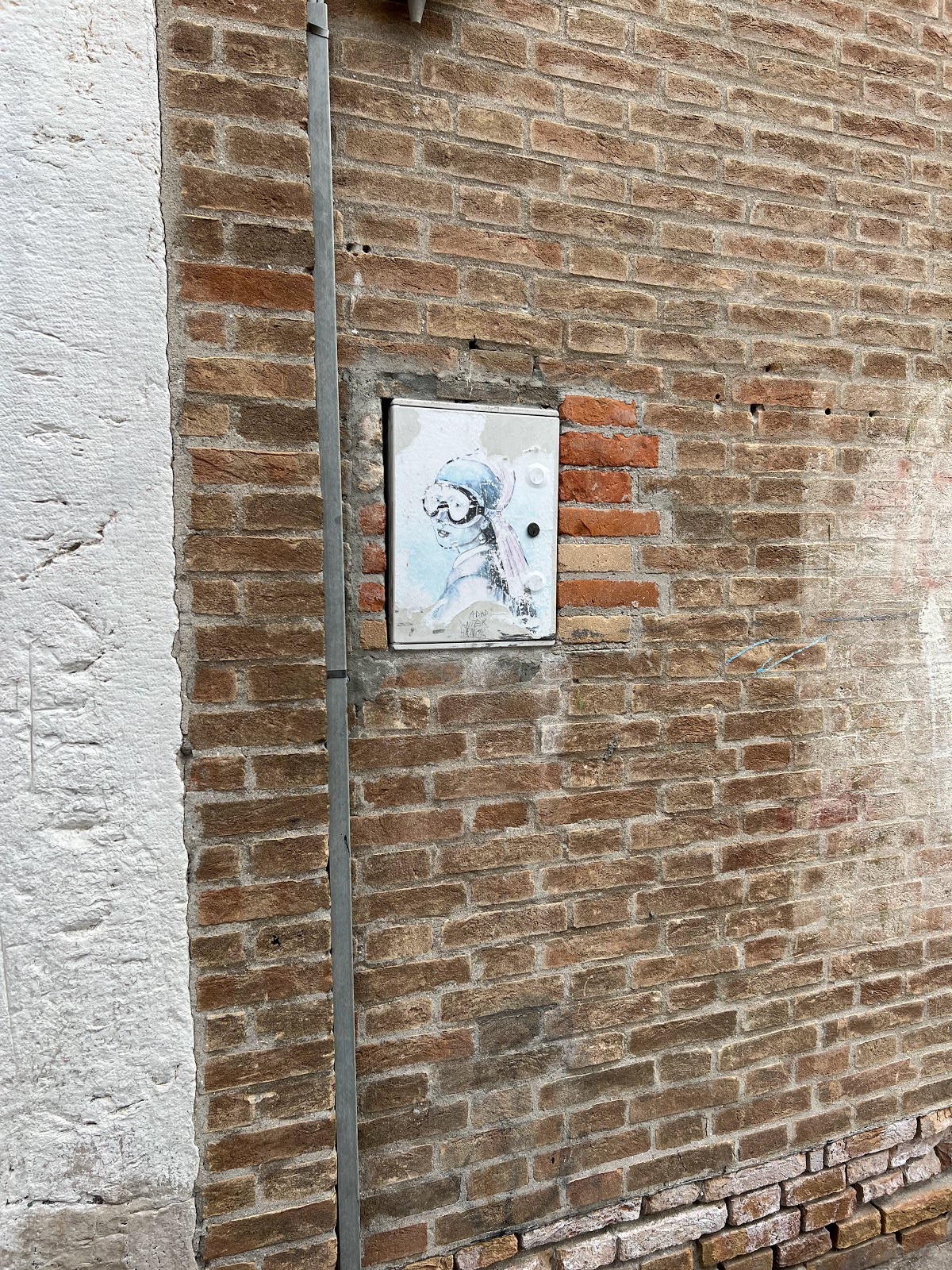
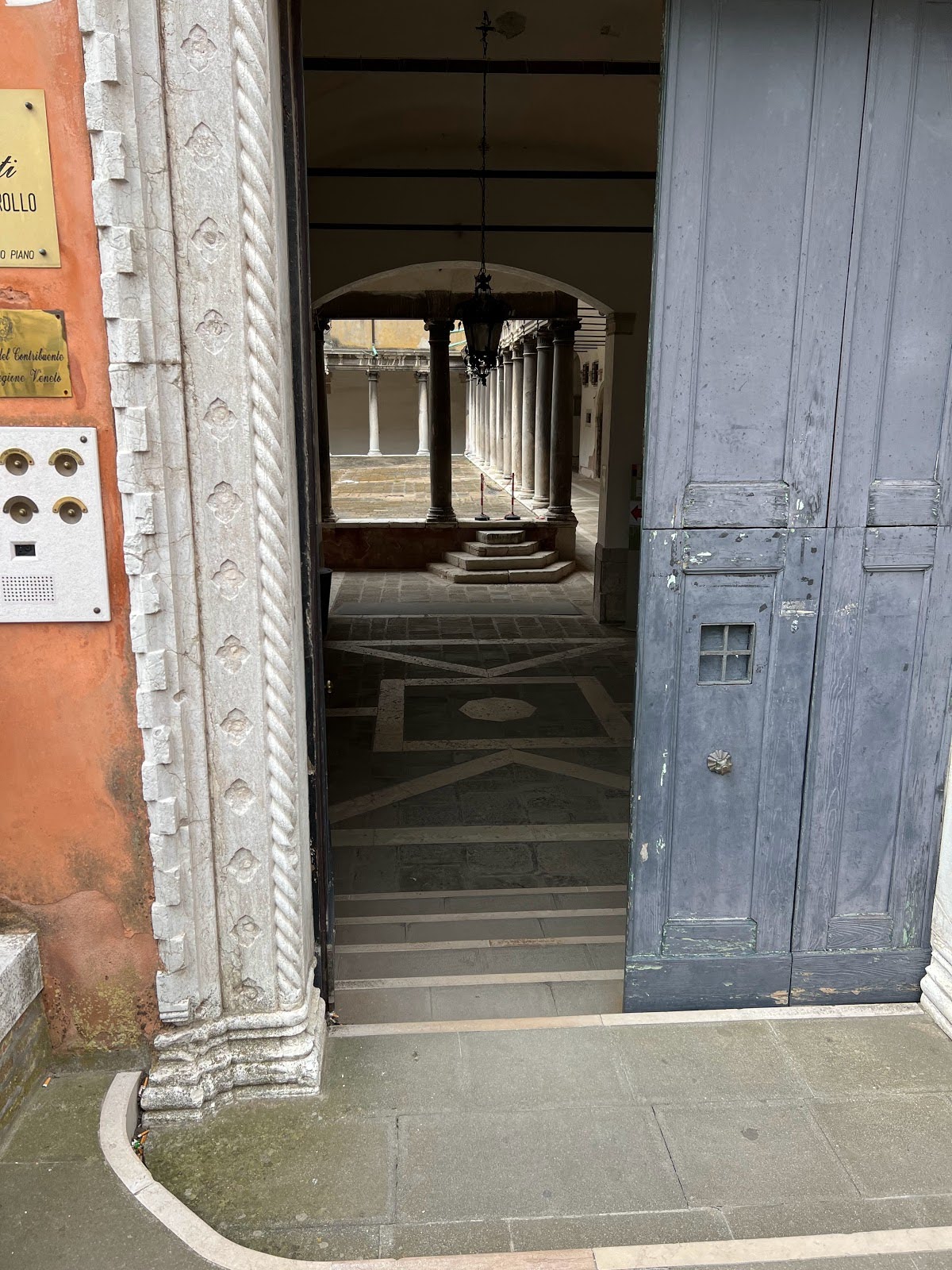
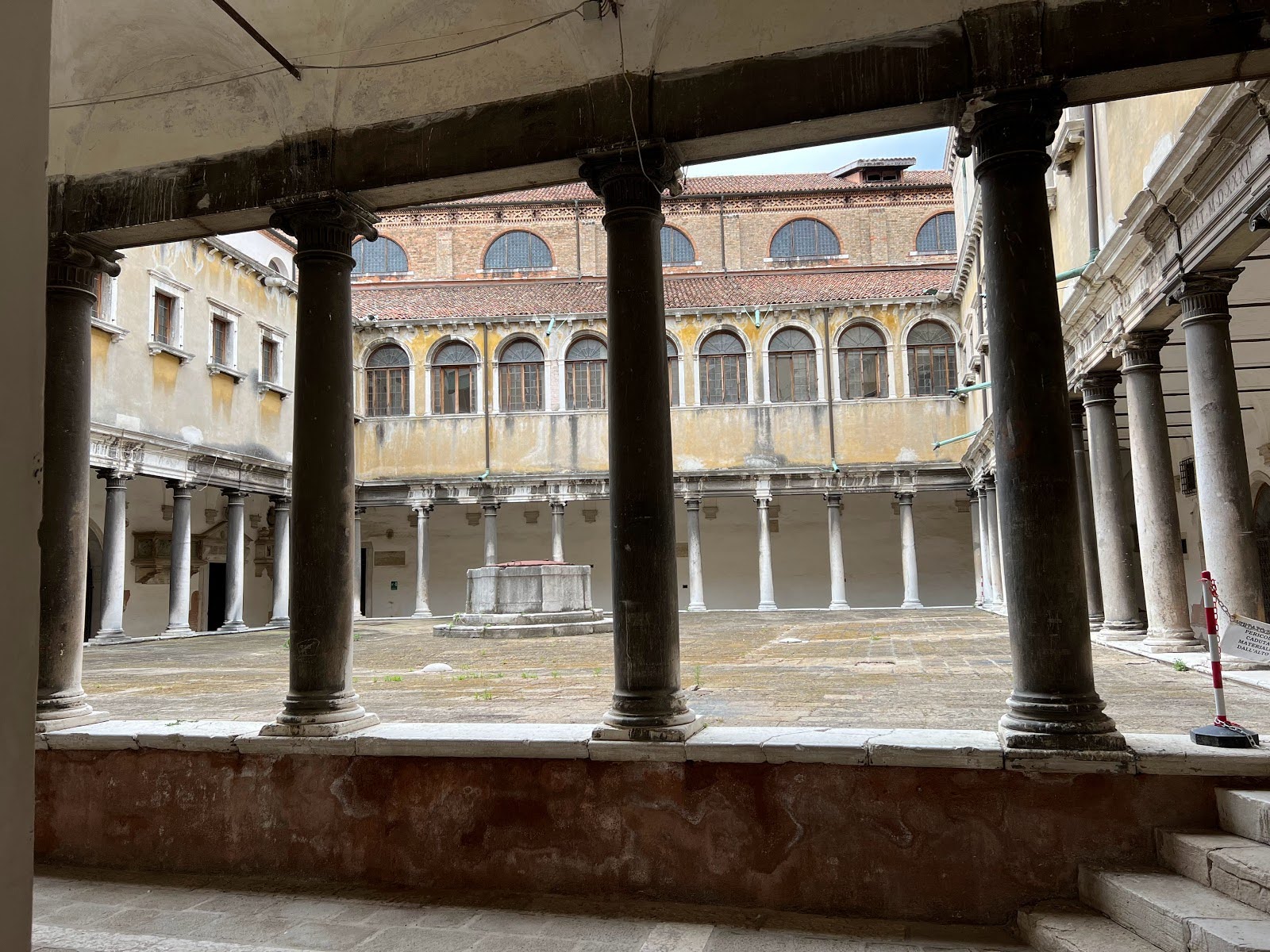

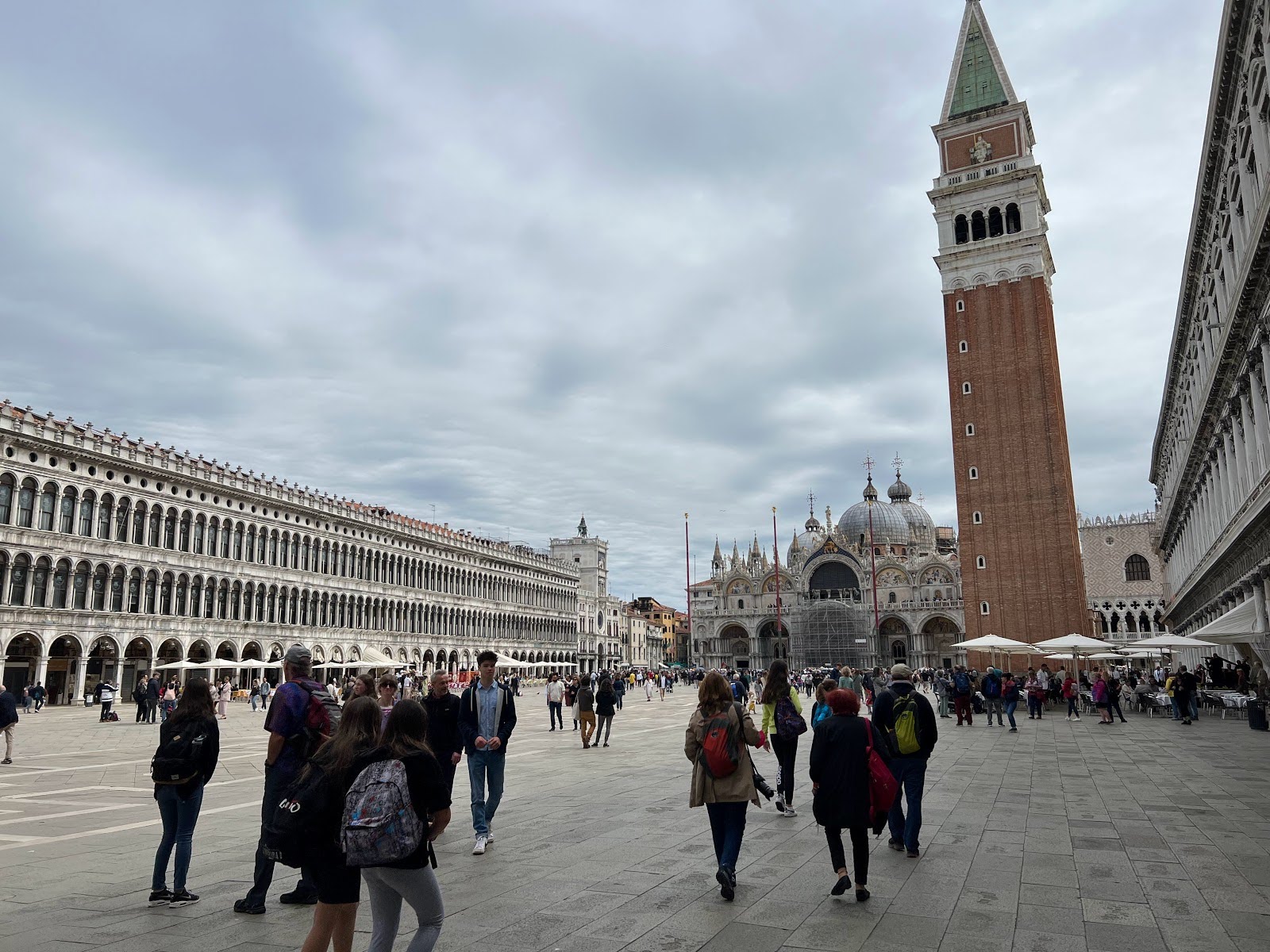
In the top right photo, the door was open, and we looked inside. There was this cool interior courtyard, it looked really old. I forgot to write down what this actually was, and I’ve scoured Google Maps trying to figure out what it actually is.
You can see in the bottom middle: Taverna near La Fenice, a famous theatre.

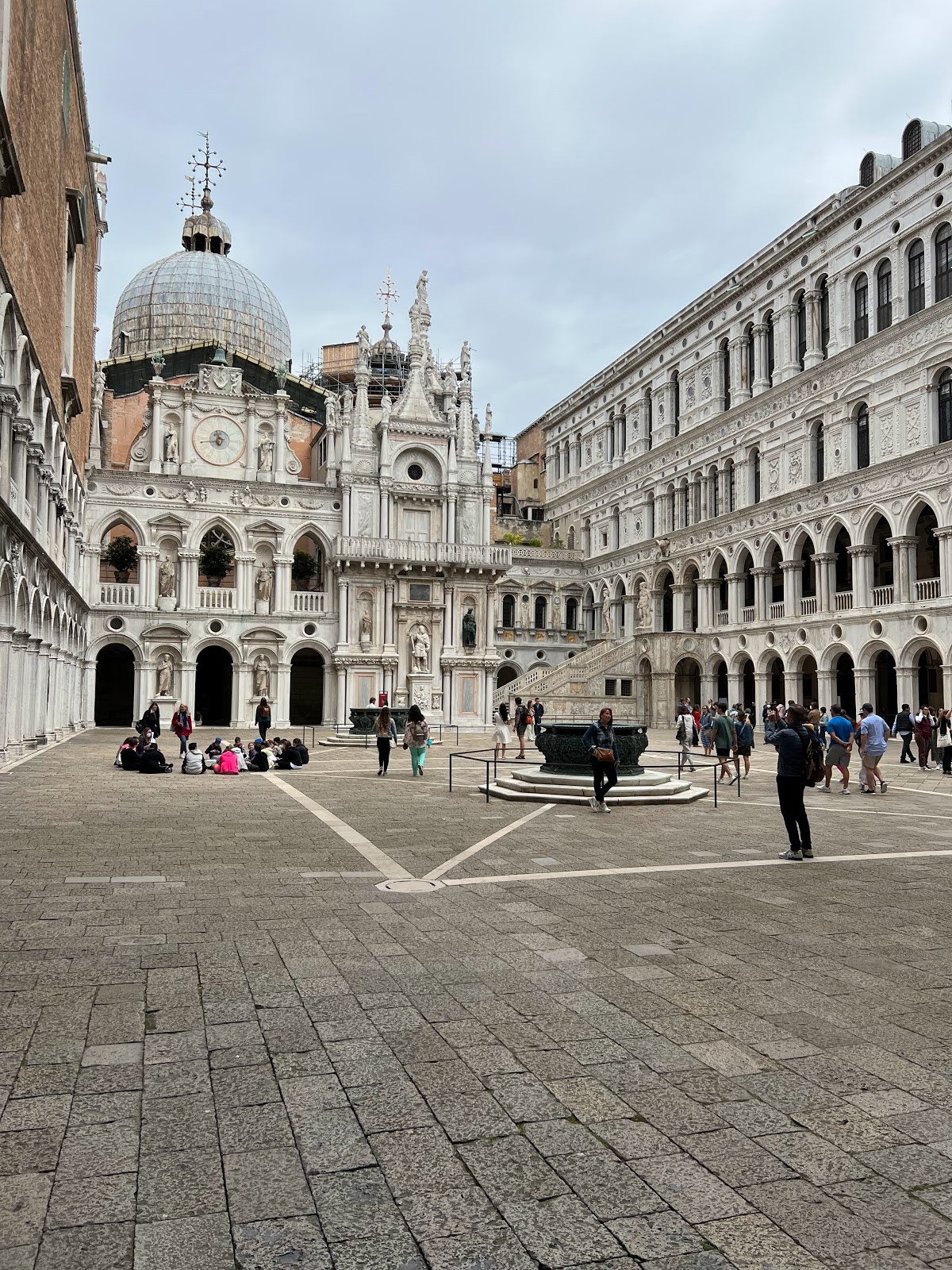
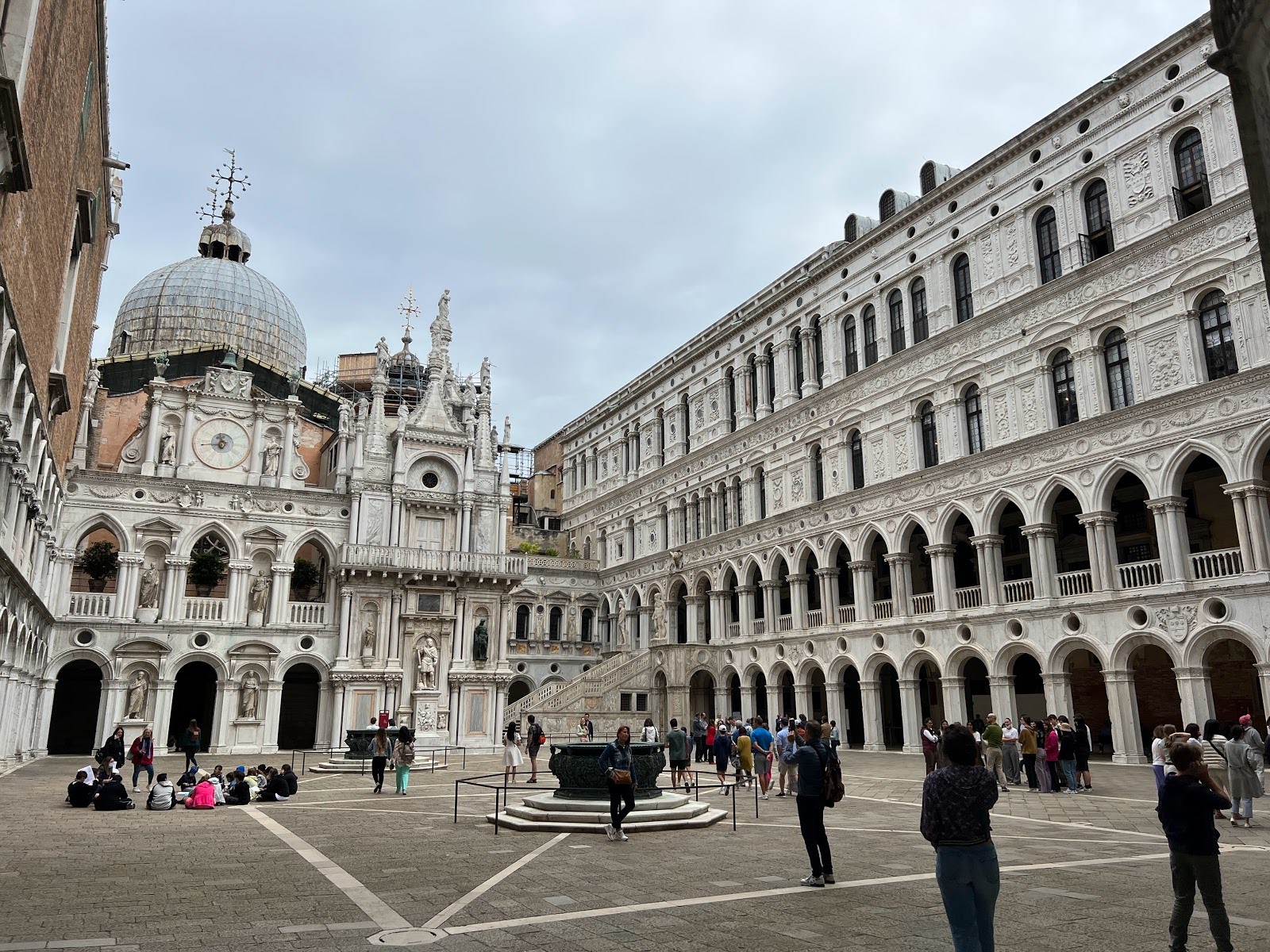
Again borrowing from Wikipedia: “The Clock Tower in Venice is an early Renaissance building on the north side of the Piazza San Marco, at the entrance to the Merceria. It comprises a tower, which contains the clock, and lower buildings on each side. It adjoins the eastern end of the Procuratie Vecchie. Both the tower and the clock date from the last decade of the 15th century, though the mechanism of the clock has subsequently been much altered. It was placed where the clock would be visible from the waters of the lagoon and give notice to everyone of the wealth and glory of Venice. The lower two floors of the tower make a monumental archway into the main street of the city, the Merceria, which linked the political and religious centre (the Piazza) with the commercial and financial centre (the Rialto). Today it is one of the 11 venues managed by the Fondazione Musei Civici di Venezia.”
In the middle photo: the inside of the Doge’s Palace (Palazzio Ducale). The Doge was an elected official who was the most senior administrator in the Venetian Republic, this was their palace.
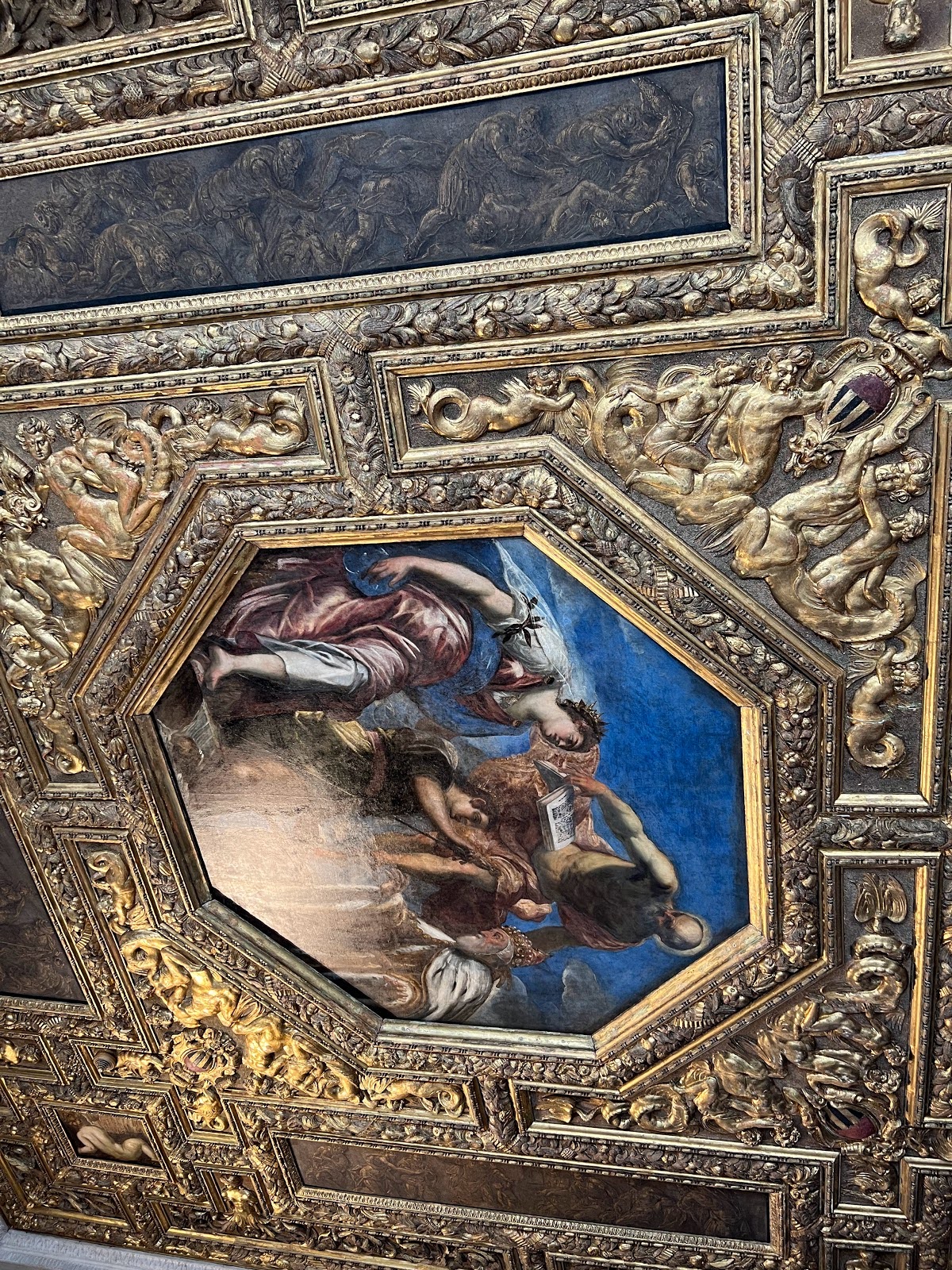
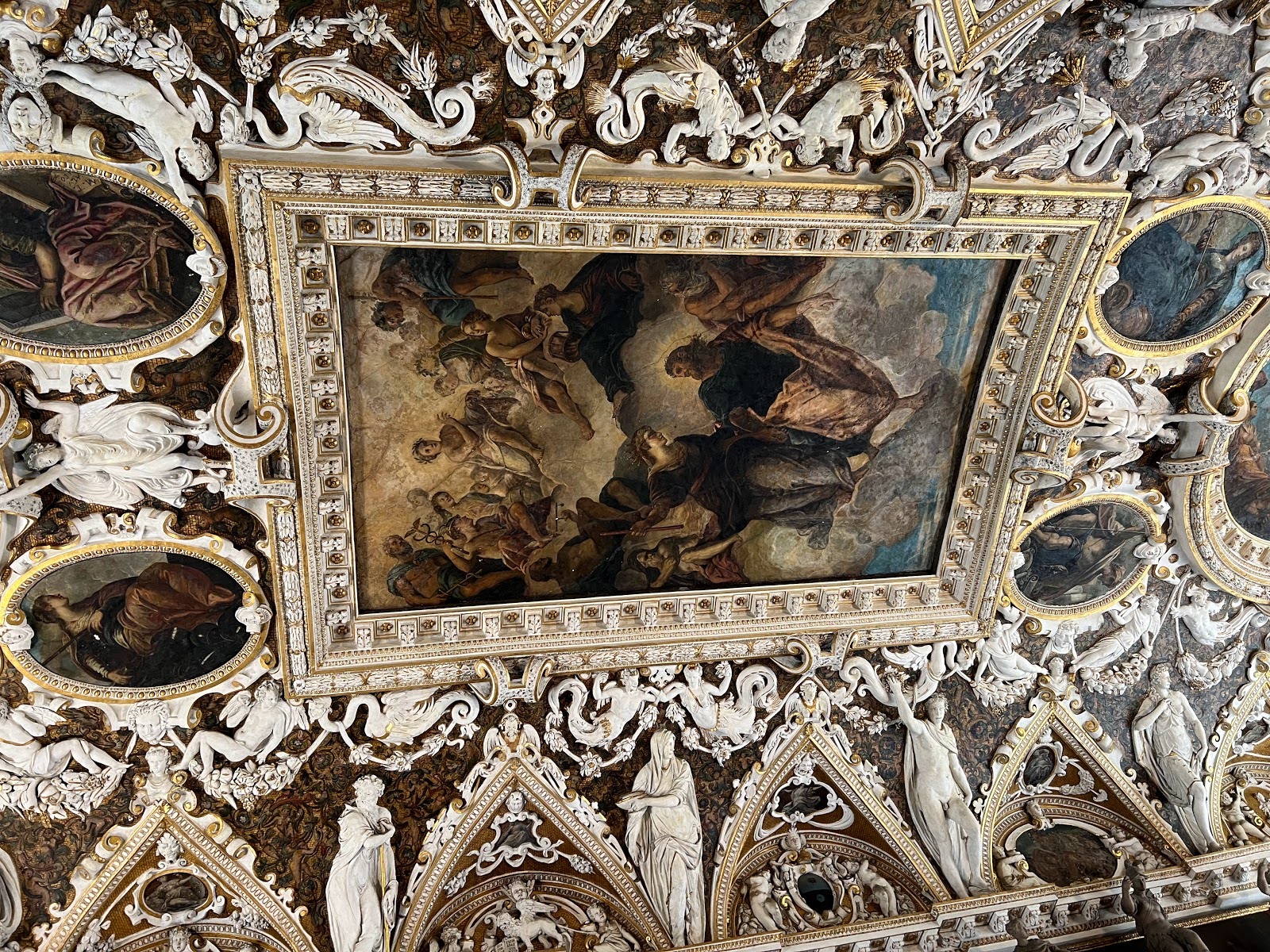
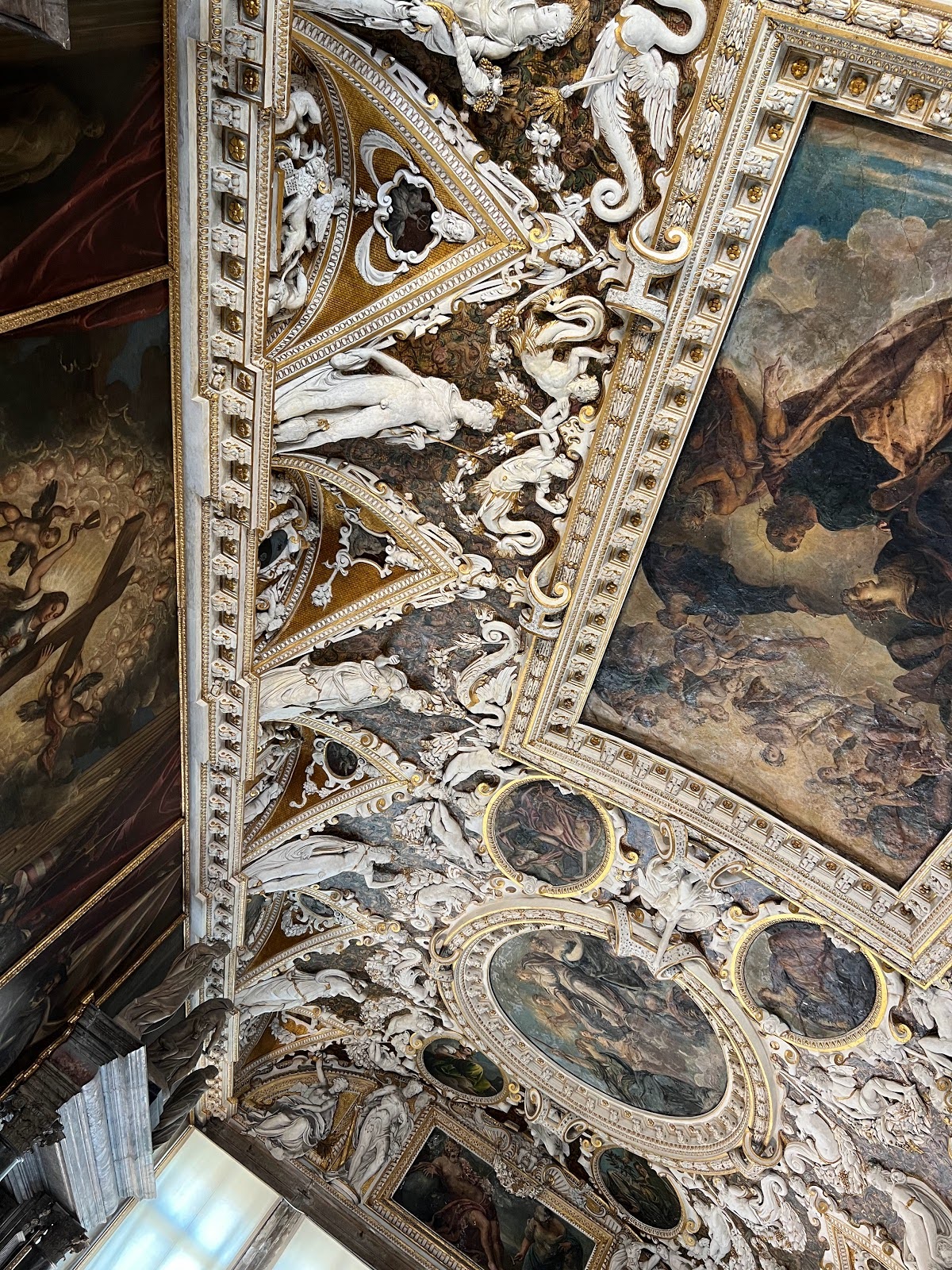
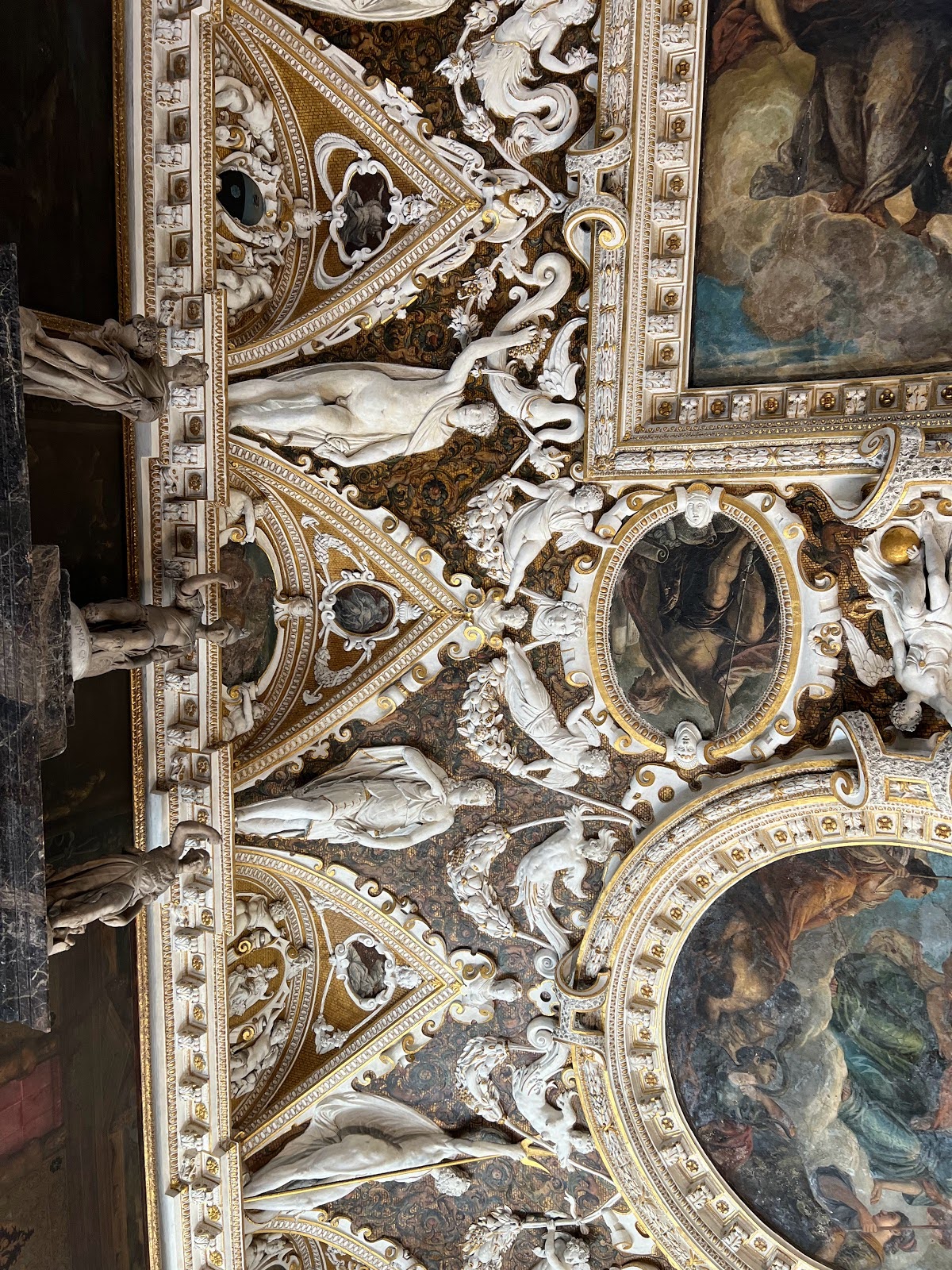
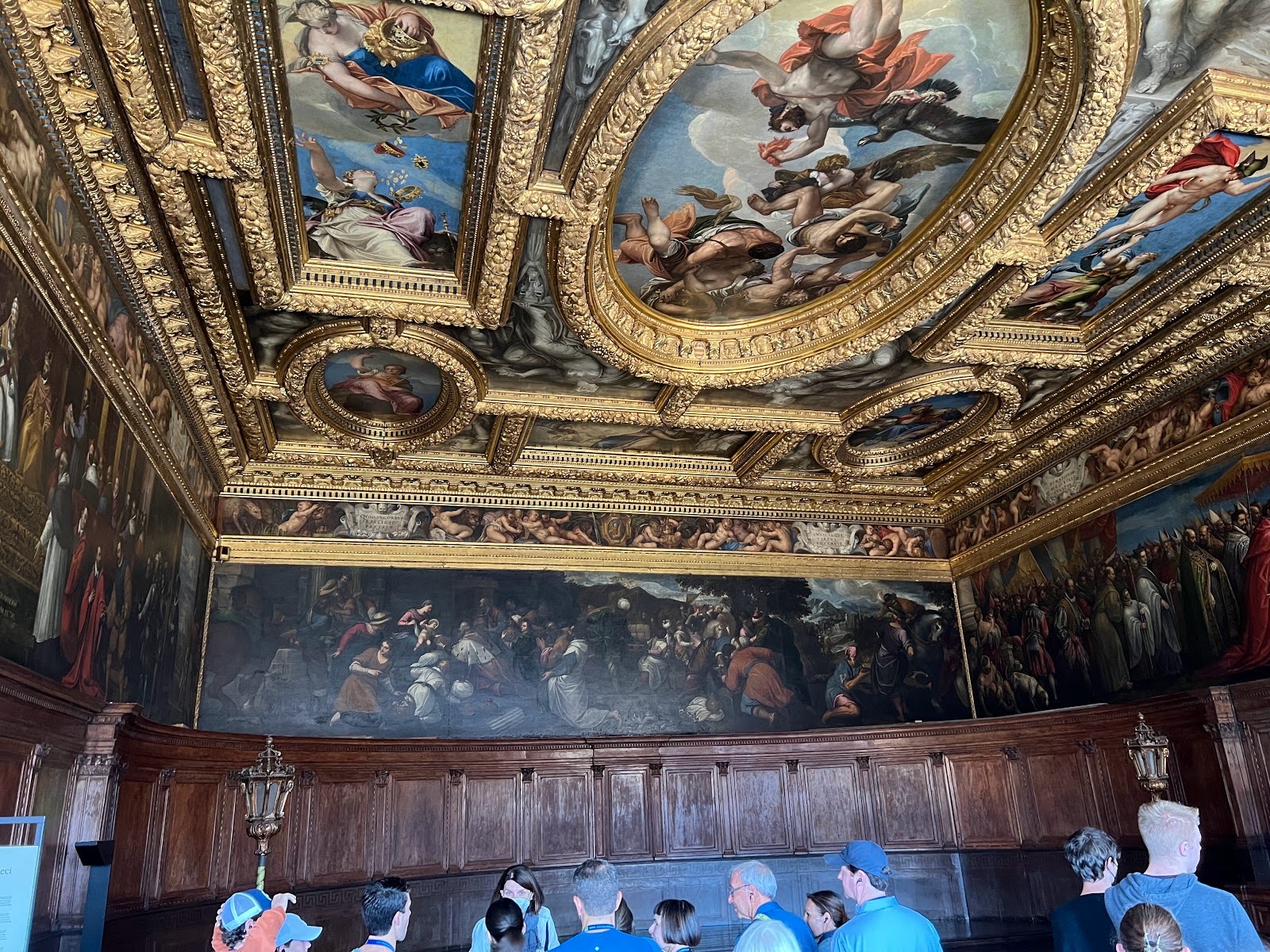
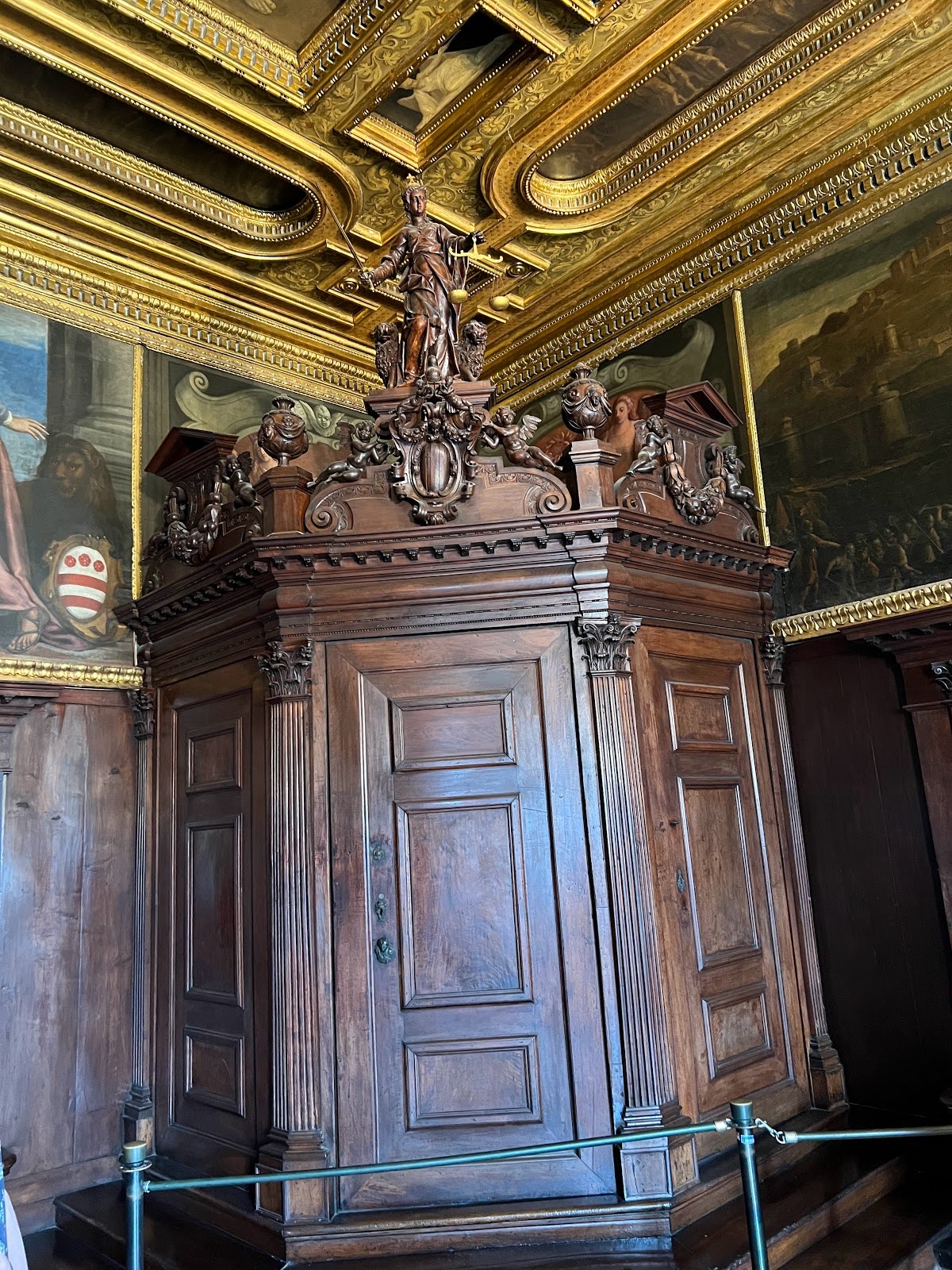
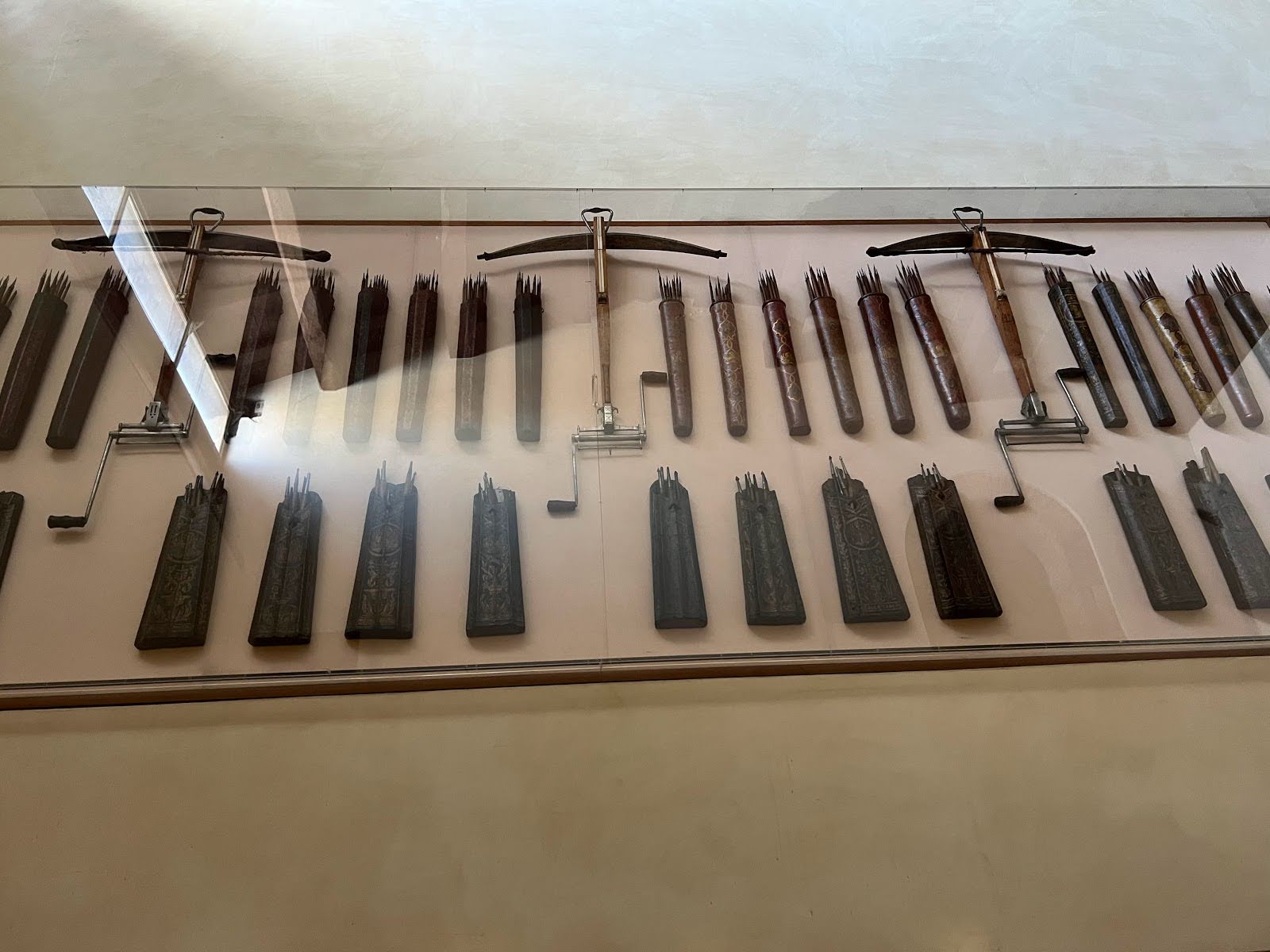
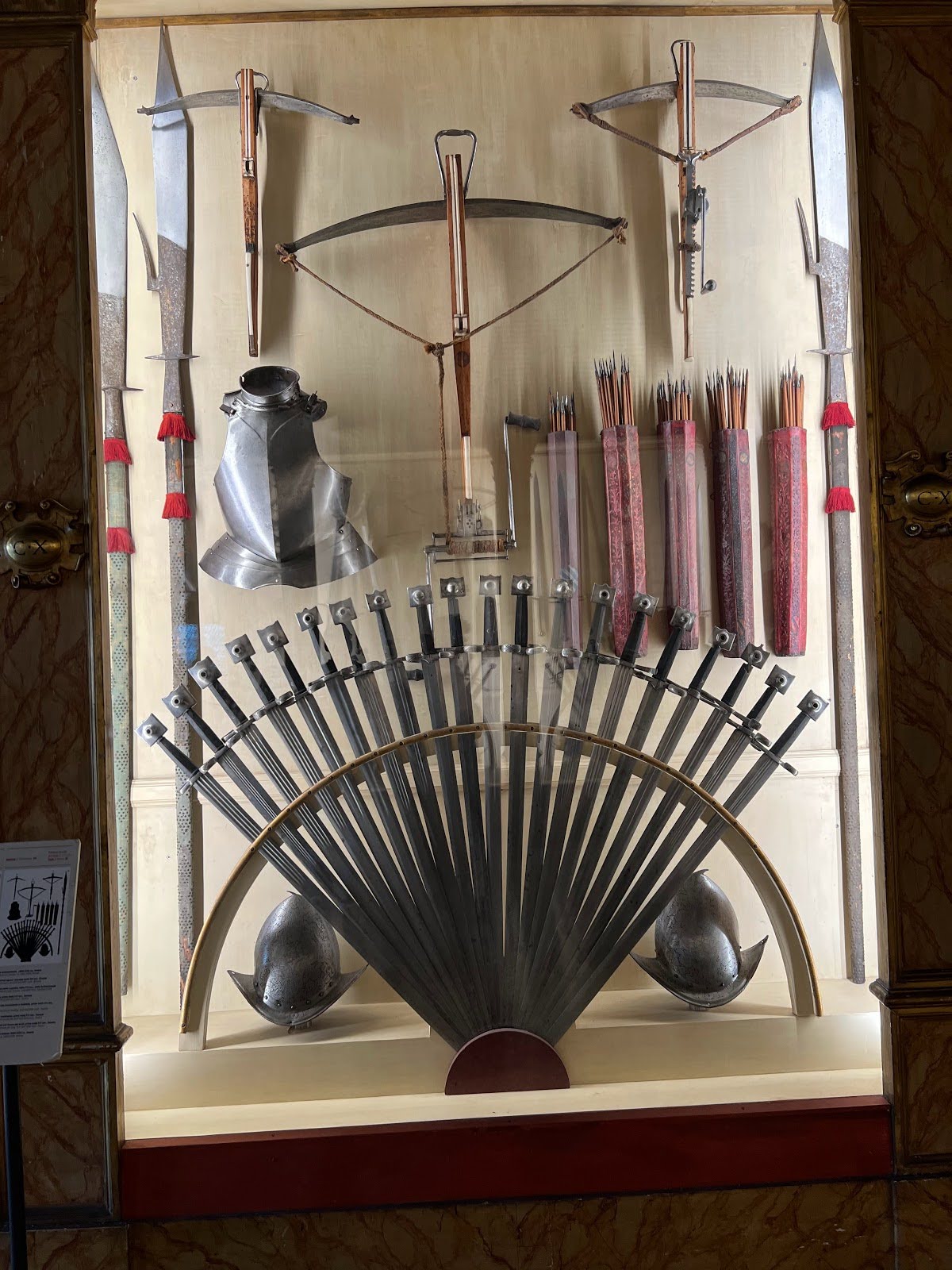
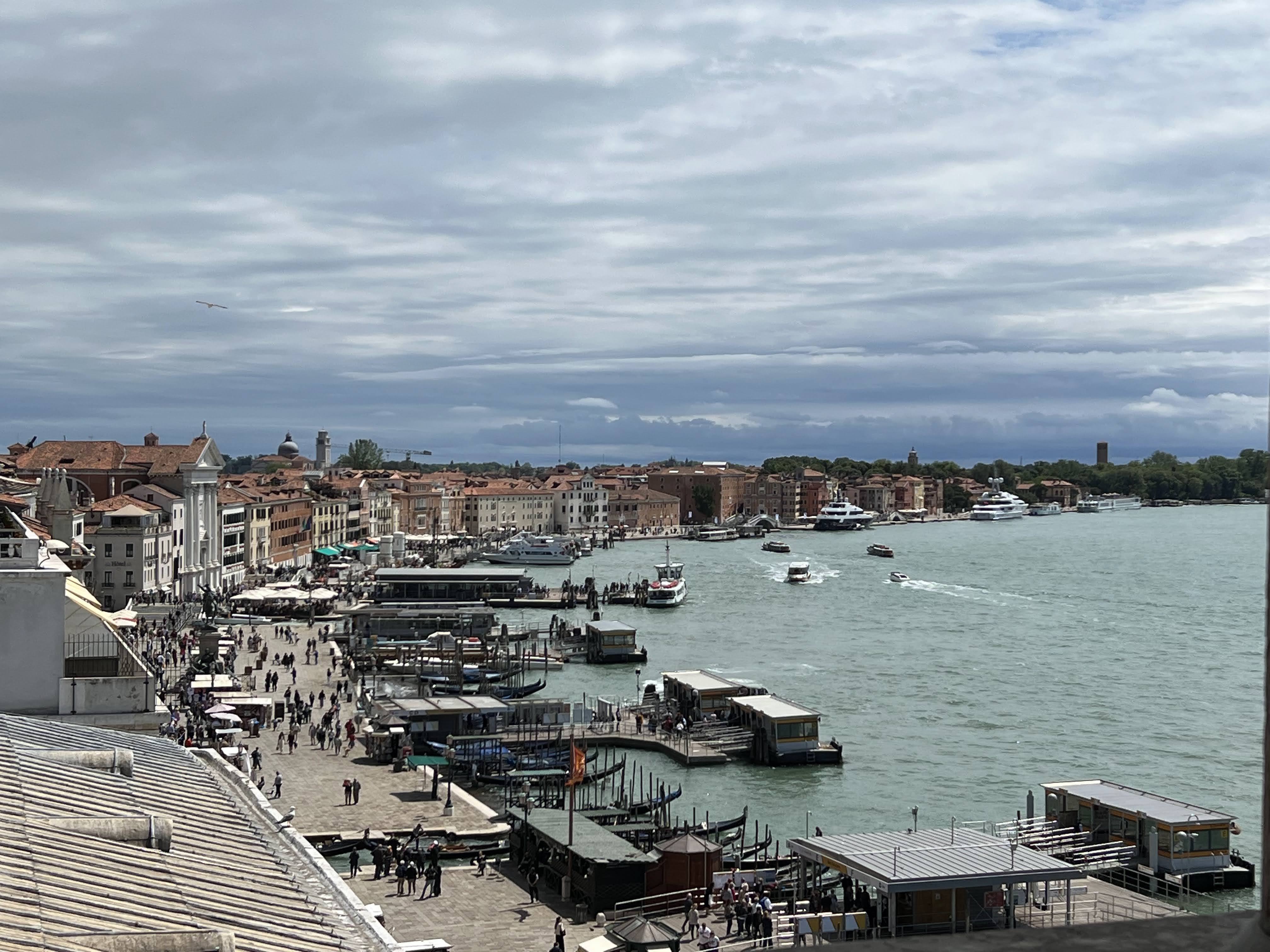
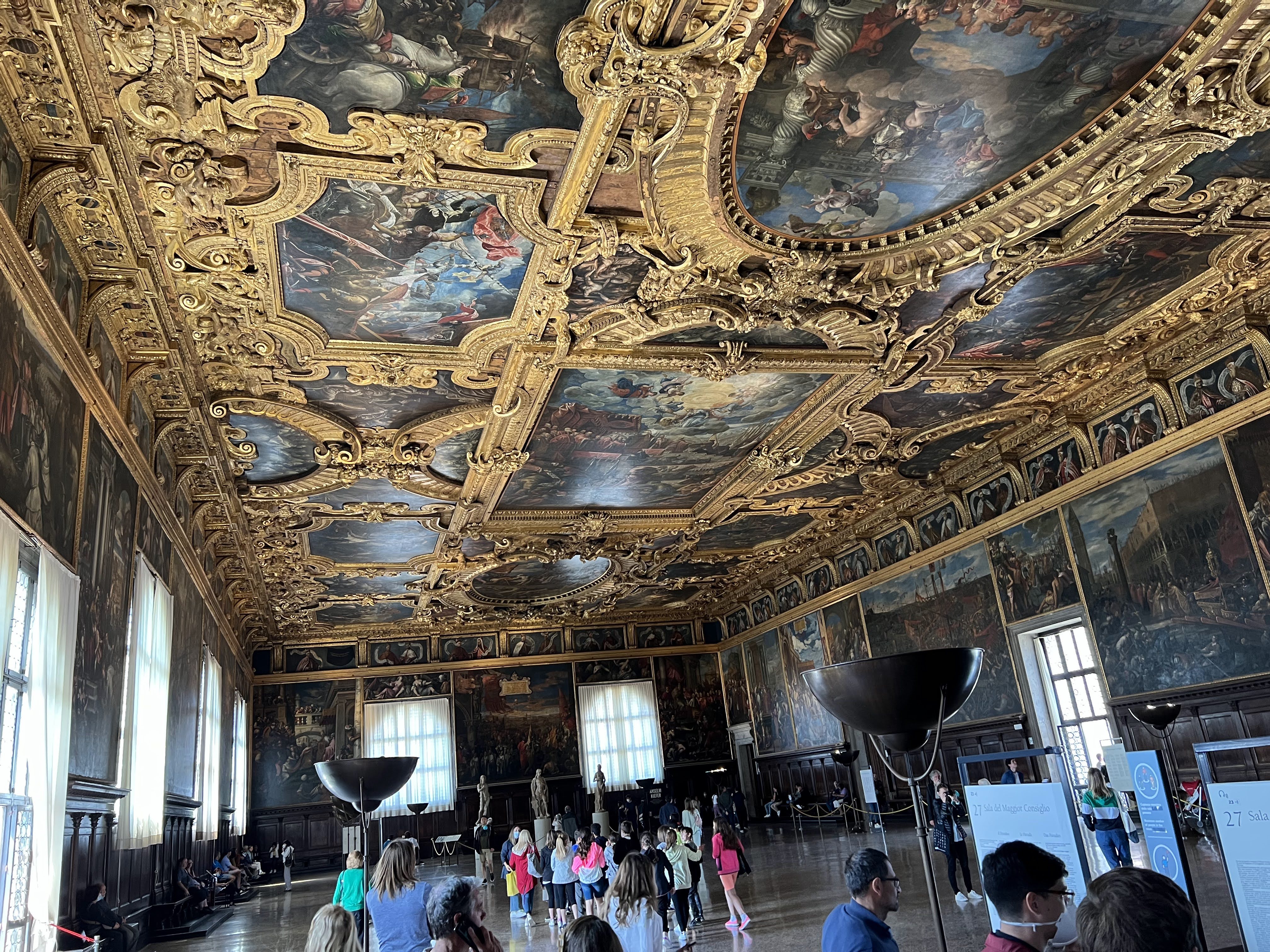
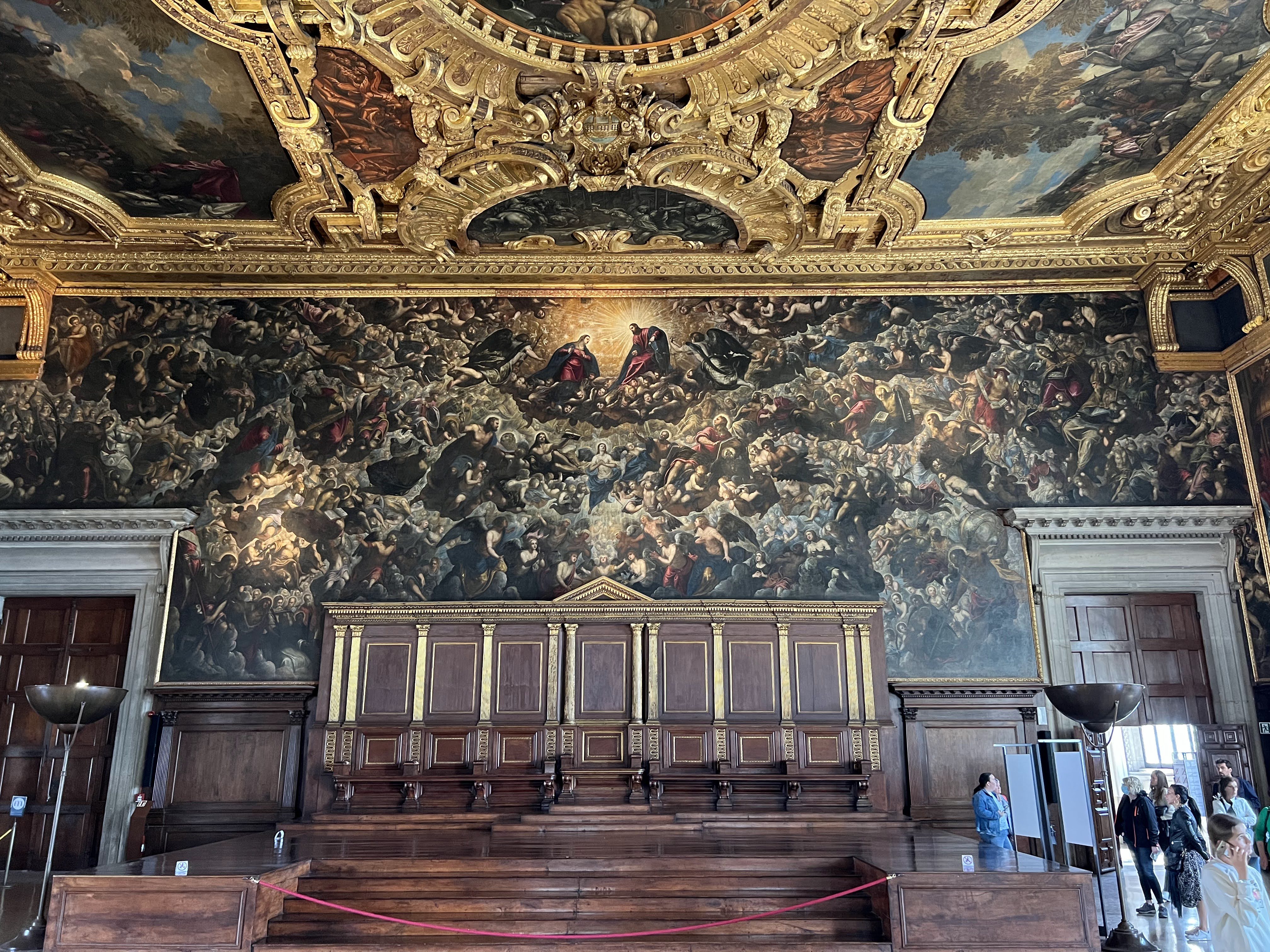
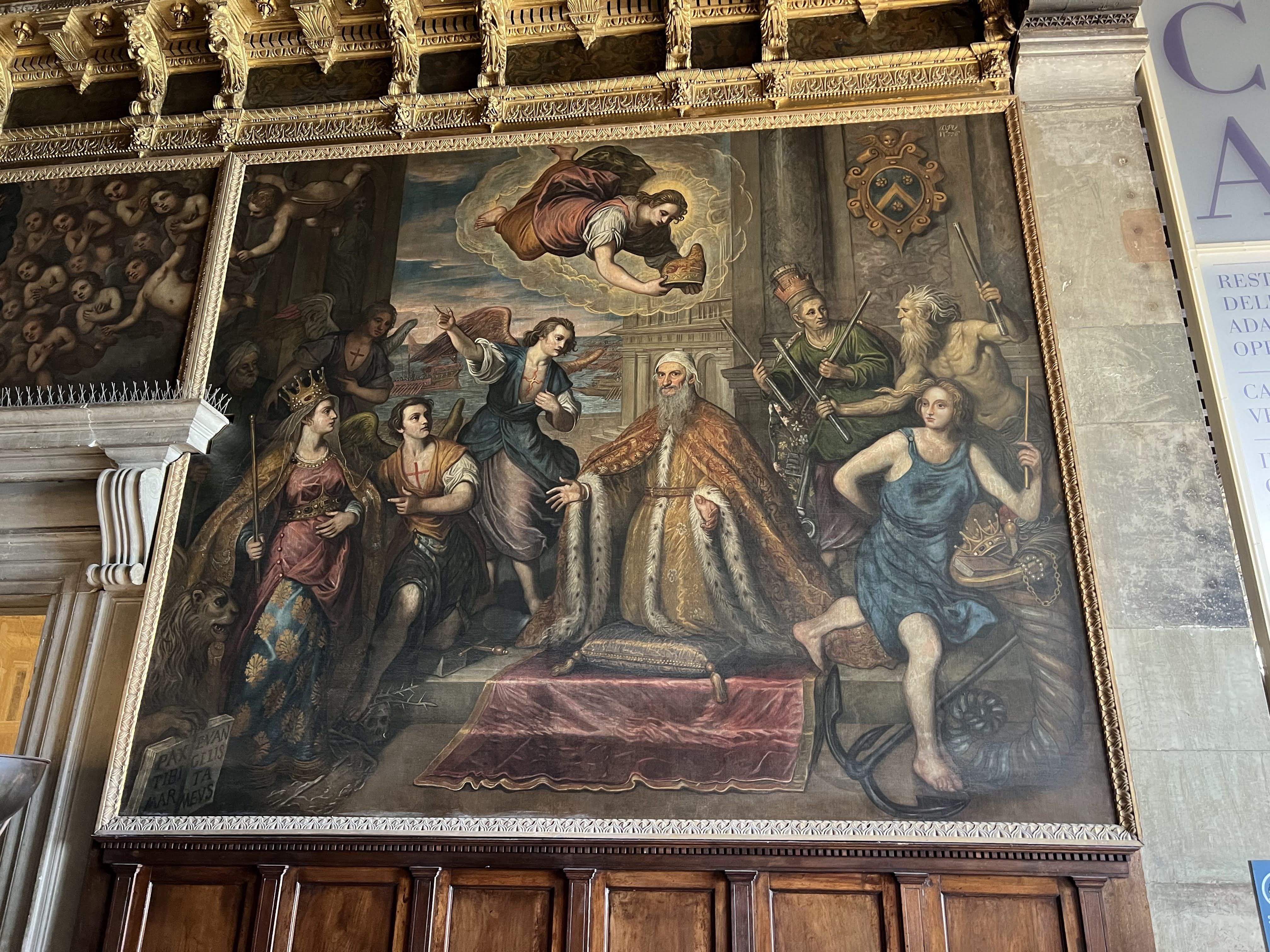
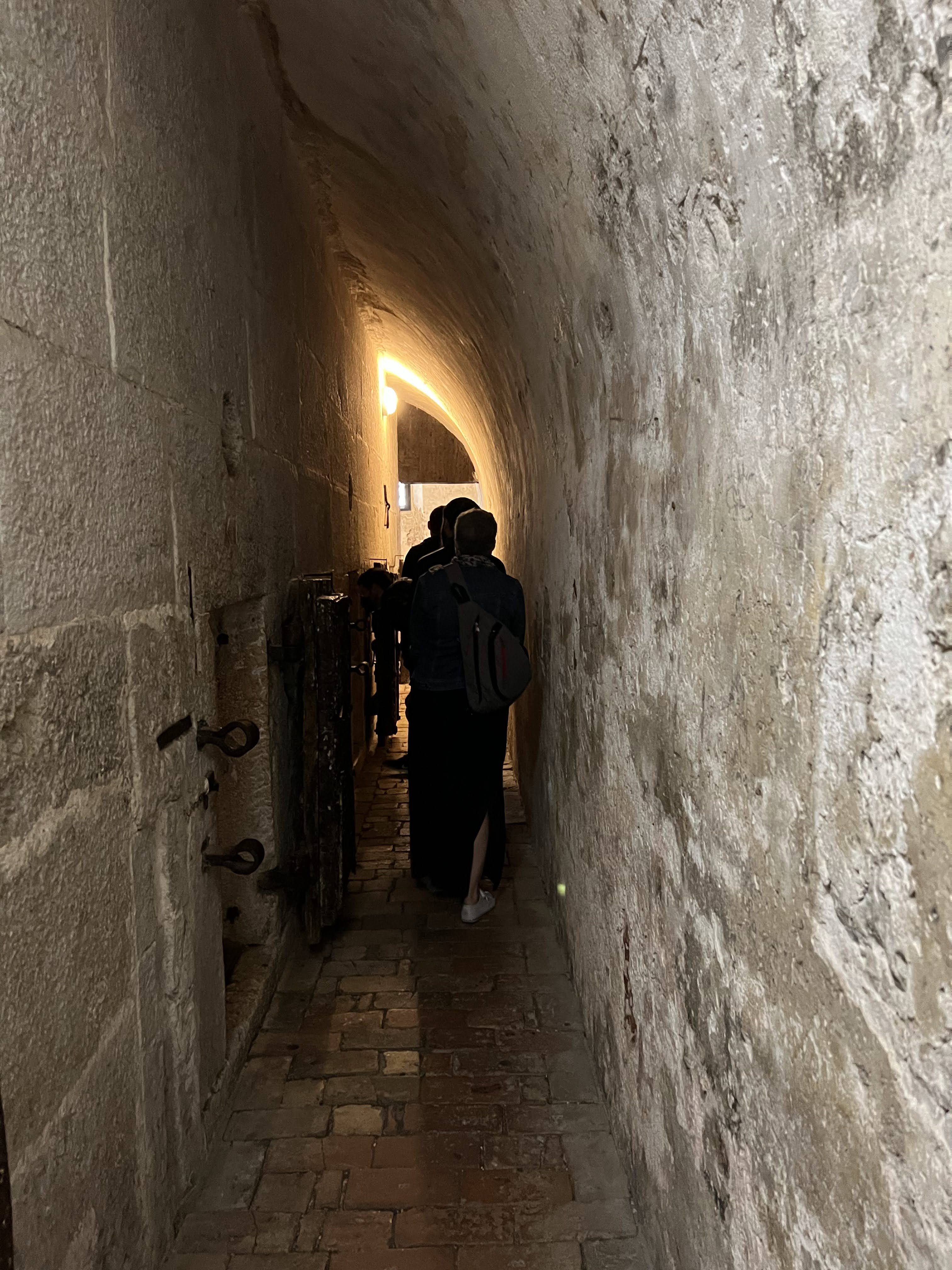
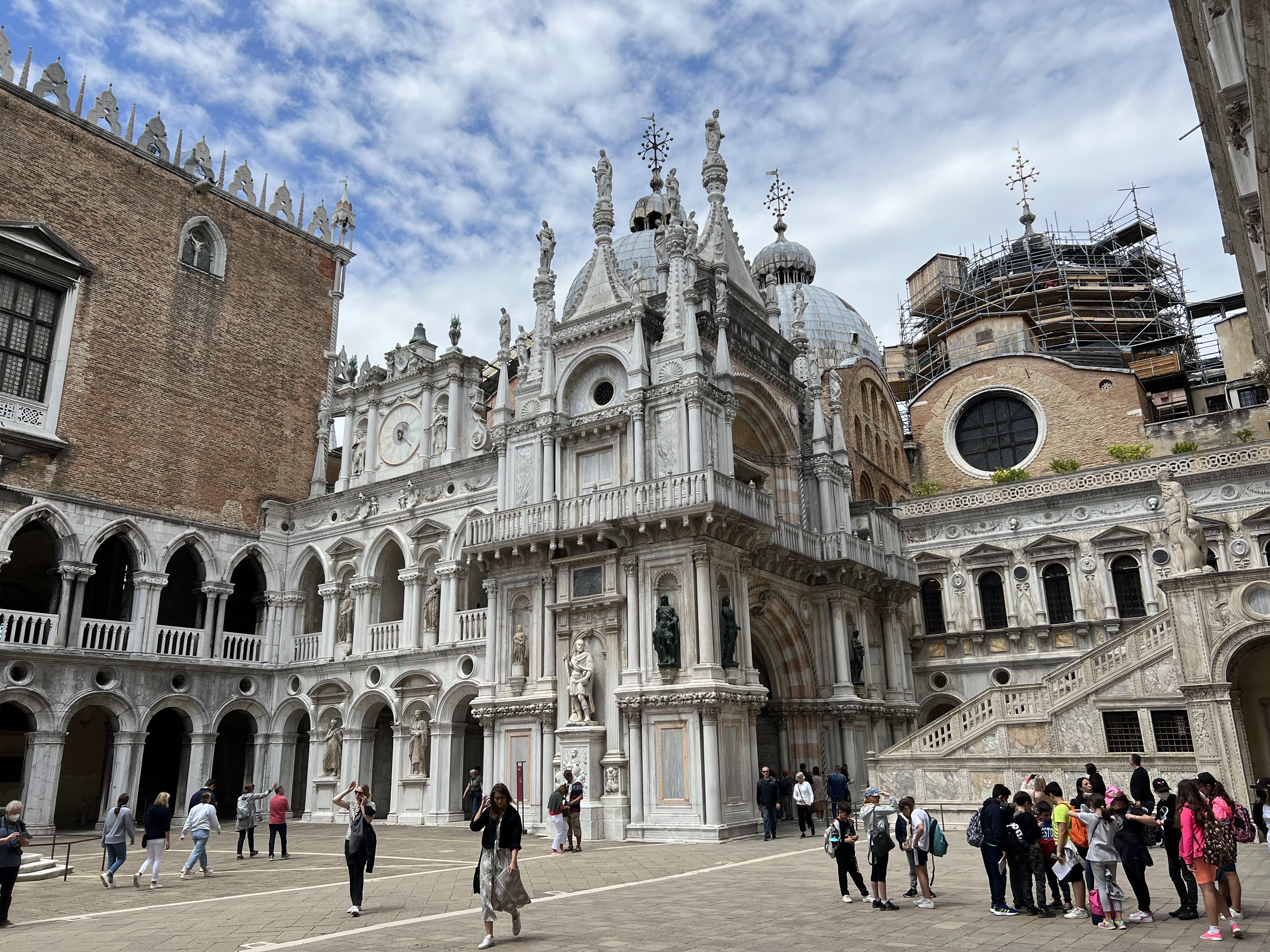
Top left: View of the Lagoon from inside the Palazzo Ducale.
Bottom left: This painting is titled “Il Mandarin.” No, it’s not. But that really does look like Ben Kingsley.
Top right: One of the main halls in the Palazzo Ducale, covered in scenes from Venetian history. Really a stunning space, and not the only one of its size in this building. The Venetians were vedy reech.
Bottom middle: Inside the dungeon area.
Bottom right: I think there are three or four big domes inside this complex, one is being restored.
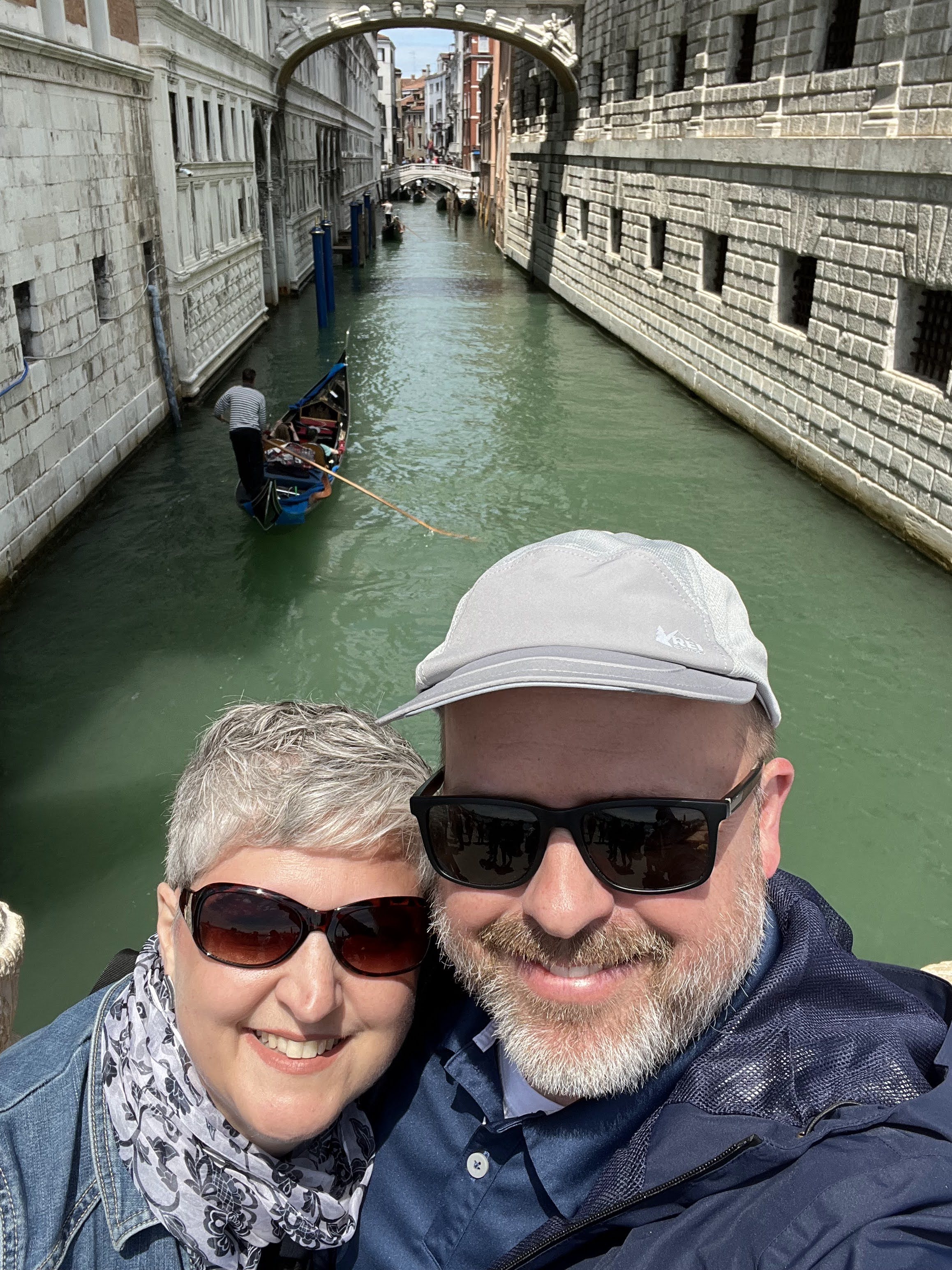

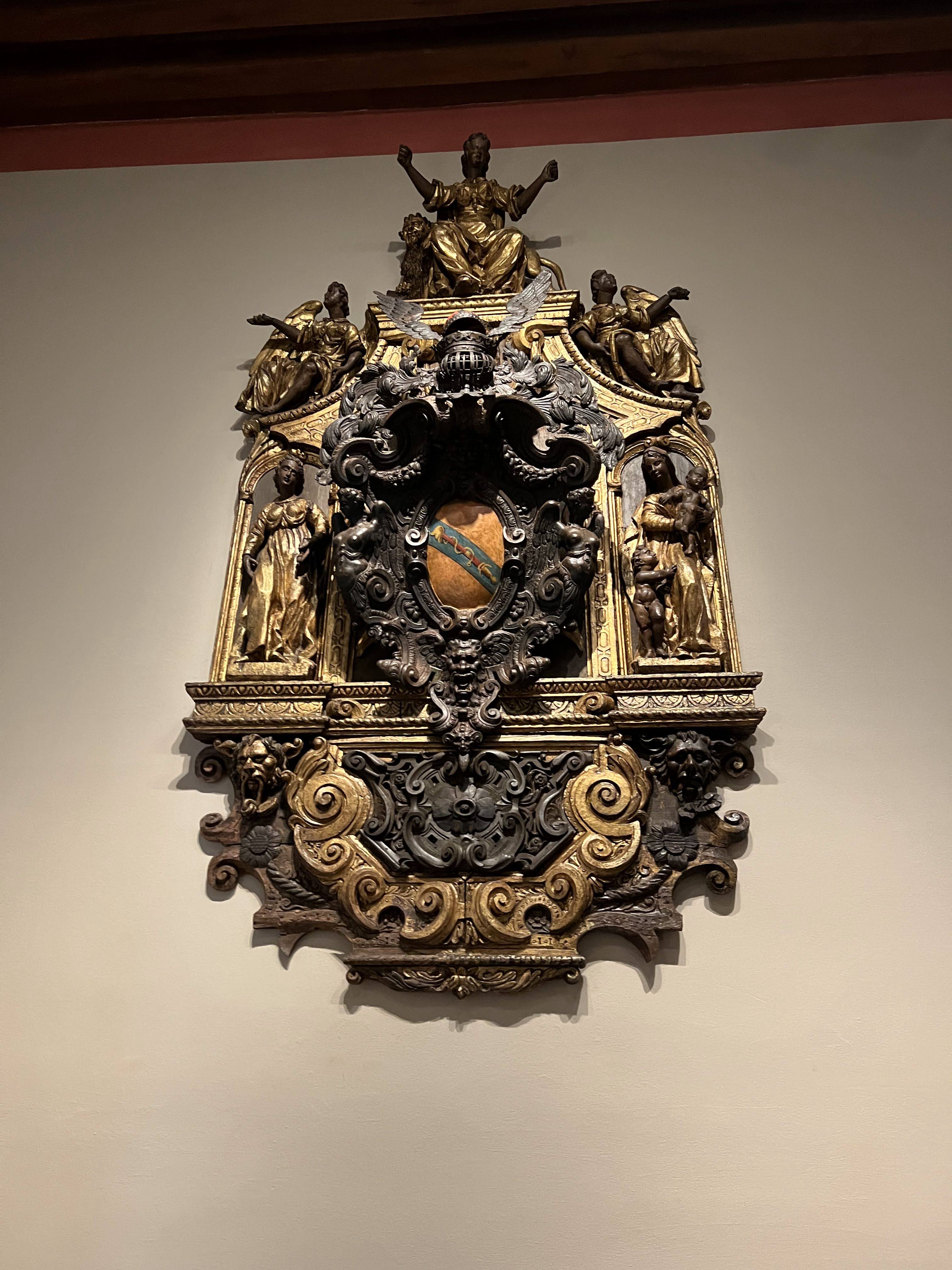
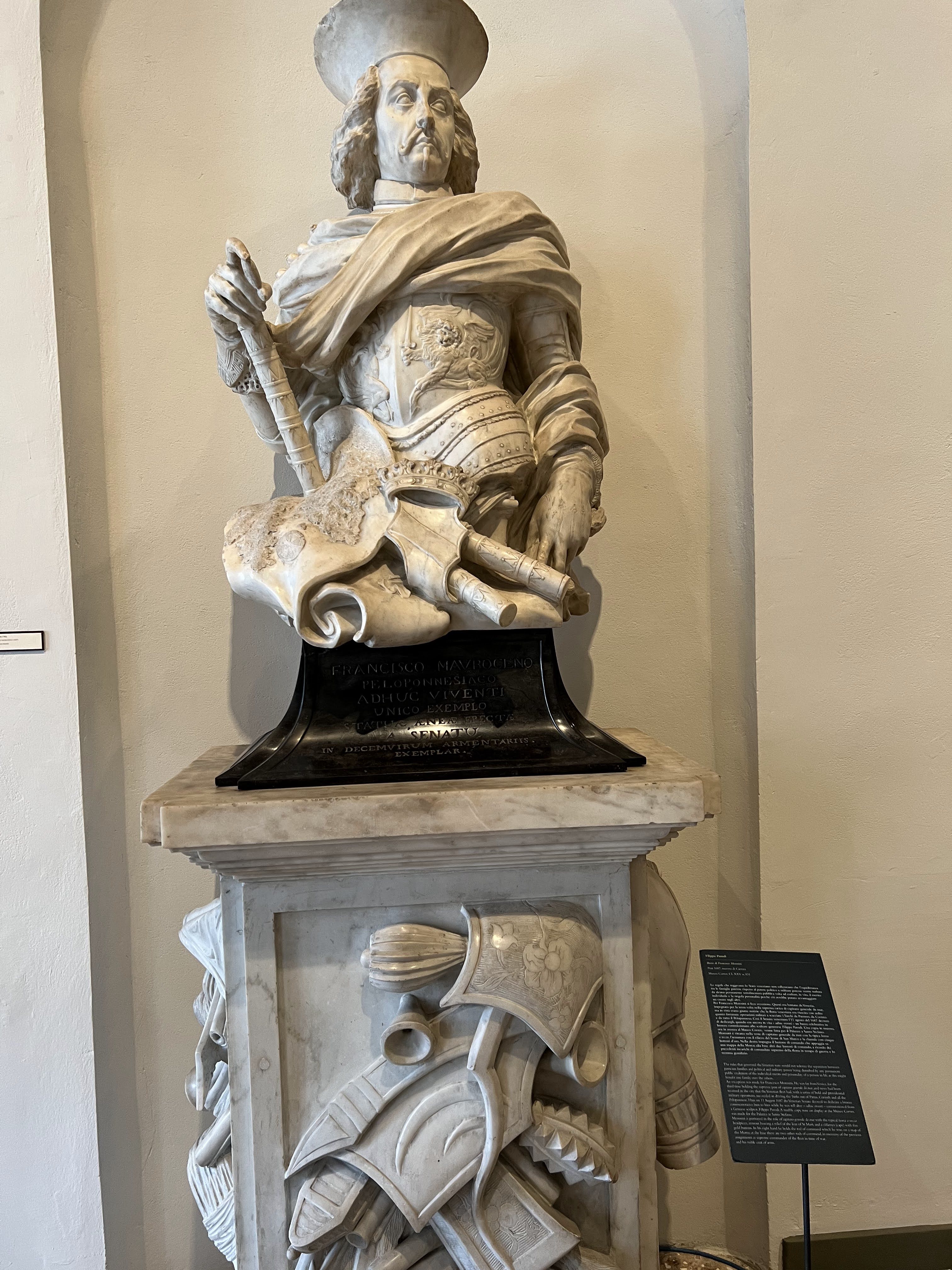
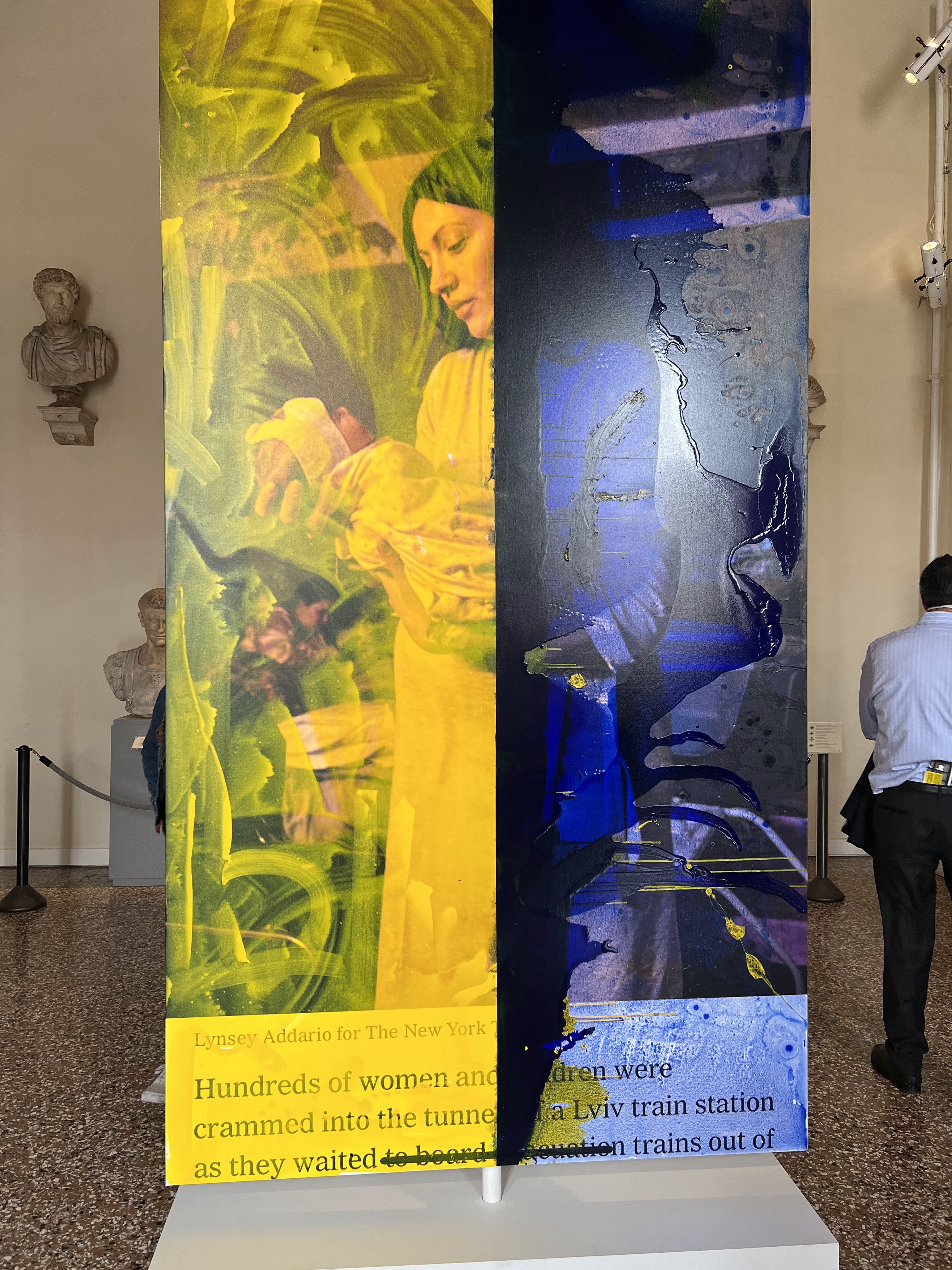
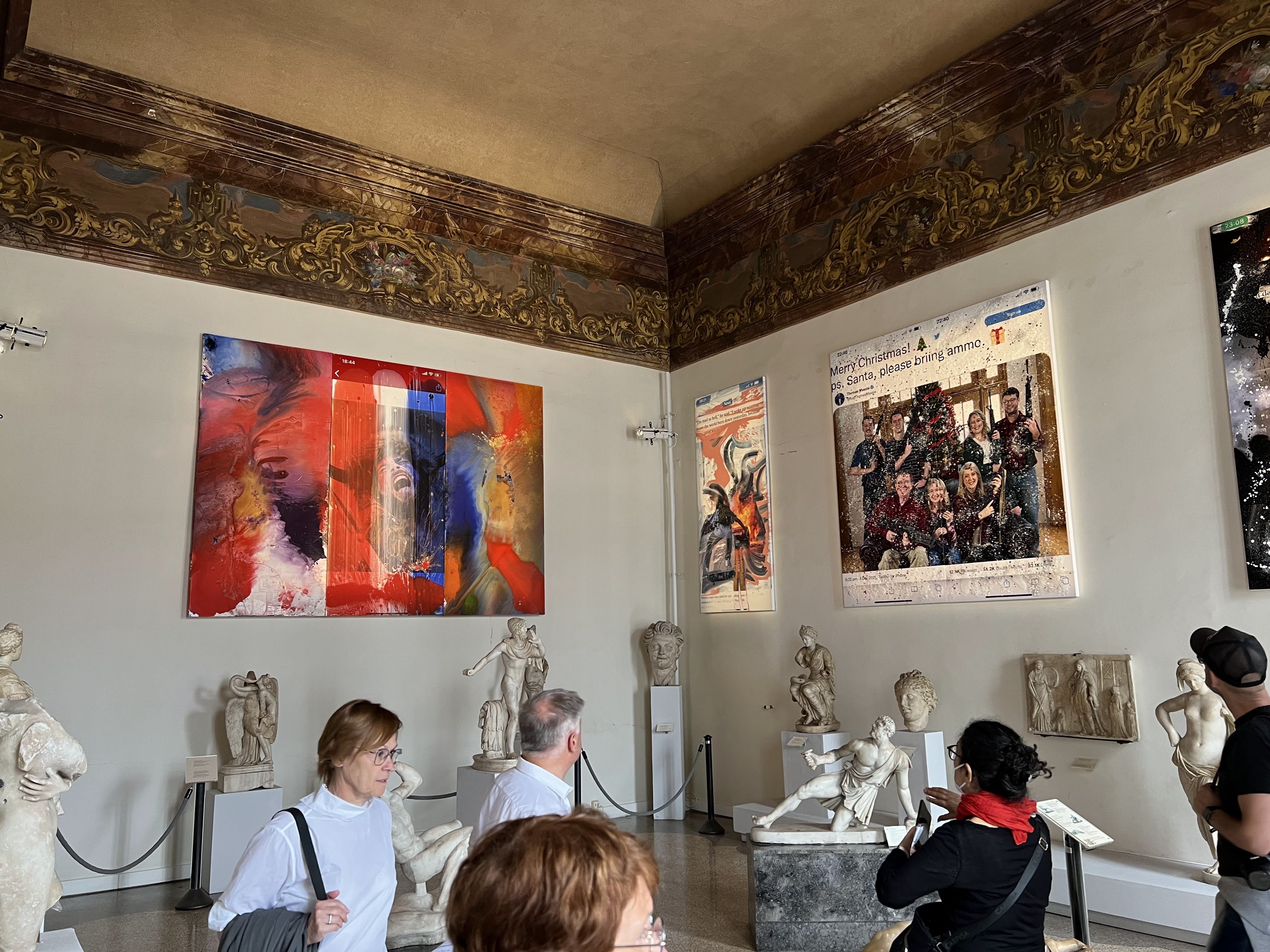
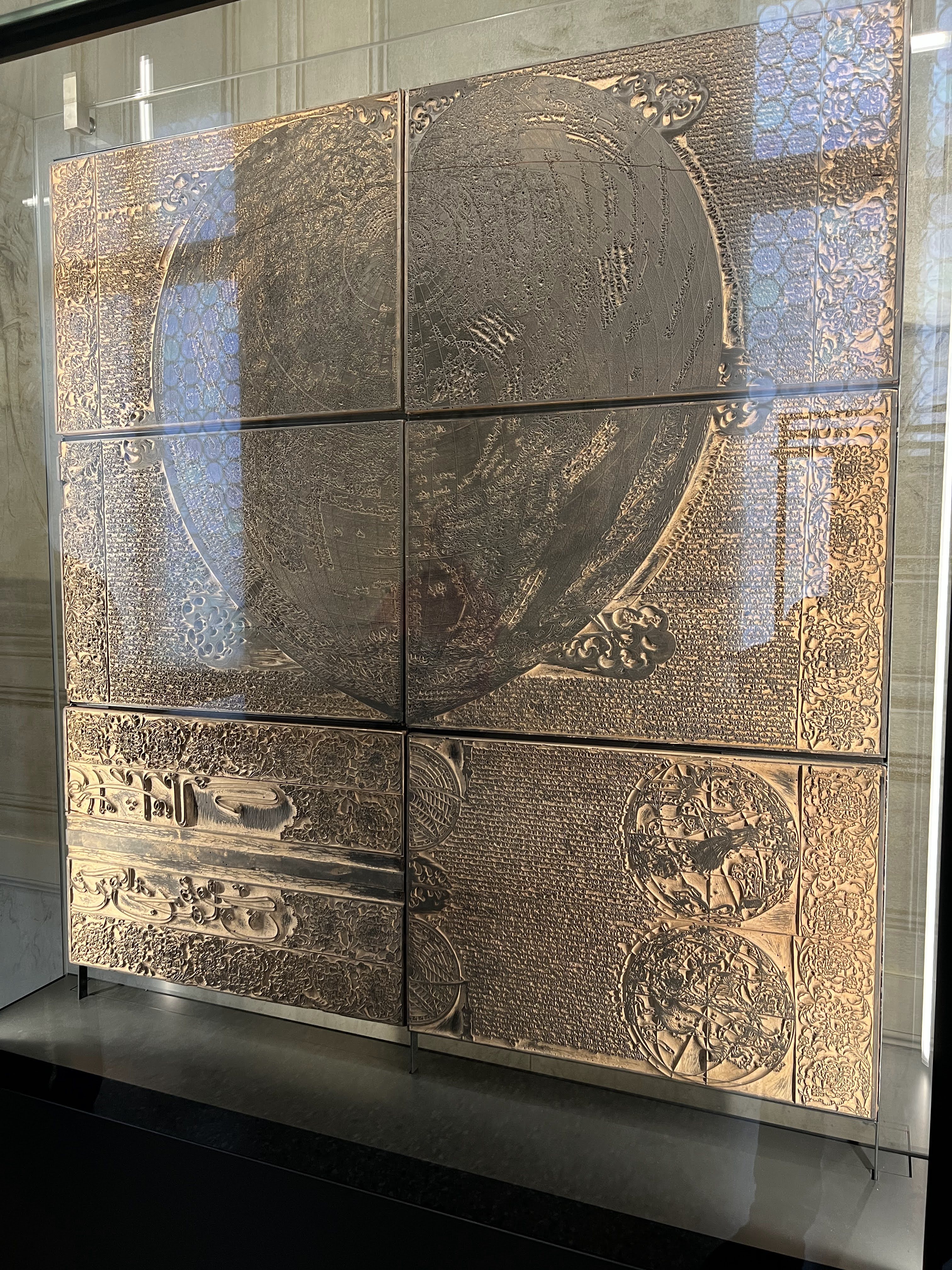
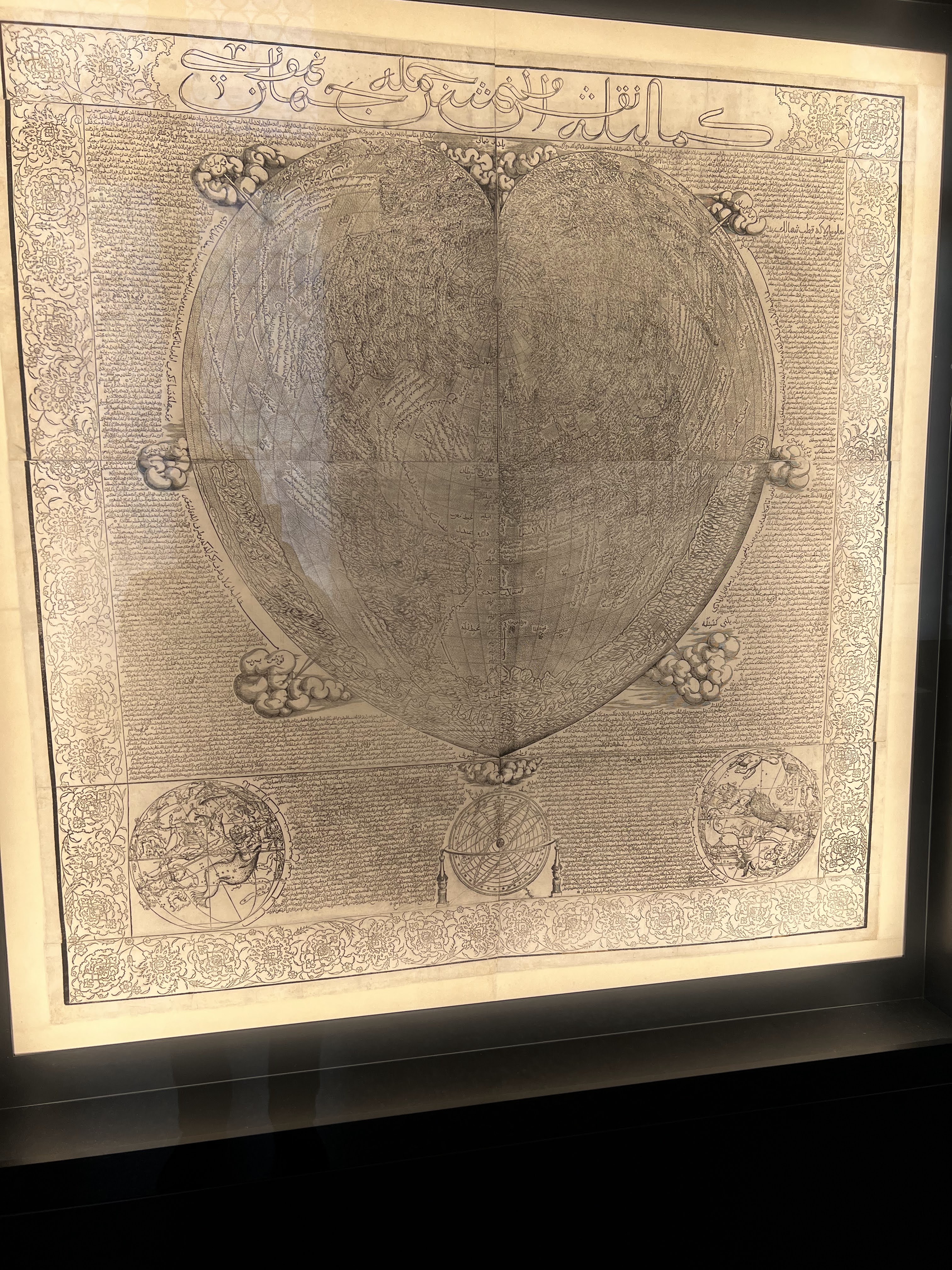
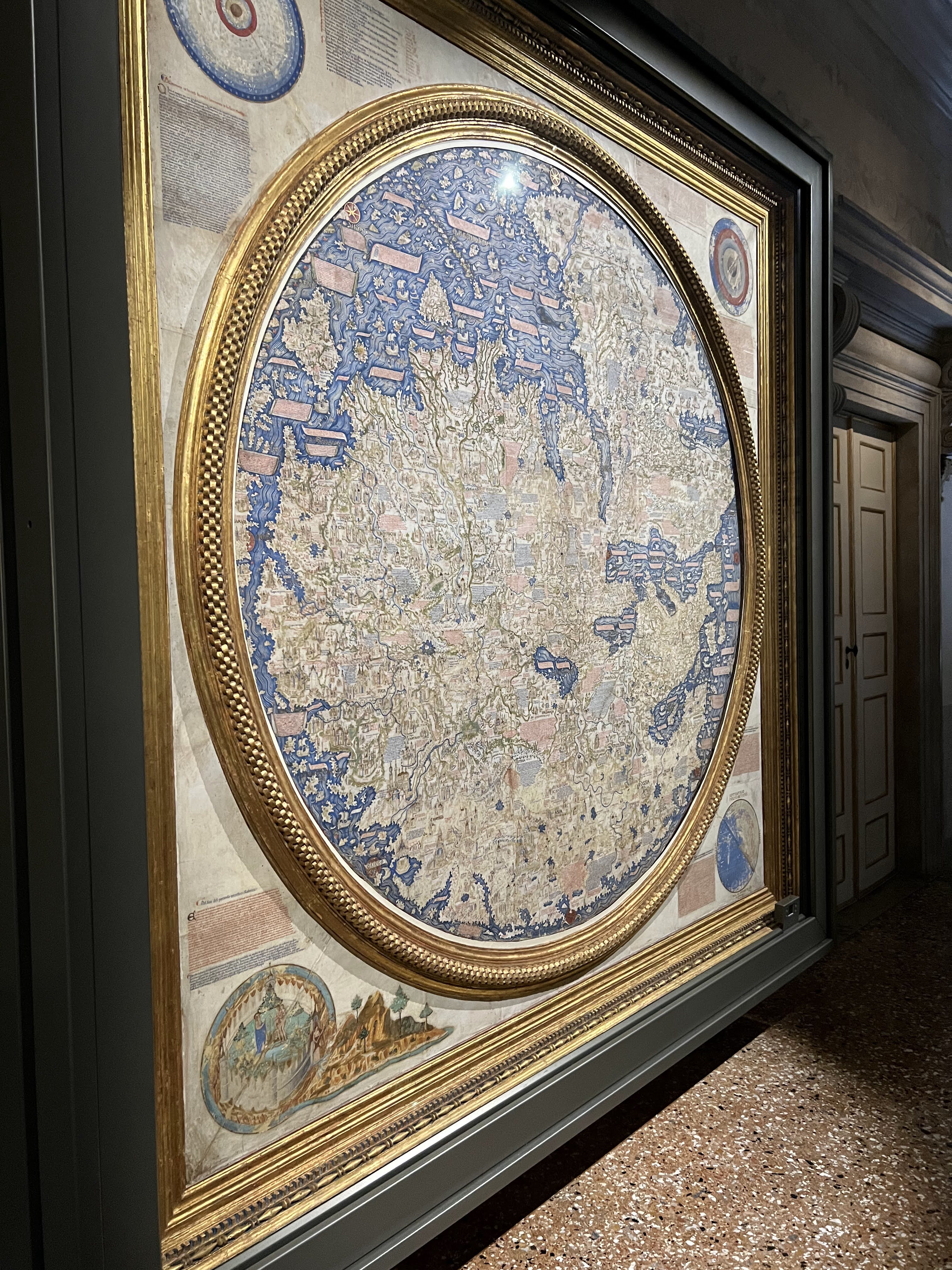
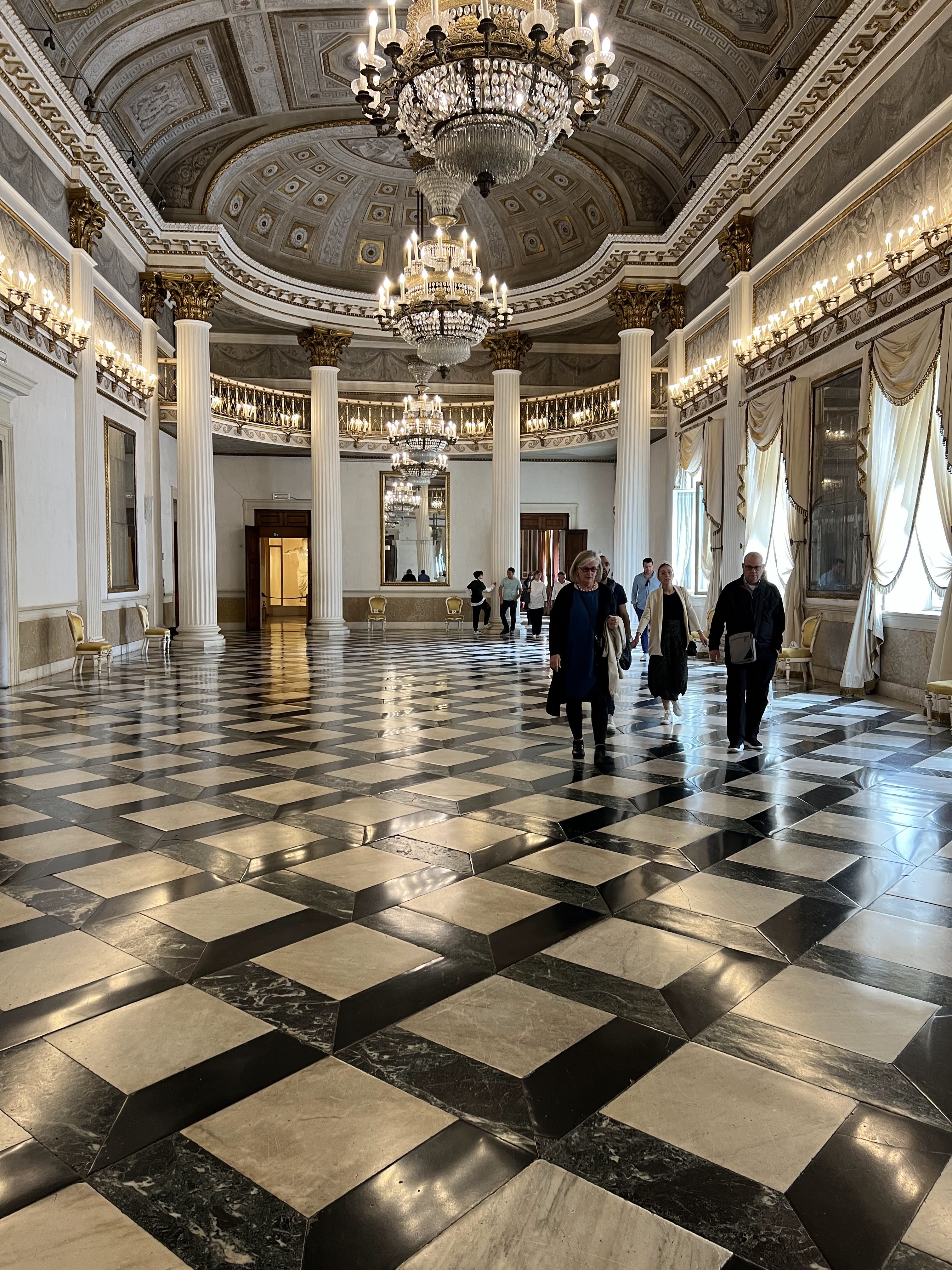
Top left: It seems the Renaissance was all about digging up the last of the remaining marble in Italy that hadn’t already been quarried in Roman times, and making incredible sculptures with it.
Top right: Venezia really wants to be known for showcasing contemporary art, they mentioned the Museo Correr and Palazzo Ducale not wanting to just be historical collections but hoping to use their massive spaces to showcase significant new works as well. They certainly have the space for it.
Bottom left: This space was trying to counterpoint sculptures of the Gauls (highlighting Rome’s violent conquests) with images of contemporary tensions (e.g. January 6, see the QAnon Shaman on the left).
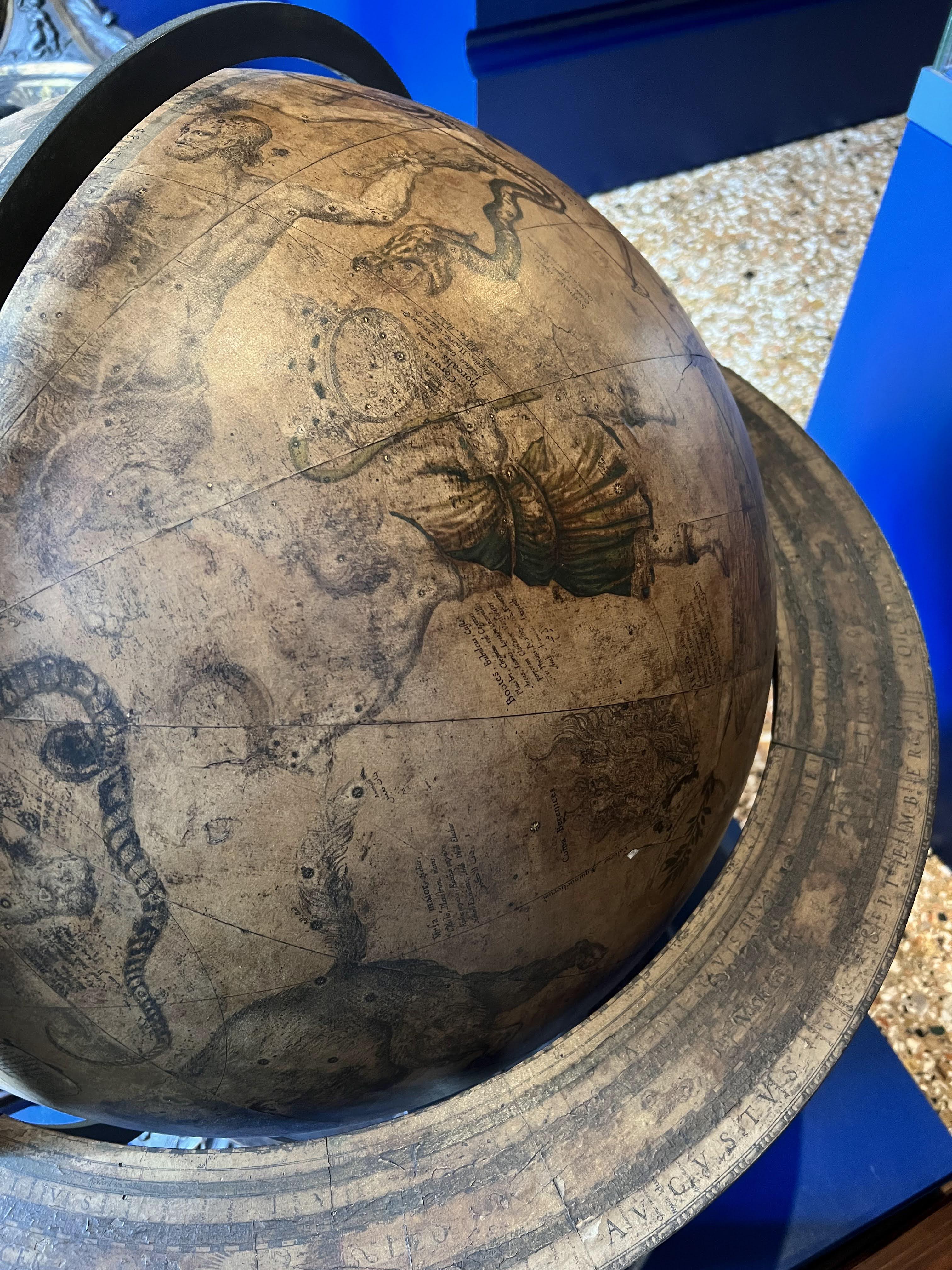
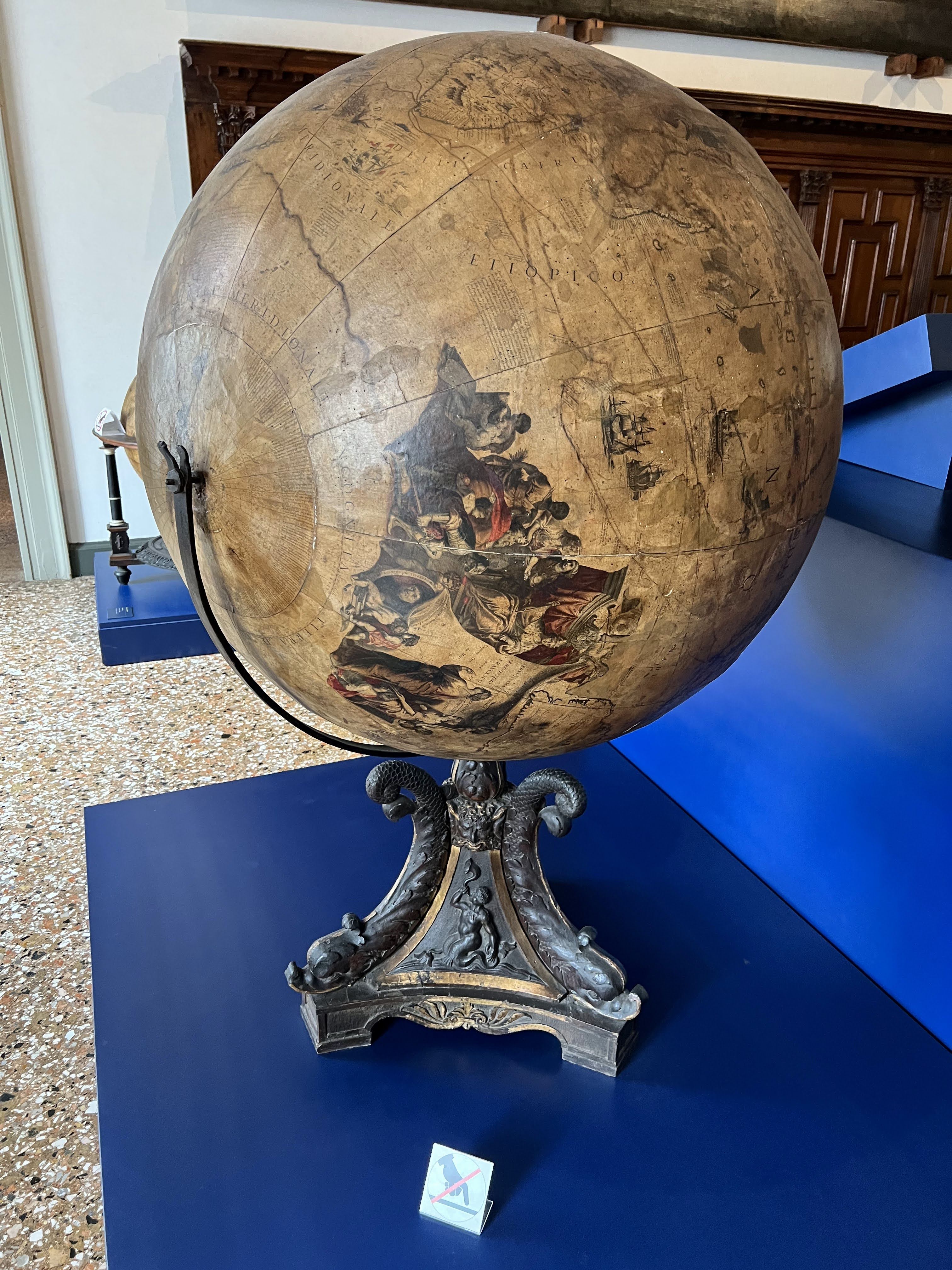
Bottom middle: A famous (so famous I can’t remember the name) woodcut atlas purporting to represent the world of the time. They inked this up and pressed it onto a massive sheet of paper, of course only super-rich people had the space to display it. The photo next to this is a print made from the previous woodcut/lithograph.
Bottom right: Another intricately detailed world map, really fascinating. There’s a whole interactive exhibit next to it.
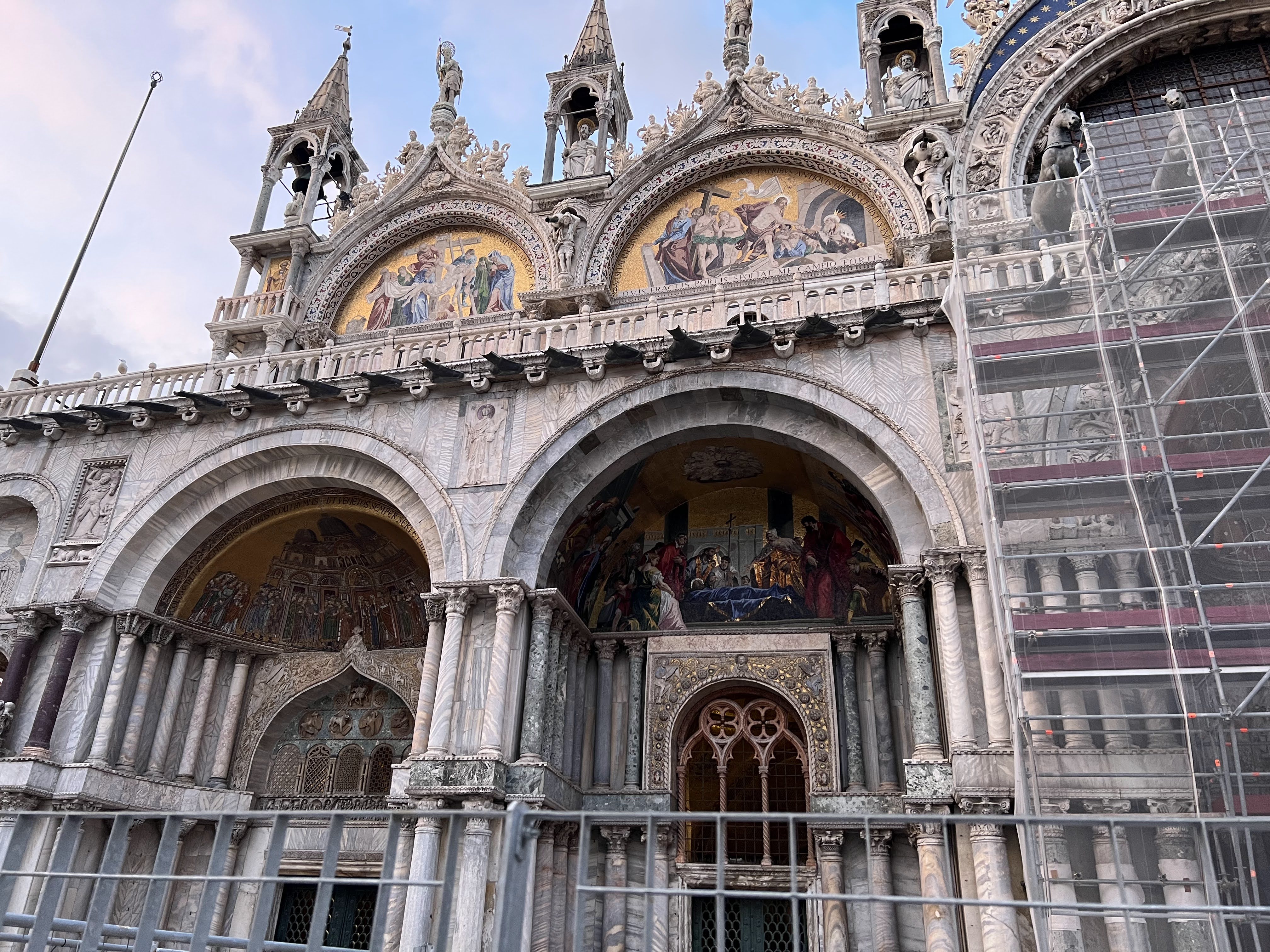
Bottom right: Up-close detail of the Basilica de San Marco, though we didn’t end up touring inside (zoom in for the intricate detail!)
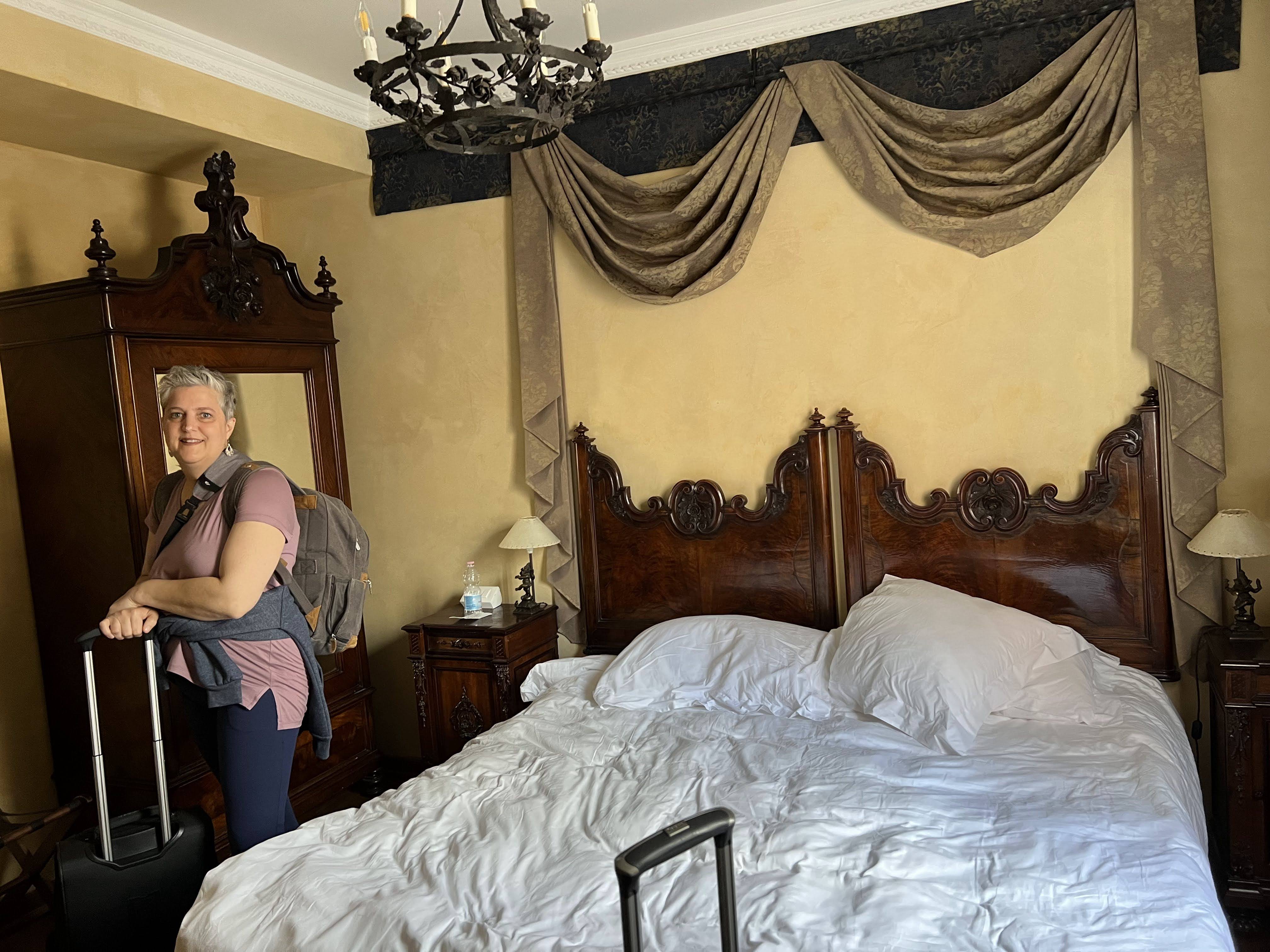
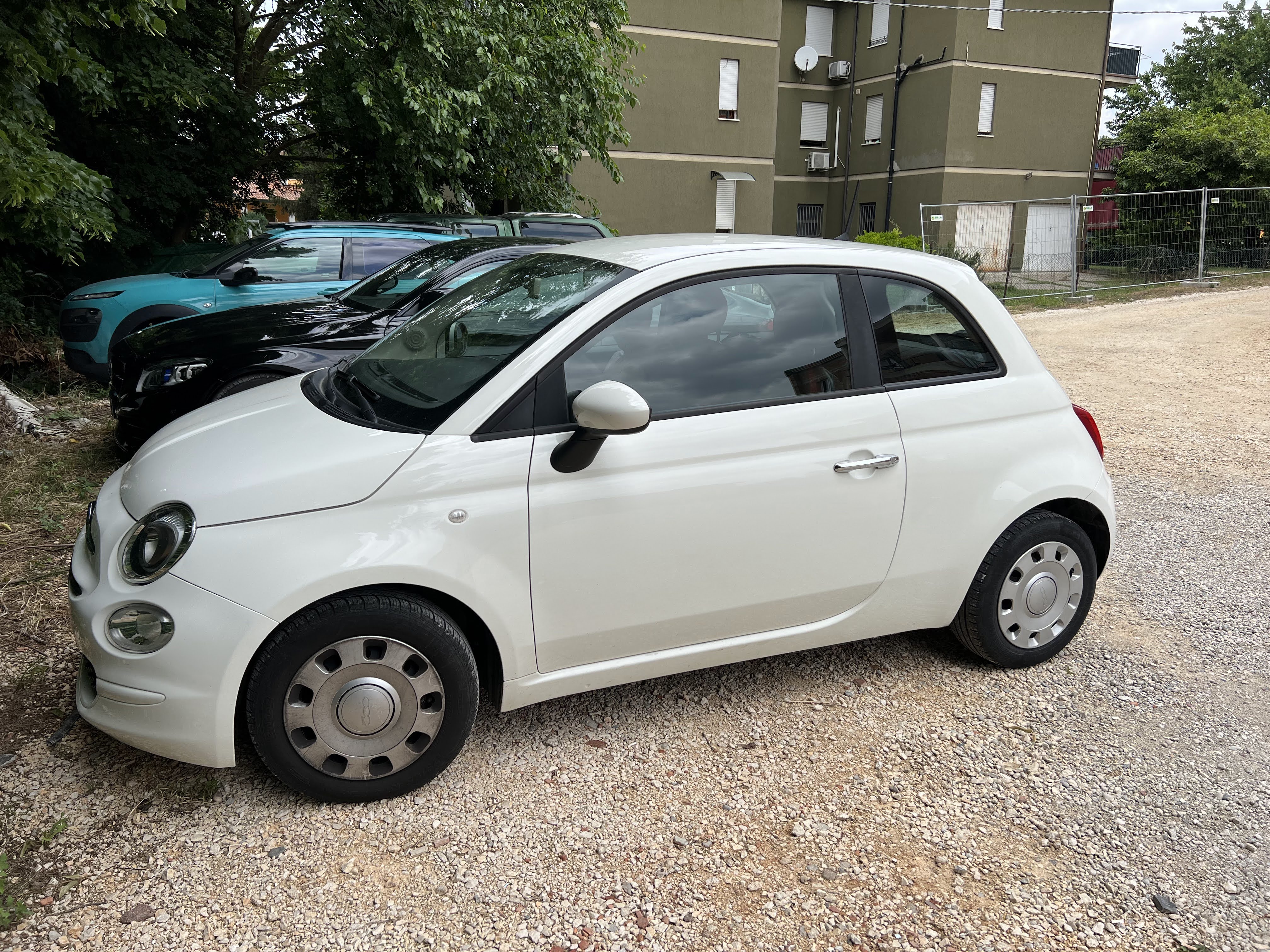
And of course, a blog post on this site wouldn’t be complete without some minutia about how we got from one place to another: here’s Susan in the charming Novecente Hotel room as we’re checking out, and our trusty steed for the drive to Firenze (Florence).
 MOR'NA MILE AWEE